
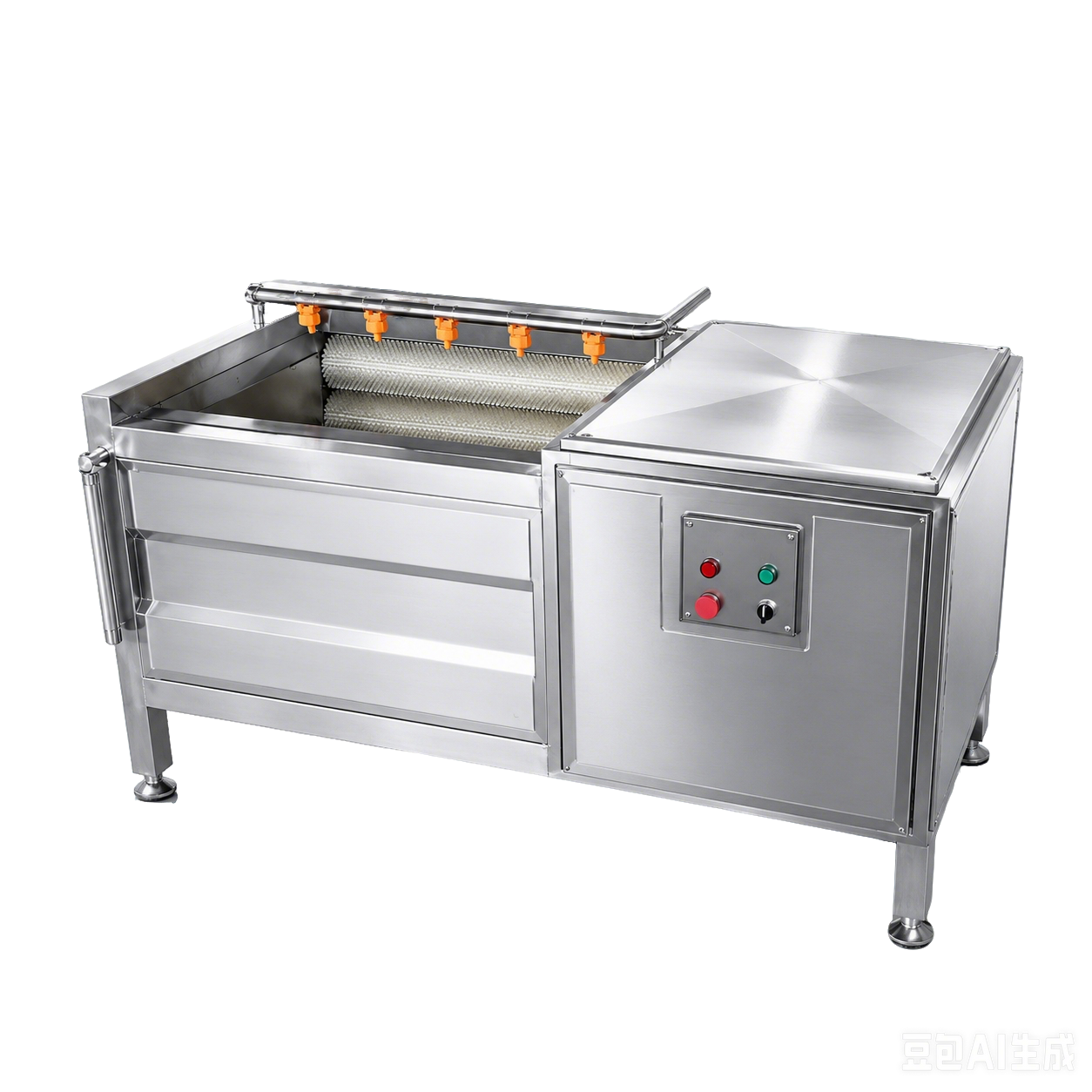
 NEW▶ videoIndustrial Vegetable Brush Washing Machine for Automatic Root Vegetable Cleaning and Peeling
Tomato Sauce Production Line | Industrial Tomato Processing Equipment for Commercial Food Manufacturing
Tomato Sauce Production Line for washing, pulping, cooking, mixing, and filling tomato sauce into glass jars for food manufacturers.
Brand: YIDO
Product Description
What Is a Tomato Sauce Production Line?
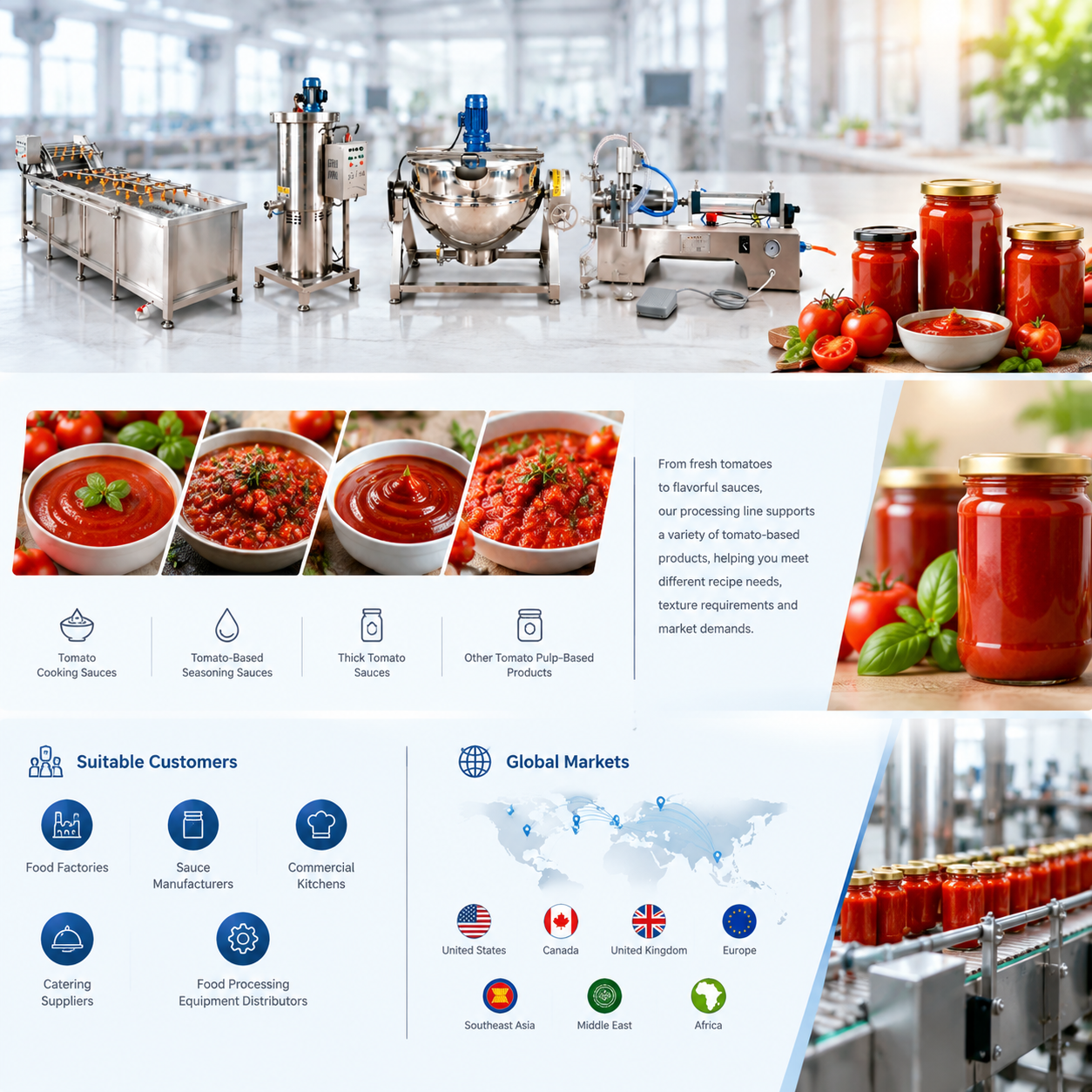
A Tomato Sauce Production Line is a combination of food processing machines used to prepare tomato-based products for commercial applications. Depending on the recipe and required finished product, the process may include raw material washing, pulping, cooking, ingredient mixing, and filling.
For food factories, using coordinated Tomato Processing Equipment can simplify production organization, reduce unnecessary manual handling, and help establish a more consistent processing workflow. The actual production capacity depends on the specifications of each machine, processing time, sauce viscosity, and the coordination between individual operations.
Main Functions of Tomato Sauce Processing Equipment
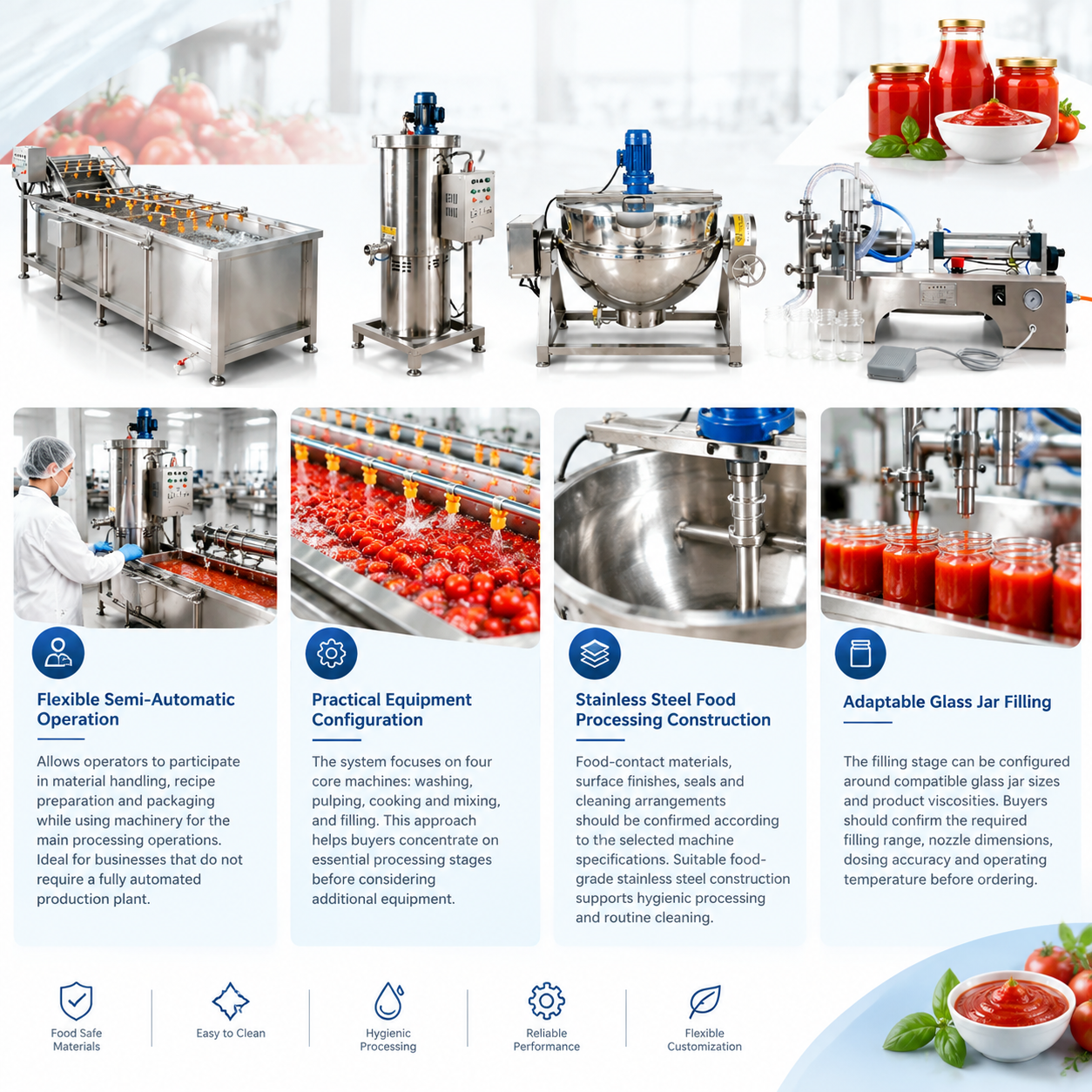
Washing: Removes soil and surface impurities from fresh tomatoes.
Pulping: Processes tomatoes into pulp for subsequent cooking and mixing.
Cooking and mixing: Uses a jacketed kettle to heat tomato pulp and blend ingredients according to the recipe.
Filling: Transfers suitable tomato sauce into glass jars using a semi-automatic filling machine.
These operations form the basic workflow of a Tomato Sauce Making Machine configuration. Additional equipment may be required for specialized formulations, concentration, validated thermal processing, bottle capping, or extended shelf-life requirements.
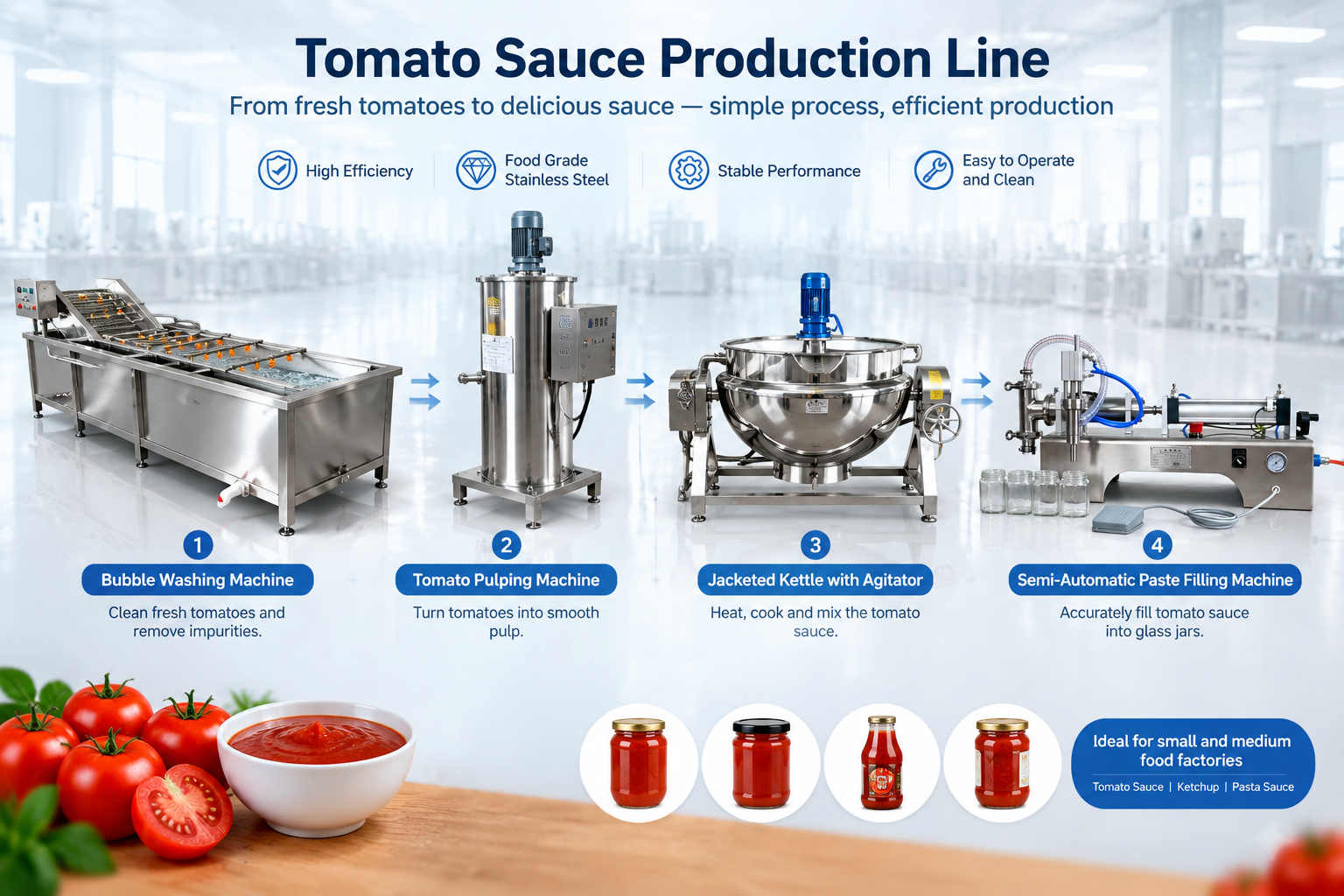
Key Equipment in Our Tomato Sauce Production Line
Our proposed Tomato Paste Processing Line configuration focuses on four core machines. Each machine performs a specific function, allowing buyers to evaluate the processing workflow without unnecessarily complicating the initial equipment setup.
1. Bubble Washing Machine
The Bubble Washing Machine cleans fresh tomatoes before further processing. Water circulation and bubbling help loosen surface dirt and impurities, preparing the raw materials for the next production stage.
This machine is suitable for food processing facilities that handle fresh tomatoes and other compatible fruits or vegetables.
2. Tomato Pulping Machine
The Tomato Pulping Machine processes prepared tomatoes into pulp for cooking and sauce preparation. The achievable pulp texture and the separation of skins or seeds depend on the machine structure, screen configuration, and processing characteristics.
For buyers evaluating a Tomato Sauce Making Machine, confirming the required pulp fineness is important before selecting the equipment.
3. Jacketed Kettle with Agitator
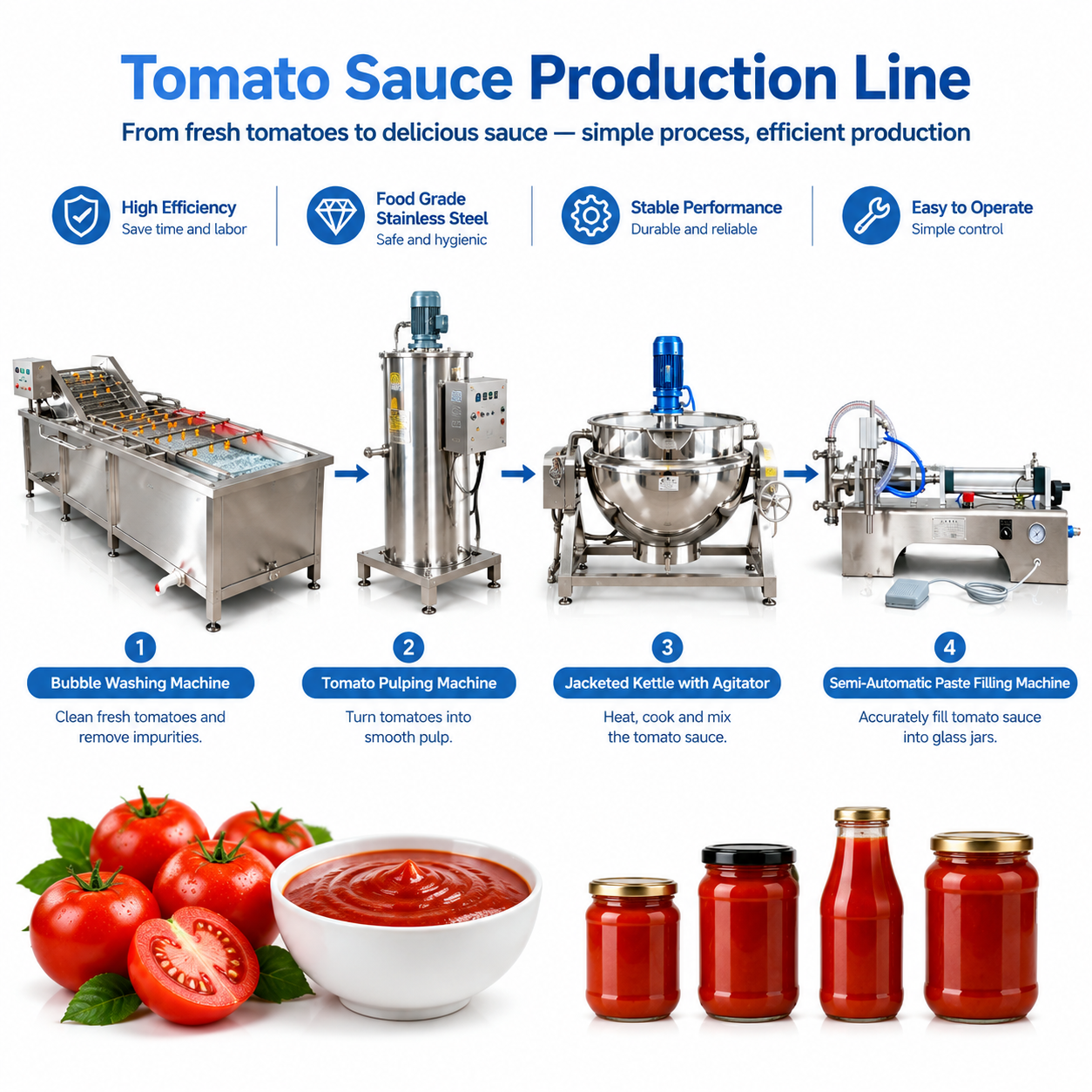
The Jacketed Kettle with Agitator is used for heating, cooking, and mixing tomato pulp with recipe ingredients. Its suitability depends on the heating configuration, working capacity, agitator design, and the viscosity of the product.
For commercial tomato sauce production, these parameters should be evaluated to determine whether the kettle can meet the required batch size and processing time.
4. Semi-Automatic Paste Filling Machine
The Semi-Automatic Paste Filling Machine is designed to dispense suitable viscous products into containers. It can be considered for glass jar packaging when the jar dimensions, filling volume, product viscosity, and operating temperature are compatible with the machine specifications.
For a Tomato Sauce Production Line with Glass Jar Filling Machine, the filling and capping processes should be evaluated separately because a filling machine does not automatically provide bottle sealing.
How Does a Tomato Sauce Production Line Work?
A well-organized workflow helps manufacturers understand how individual machines work together. Our proposed Tomato Sauce Production Line follows a straightforward sequence based on the four core machines.
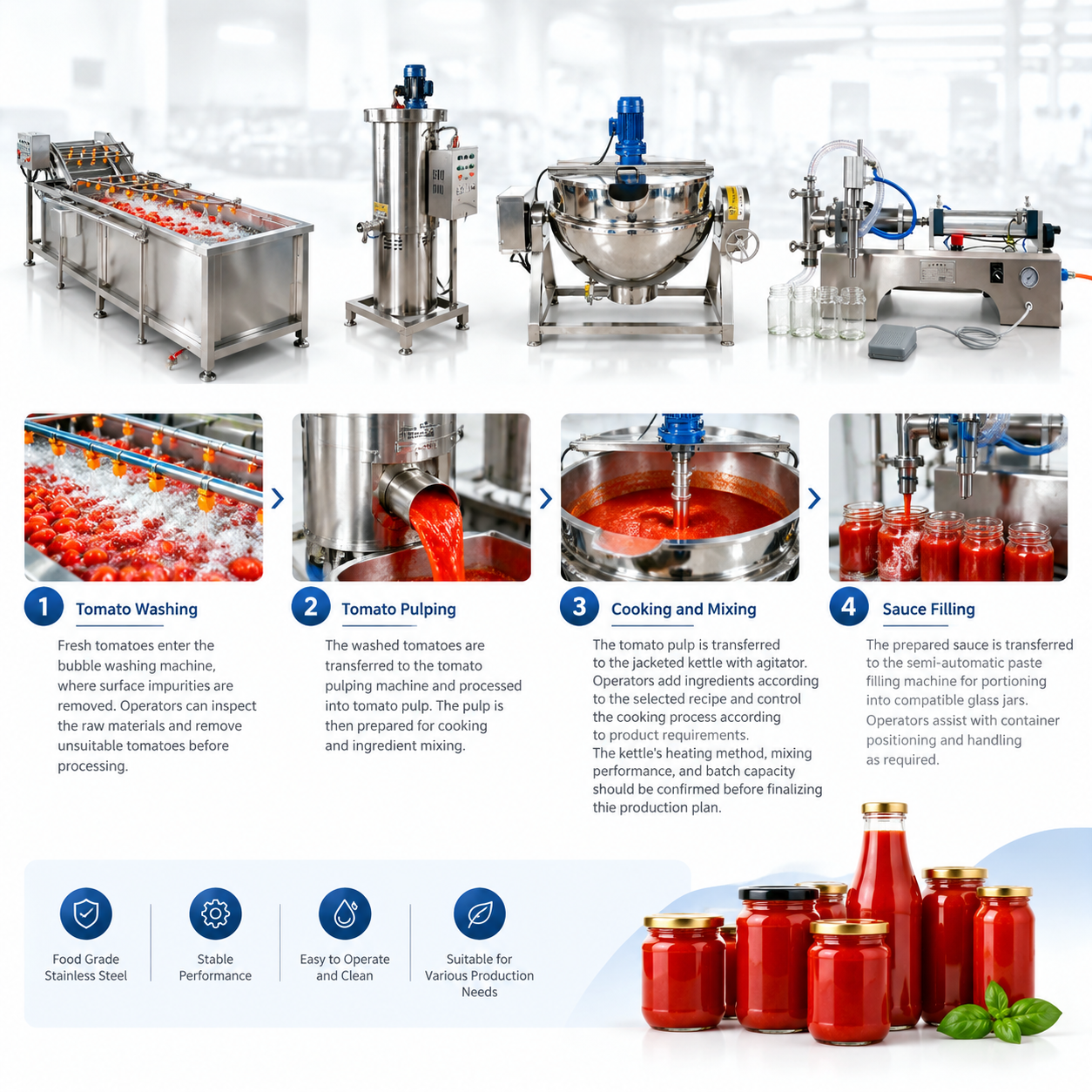
Step 1: Tomato Washing
Fresh tomatoes enter the Bubble Washing Machine, where surface impurities are removed. Operators can inspect the raw materials and remove unsuitable tomatoes before processing.
Step 2: Tomato Pulping
The washed tomatoes are transferred to the Tomato Pulping Machine and processed into tomato pulp. The pulp is then prepared for cooking and ingredient mixing.
Step 3: Cooking and Ingredient Mixing
The tomato pulp is transferred to the Jacketed Kettle with Agitator. Operators add ingredients according to the selected recipe and control the cooking process according to product requirements.
The kettle's heating method, mixing performance, and batch capacity should be confirmed before finalizing the production plan.
Step 4: Sauce Filling
The prepared sauce is transferred to the Semi-Automatic Paste Filling Machine for portioning into compatible glass jars. Operators assist with container positioning and handling as required.
Additional thermal processing, bottle capping, cooling, labeling, and packaging must be a
rranged according to the product's food safety plan and packaging requirements.
Advantages of Our Tomato Processing Equipment
Choosing suitable Tomato Processing Equipment can help food manufacturers organize production more effectively and adapt the setup to their business needs.
Flexible Semi-Automatic Operation
A Semi Automatic Tomato Sauce Production Line allows operators to participate in material handling, recipe preparation, and packaging while using machinery for the main processing operations. This configuration may be suitable for businesses that do not require a fully automated production plant.
Practical Equipment Configuration
The proposed system focuses on four core machines: washing, pulping, cooking and mixing, and filling. This approach helps buyers concentrate on essential processing stages before considering additional equipment.
Stainless Steel Food Processing Construction
Food-contact materials, surface finishes, seals, and cleaning arrangements should be confirmed according to the selected machine specifications. Suitable food-grade stainless steel construction can support hygienic processing and routine cleaning.
Adaptable Glass Jar Filling
The filling stage can be configured around compatible glass jar sizes and product viscosities. Buyers should confirm the required filling range, nozzle dimensions, dosing accuracy, and operating temperature before ordering.
Frequently Asked Questions About Tomato Sauce Production Equipment
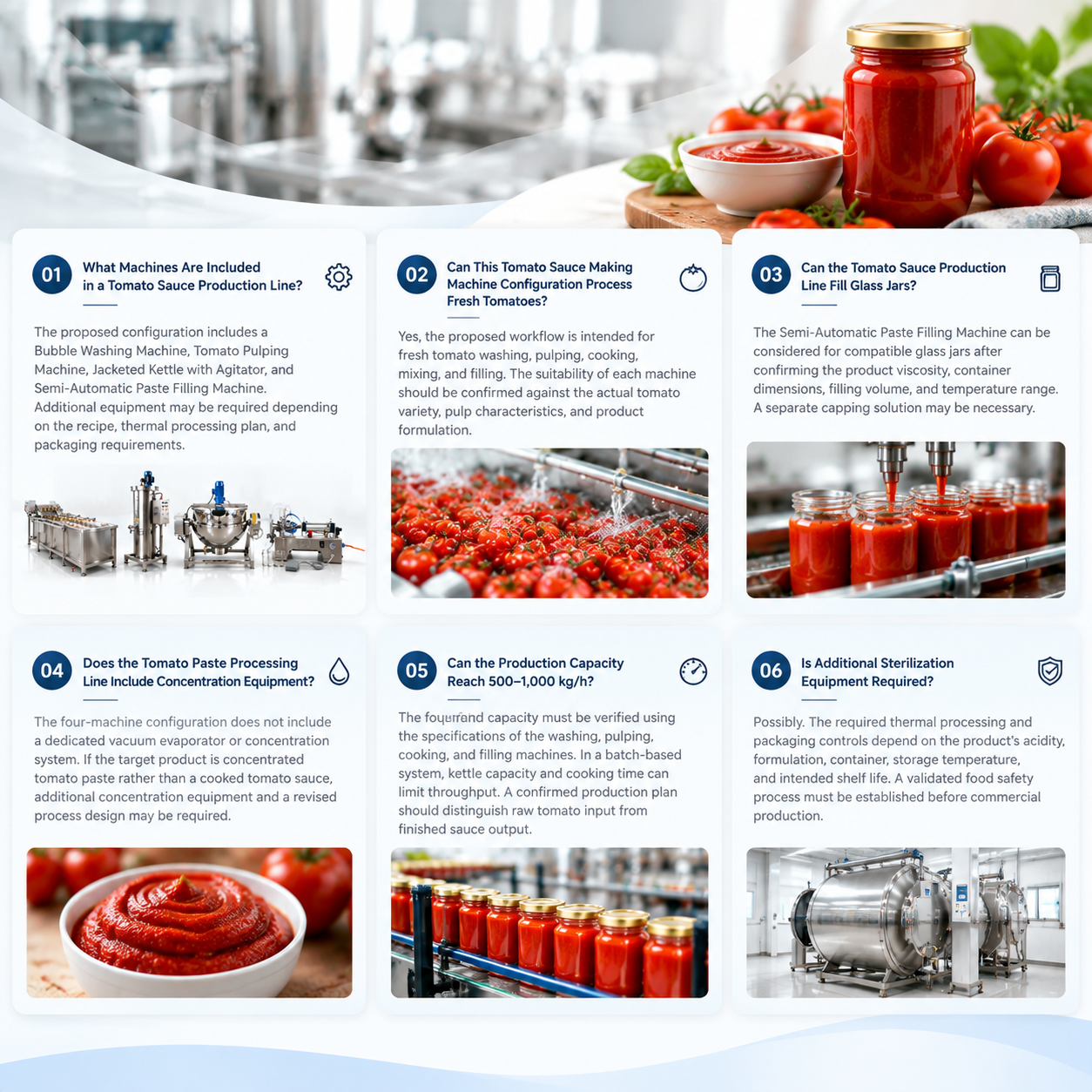
What Machines Are Included in a Tomato Sauce Production Line?
The proposed configuration includes a Bubble Washing Machine, Tomato Pulping Machine, Jacketed Kettle with Agitator, and Semi-Automatic Paste Filling Machine. Additional equipment may be required depending on the recipe, thermal processing plan, and packaging requirements.
Can This Tomato Sauce Making Machine Configuration Process Fresh Tomatoes?
Yes, the proposed workflow is intended for fresh tomato washing, pulping, cooking, mixing, and filling. The suitability of each machine should be confirmed against the actual tomato variety, pulp characteristics, and product formulation.
Can the Tomato Sauce Production Line Fill Glass Jars?
The Semi-Automatic Paste Filling Machine can be considered for compatible glass jars after confirming the product viscosity, container dimensions, filling volume, and temperature range. A separate capping solution may be necessary.
Does the Tomato Paste Processing Line Include Concentration Equipment?
The four-machine configuration does not include a dedicated vacuum evaporator or concentration system. If the target product is concentrated tomato paste rather than a cooked tomato sauce, additional concentration equipment and a revised process design may be required.
Can the Production Capacity Reach 500–1,000 kg/h?
The required capacity must be verified using the specifications of the washing, pulping, cooking, and filling machines. In a batch-based system, kettle capacity and cooking time can limit throughput. A confirmed production plan should distinguish raw tomato input from finished sauce output.
Is Additional Sterilization Equipment Required?
Possibly. The required thermal processing and packaging controls depend on the product's acidity, formulation, container, storage temperature, and intended shelf life. A validated food safety process must be established before commercial production.
Related Products
NEW▶ videoIndustrial Vegetable Brush Washing Machine for Automatic Root Vegetable Cleaning and Peeling NEW▶ videobottle washing machine
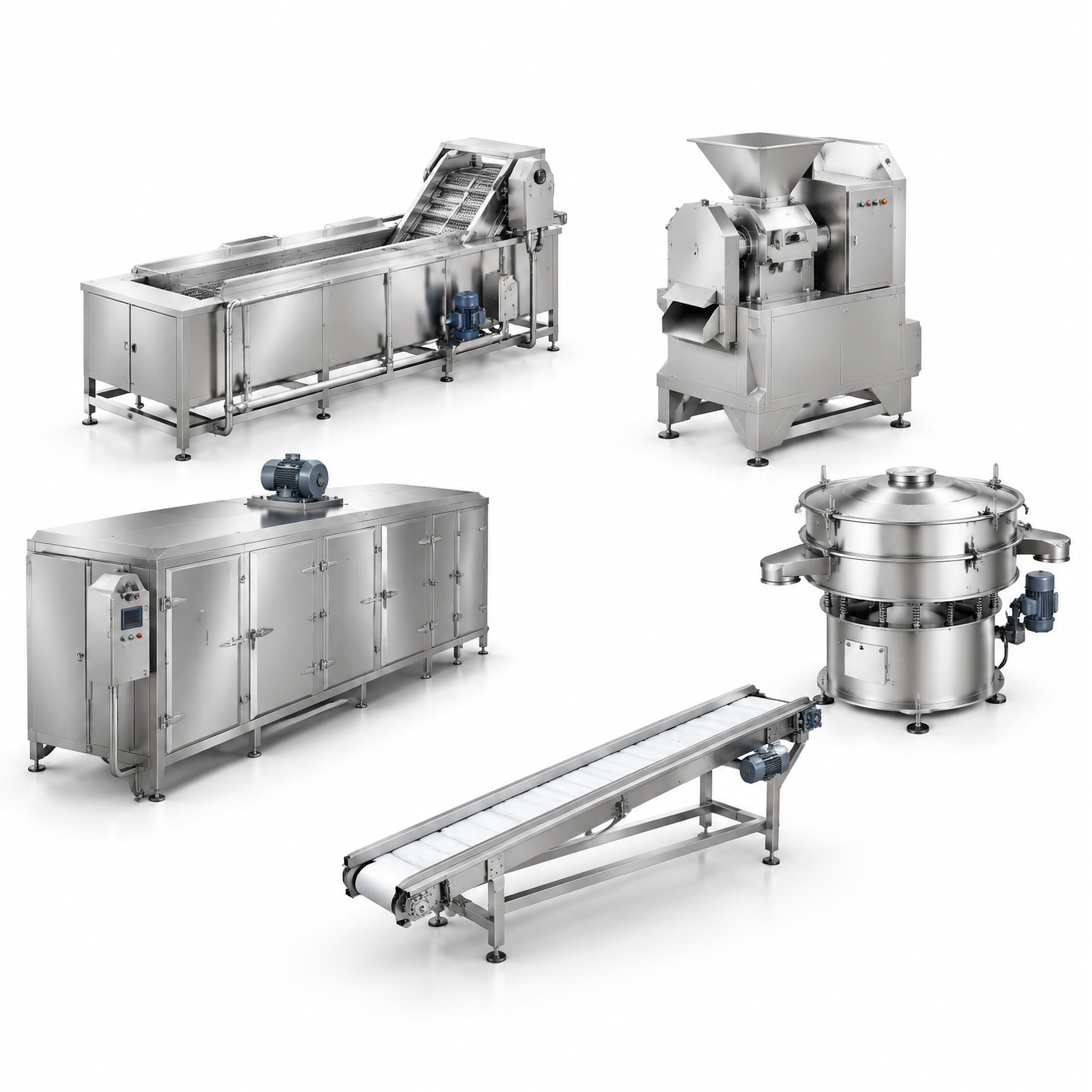 NEW▶ videoAutomatic Chili Pepper Slicing Line for Industrial Chili Shredding and Food Processing
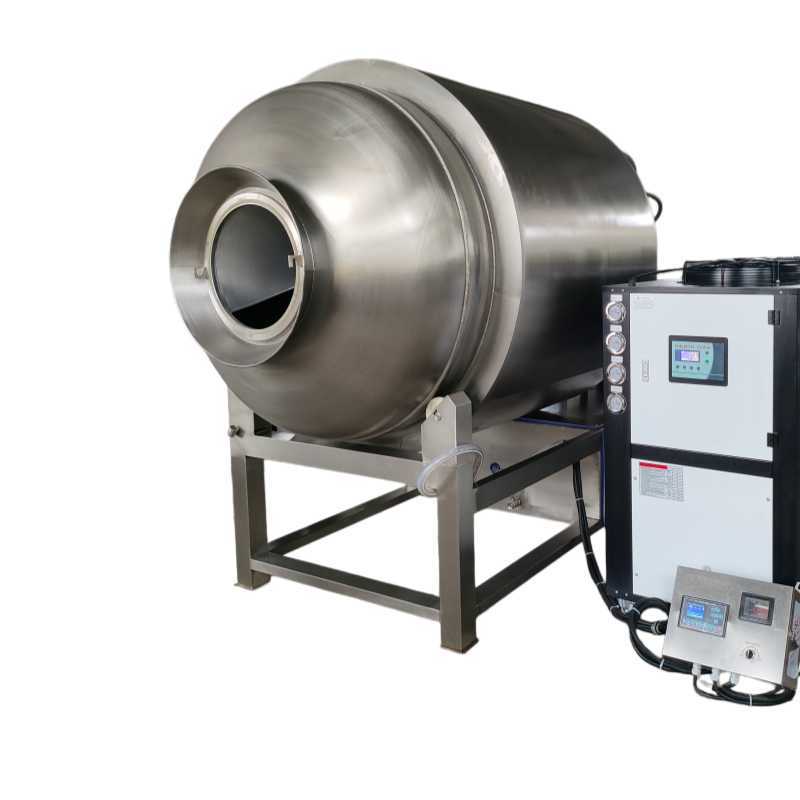 NEWVacuum Tumbler Machine
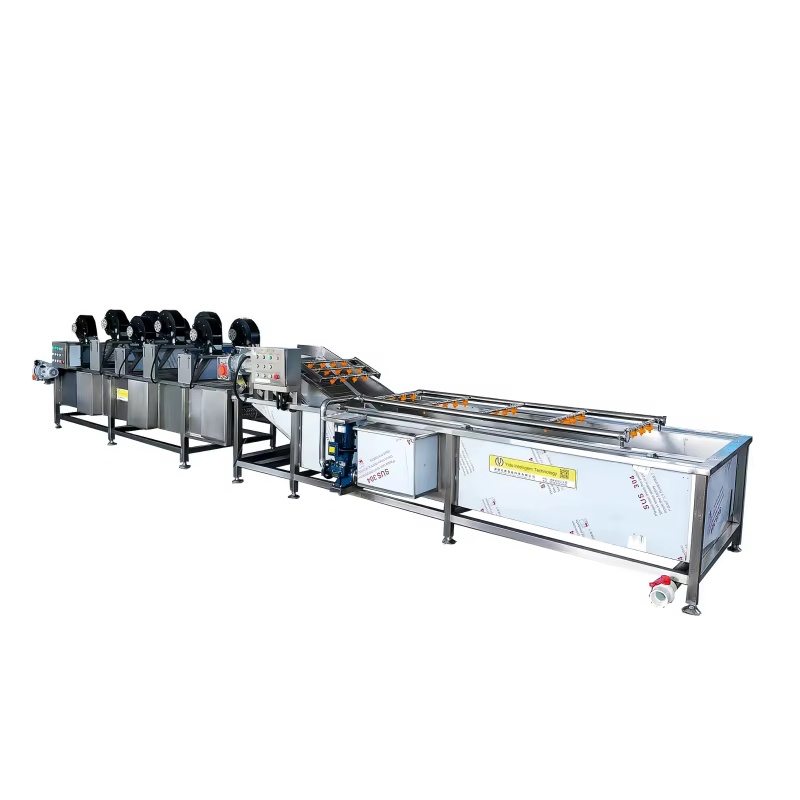 NEW▶ videoAutomatic Vegetable Processing Line for Fresh Cut Vegetables: Complete Vegetable Washing, Cutting and Packaging Solutions for Food Processing Factories
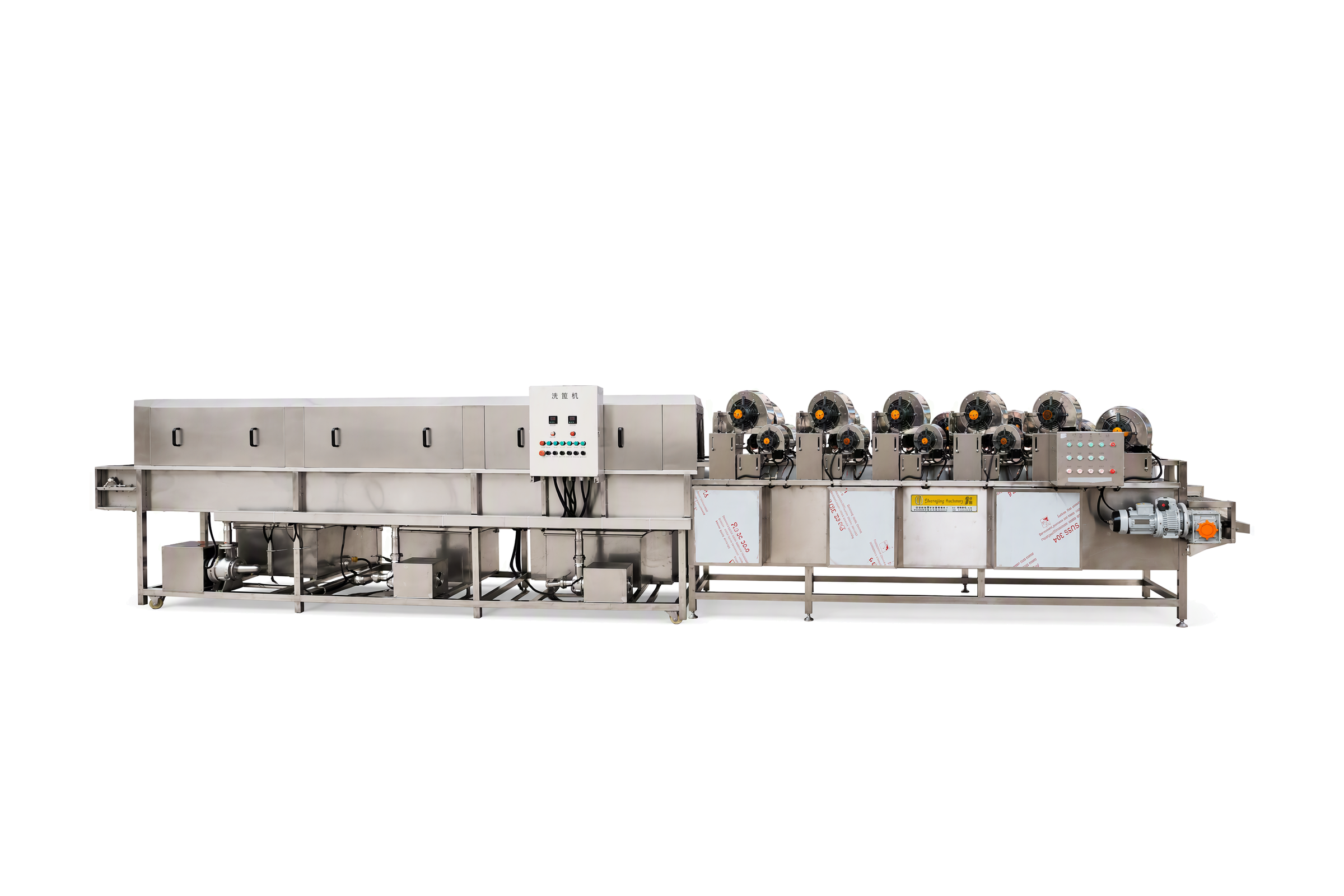 NEW▶ videoHigh Efficiency Automatic Plastic Crate Washing Line for Food Processing Plants