
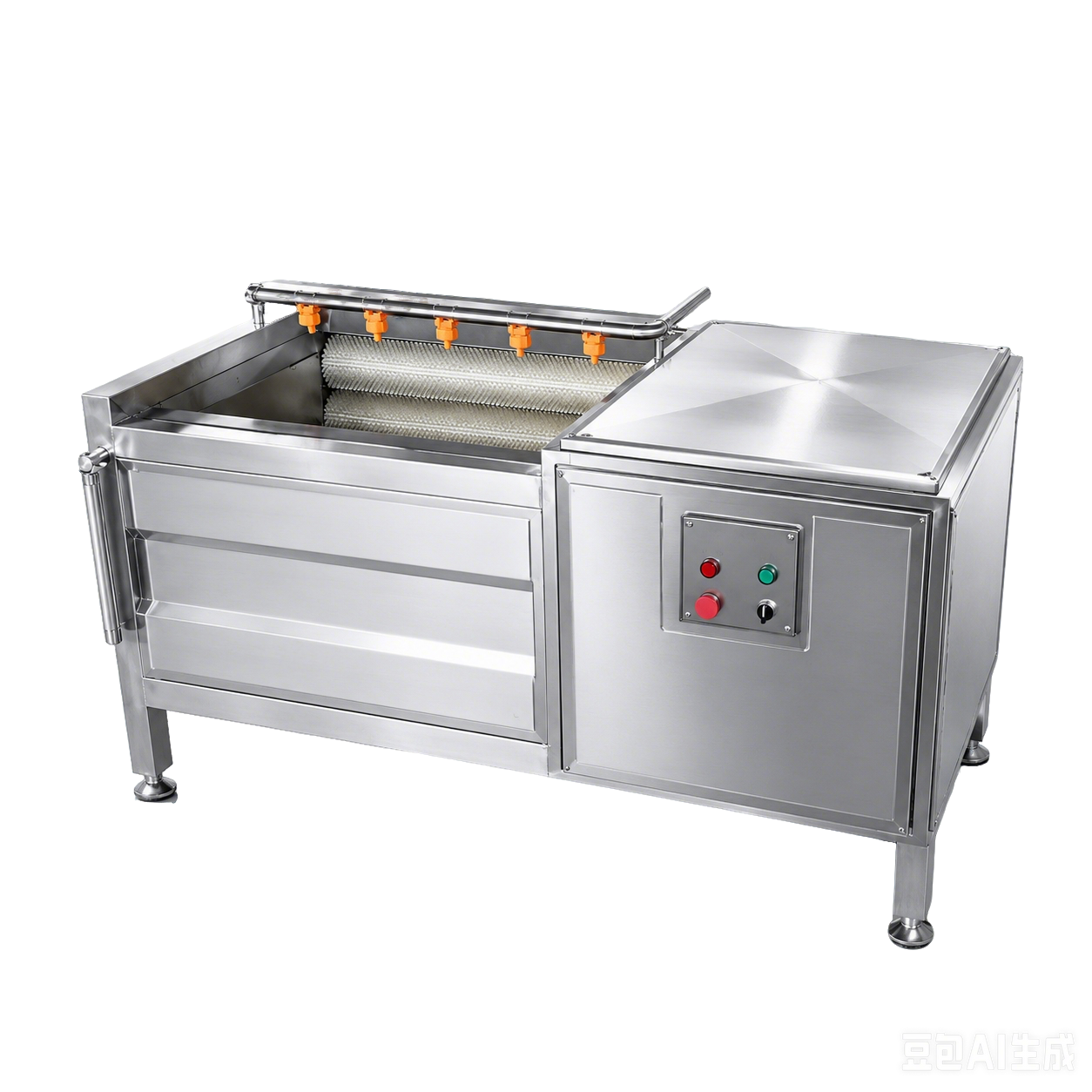
 NEW▶ videoIndustrial Vegetable Brush Washing Machine for Automatic Root Vegetable Cleaning and Peeling
Dried fruit and vegetable production line
Discover an automatic fruit and vegetable drying production line for apples, bananas, mangoes, carrots, onions, and other produce.
Brand: YIDO
Product Description
Automatic Fruit and Vegetable Drying Production Line
1. Product Overview
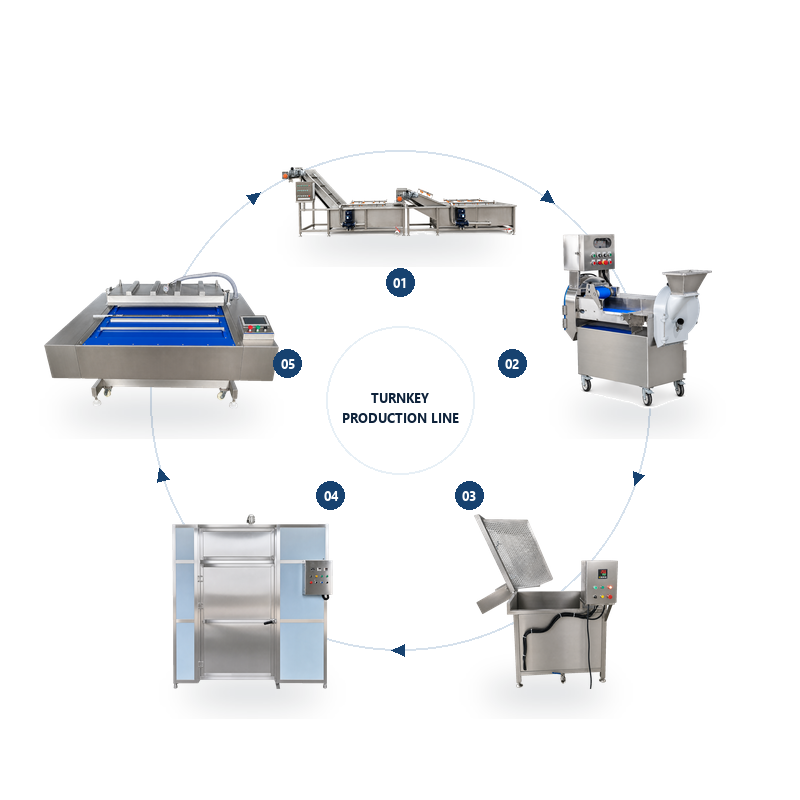
The automatic fruit and vegetable drying production line is a comprehensive food processing solution designed for fruit processing plants, vegetable processing factories, snack manufacturers, and agricultural product processors. Depending on the raw materials and finished product requirements, the production line can integrate fruit and vegetable washing machines, sorting equipment, cutting machines, blanching equipment, dewatering machines, industrial drying machines, cooling conveyors, and automatic packaging machines. This integrated configuration helps manufacturers improve processing efficiency, reduce manual handling, and achieve more consistent product quality.
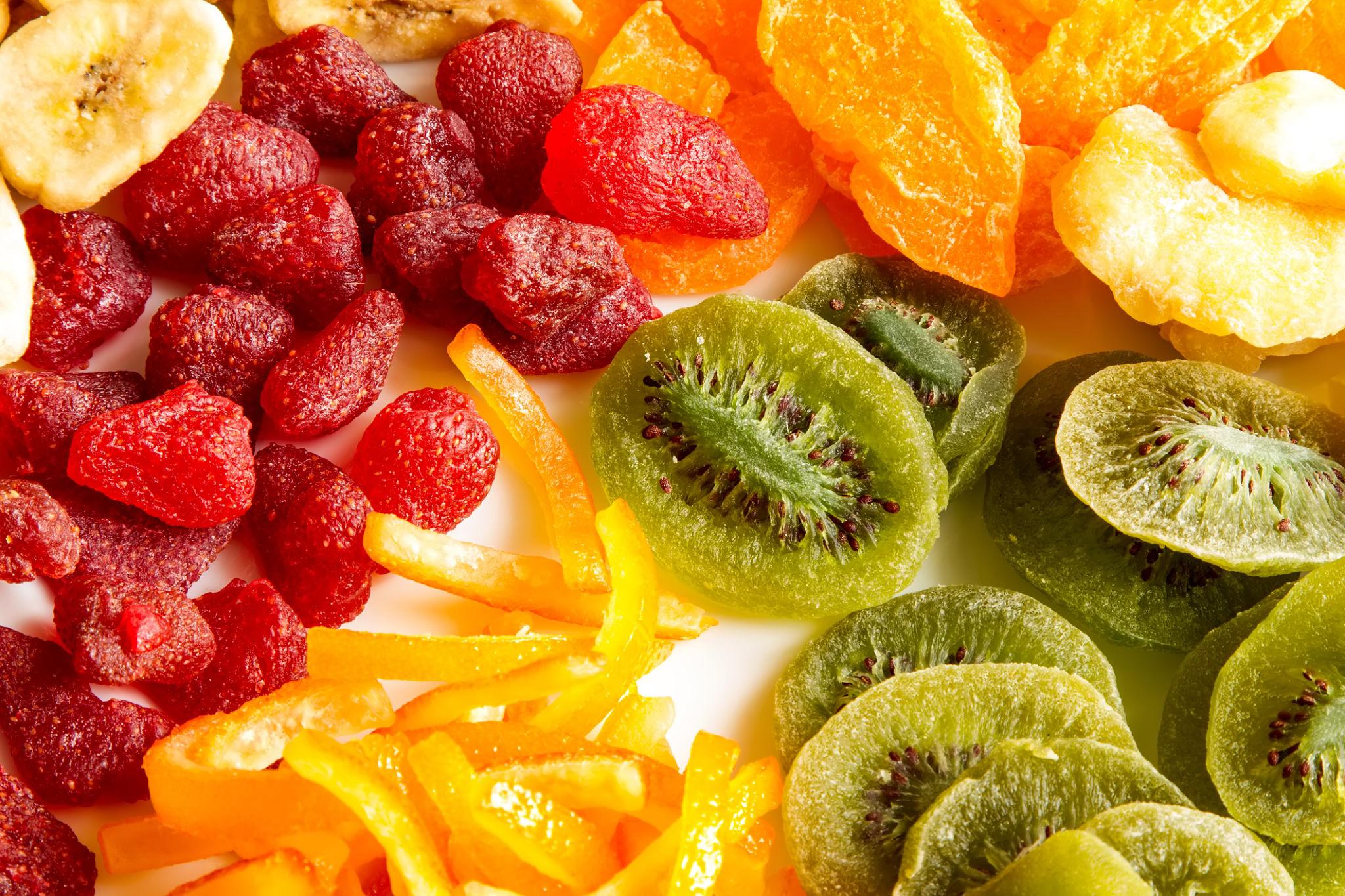
With the growing global demand for healthy snacks, natural ingredients, convenient foods, and shelf-stable products, food manufacturers are paying increasing attention to nutritional quality, texture, food safety, and production efficiency. Modern fruit and vegetable drying equipment can process apples, bananas, mangoes, strawberries, kiwis, pineapples, carrots, pumpkins, onions, and other suitable raw materials. Depending on the target market and product characteristics, manufacturers can select hot air drying, low-temperature drying, or other suitable dehydration technologies to produce dried fruit, dried vegetables, mixed fruit and vegetable snacks, and dehydrated food ingredients. The production line can be customized according to raw material characteristics, target capacity, final moisture content, processing requirements, and factory layout.
2. Fruit and Vegetable Drying Process
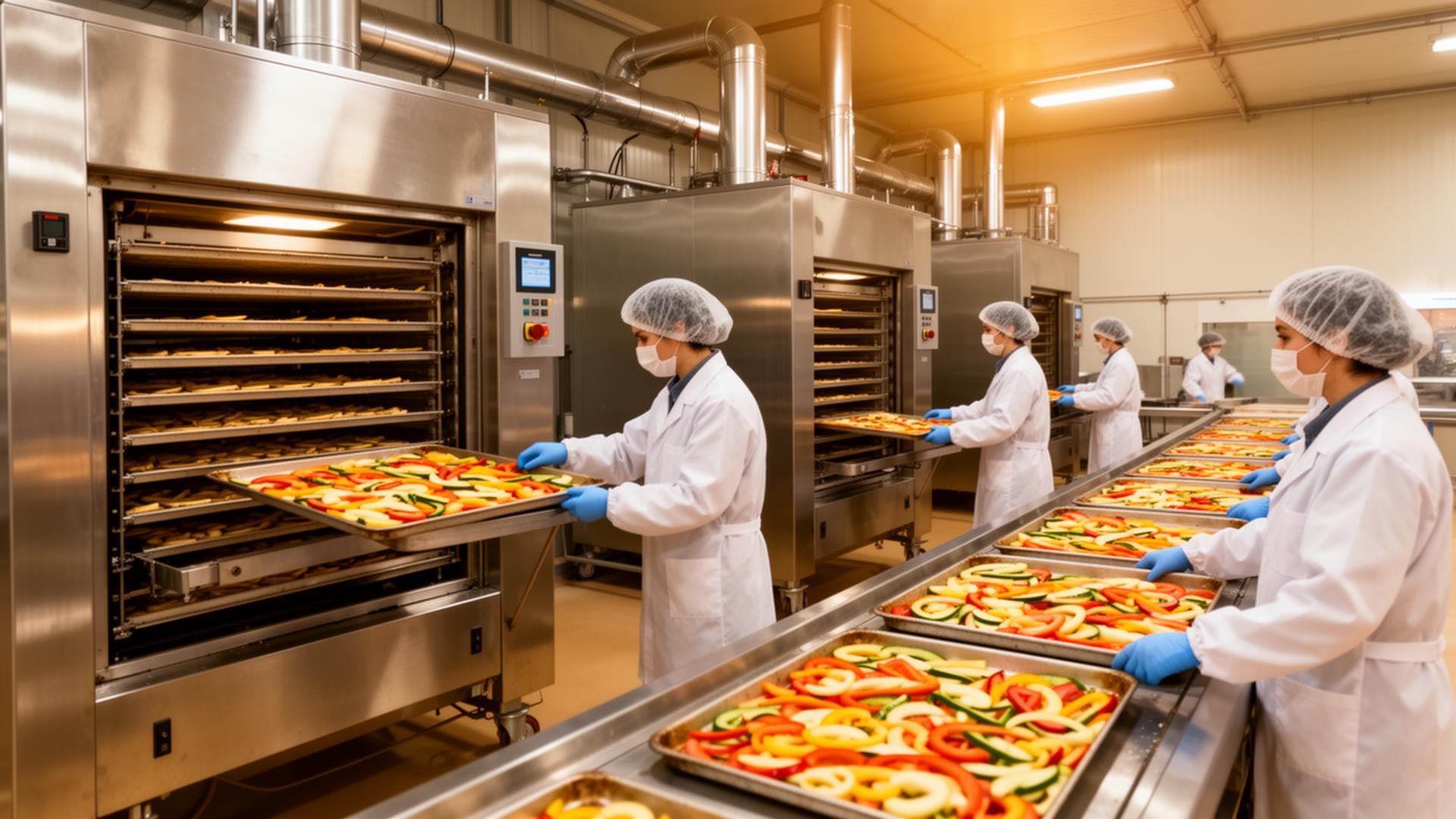
The fruit and vegetable drying process typically includes raw material inspection, washing, sorting, peeling, cutting, pretreatment, dewatering, drying, cooling, inspection, and packaging. First, fresh fruits and vegetables are washed to remove soil, impurities, and surface contaminants before being sorted according to quality requirements. The raw materials are then peeled, cored, sliced, or diced according to the desired product specifications. Some fruits and vegetables require blanching, color protection, or other pretreatment methods to improve processing stability and finished product quality.
After pretreatment, the prepared materials enter the dewatering and drying stages. Controlled temperature, airflow, and drying time help reduce moisture content to the required level. After drying, the products are cooled under suitable conditions, inspected, and transferred to the packaging section. The final process can be adjusted according to the raw material, drying technology, and product specifications.
Typical Processing Flow:
Fresh Fruits and Vegetables → Washing → Sorting → Peeling and Cutting → Pretreatment → Dewatering → Drying → Cooling → Quality Inspection → Packaging
Different raw materials require different processing parameters. For example, apple slices, banana chips, and dried carrots may require different cutting thicknesses, pretreatment methods, and drying conditions.
3. Main Equipment
1. Fruit and Vegetable Washing Machine
The fruit and vegetable washing machine removes soil, impurities, and surface contaminants from fresh produce before further processing. Depending on the raw material, the washing system can use bubble washing, spray washing, or other suitable cleaning methods. Effective washing helps improve raw material cleanliness and supports hygienic food processing operations.
2. Fruit and Vegetable Cutting Machine
The cutting machine processes fruits and vegetables into slices, strips, cubes, or other required shapes. Consistent cutting dimensions help improve drying uniformity and finished product appearance. Different cutting configurations can be selected according to the raw materials and the specifications of the final products.
3. Blanching and Pretreatment Equipment
Blanching and pretreatment equipment is used for fruits and vegetables that require heat treatment or other preparation processes before drying. Suitable pretreatment can help control certain enzyme-related changes and improve processing performance. Whether blanching is necessary depends on the raw material, drying method, and desired finished product characteristics.
4. Fruit and Vegetable Drying Machine
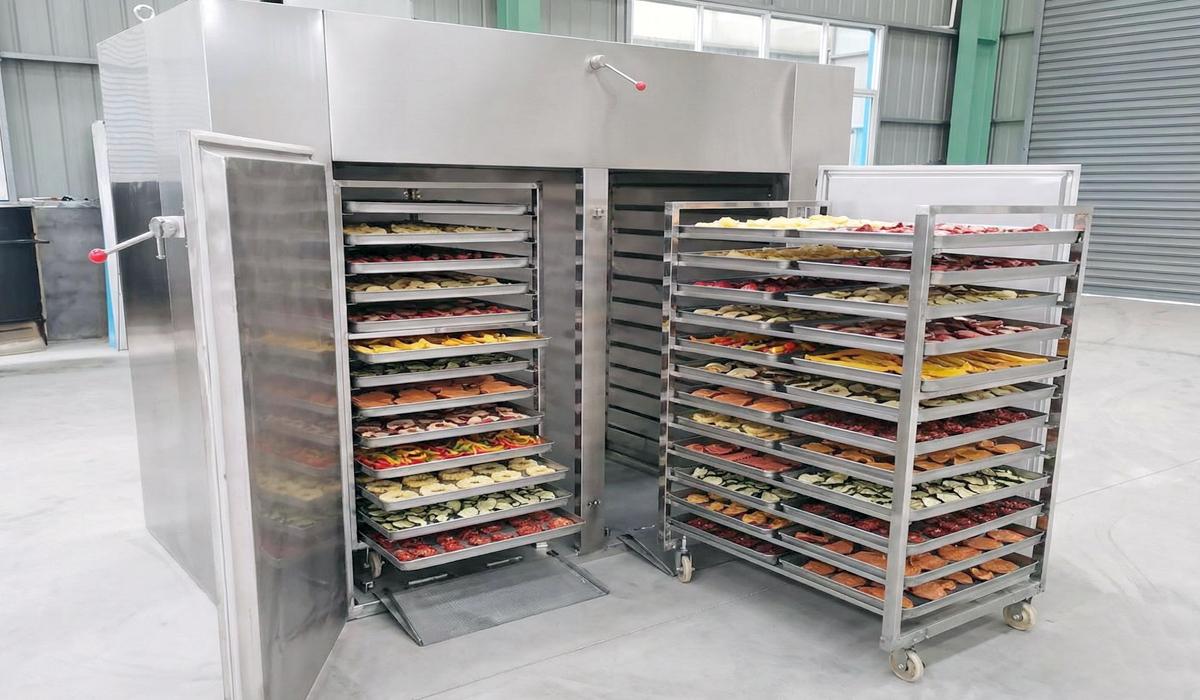
The industrial drying machine reduces the moisture content of prepared fruits and vegetables through controlled temperature, airflow, and drying time. Hot air drying is commonly used for commercial dehydration, while low-temperature drying and other technologies may be appropriate for products requiring specific texture, color, or quality characteristics. Equipment selection depends on production capacity, energy consumption, product quality requirements, and investment budget.
5. Cooling Conveyor
The cooling conveyor transports and cools dried fruits and vegetables before packaging. Proper cooling helps bring products to a suitable packaging temperature and reduces the risk of condensation caused by temperature differences. Suitable cooling and handling procedures also help protect finished product quality.
6. Automatic Packaging Machine
The automatic packaging machine is used to weigh and package dried fruits, dried vegetables, and mixed dehydrated products. Packaging equipment can be selected according to product size, texture, moisture content, packaging format, and target shelf life. Depending on the product, suitable packaging solutions may include sealed pouches, moisture-resistant packaging, or other food-grade packaging formats.
4. Production Capacity
The fruit and vegetable drying production line is suitable for small agricultural processing workshops, medium-sized food factories, and large industrial manufacturers. Small businesses can choose batch-processing equipment for washing, cutting, and drying, while larger manufacturers may integrate automatic sorting, continuous conveying, centralized drying, and automatic packaging systems to improve overall production efficiency.
Actual production capacity depends on fresh raw material input, initial moisture content, target final moisture content, cutting thickness, drying time, equipment loading method, and operating hours. Fresh material input should not be confused with finished dried product output because different fruits and vegetables have different moisture contents and drying shrinkage rates.
To determine the appropriate production capacity, manufacturers should provide the raw material type, required hourly input, target daily output, final product specifications, and expected working hours. These details help determine a suitable equipment configuration and optimize the overall production process.
5. Applicable Raw Materials
The production line can process a wide variety of fruits and vegetables according to the selected equipment and processing technology.
Fruits:
Apples
Bananas
Mangoes
Pineapples
Strawberries
Kiwis
Pears
Peaches
Other suitable fruits
Root Vegetables:
Carrots
Potatoes
Sweet potatoes
Beetroots
Other suitable root vegetables
Other Vegetables:
Spinach
Cabbage
Onions
Peppers
Pumpkins
Other compatible vegetables
Mixed Fruit and Vegetable Products:
The production line can also be configured to manufacture mixed dried fruit snacks, dehydrated vegetable ingredients, and blended ingredients for food manufacturing.
Different raw materials require different washing, cutting, pretreatment, drying temperature, and drying time settings. Before purchasing equipment, manufacturers should confirm the raw material variety, maturity, initial moisture content, cutting dimensions, and target finished product characteristics.
6. Final Products
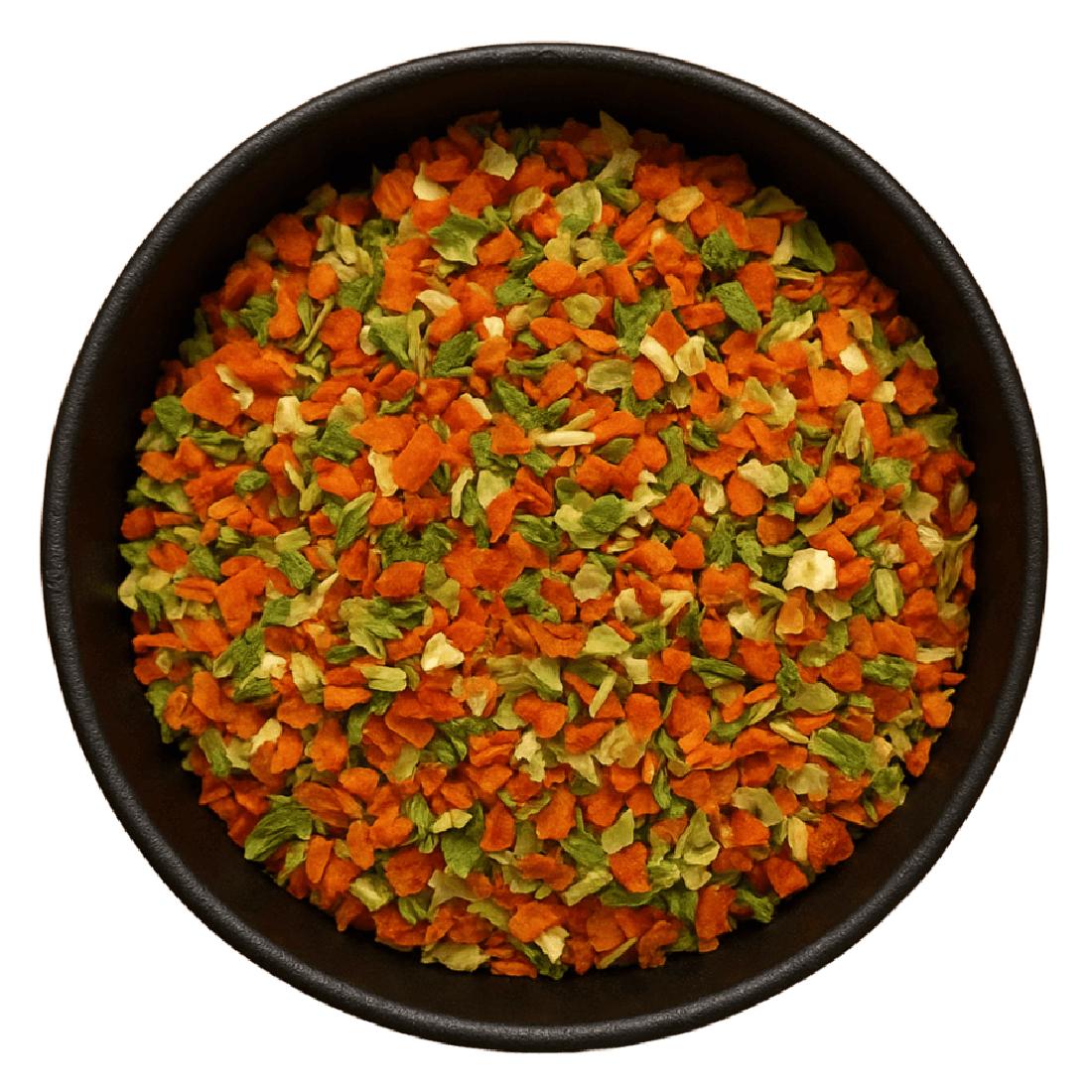
The automatic fruit and vegetable drying production line can manufacture a wide range of dehydrated products, including dried apple slices, banana chips, dried mangoes, dried pineapples, dried strawberries, dried kiwis, dried carrots, dried onions, dehydrated spinach, and mixed fruit and vegetable products.
Depending on the raw material, cutting method, and drying technology, finished products can have different textures, including soft, chewy, crisp, or other product-specific characteristics. Processing parameters can be adjusted to meet different market preferences and product requirements.
The finished products can be used in healthy snacks, breakfast cereals, bakery products, instant foods, soup mixes, seasonings, and other food applications. By controlling raw material quality, cutting dimensions, drying parameters, and packaging conditions, manufacturers can develop products with different flavors, specifications, and applications for retail, foodservice, and industrial ingredient markets.
7. Key Advantages
The modern fruit and vegetable drying production line combines washing, cutting, pretreatment, drying, and packaging equipment to improve processing efficiency and product consistency. Automated conveying and continuous processing can reduce manual handling and repetitive operations. Standardized cutting and controlled drying conditions help manufacturers achieve more consistent product dimensions, color, and moisture content.
Appropriate drying technology reduces moisture content and supports convenient storage and transportation. Manufacturers can choose hot air drying, low-temperature drying, or other suitable dehydration technologies according to product positioning and quality requirements. The effects of drying on color, aroma, texture, and nutritional components depend on temperature, processing time, oxygen exposure, and pretreatment methods. Actual product quality should be verified through processing trials.
Modular equipment configuration allows manufacturers to select a production solution according to investment budget, factory space, and target capacity. Combined with standardized cleaning procedures, batch management, suitable packaging, and controlled storage conditions, the production line can support a more consistent manufacturing system. Flexible equipment combinations also help businesses expand production capacity and introduce new products as market demand changes.
8. Applications
The fruit and vegetable drying production line is suitable for a wide range of food processing industries.
Fruit and Vegetable Processing Plants: Processing fresh fruits and vegetables into dehydrated products.
Healthy Snack Manufacturers: Producing fruit chips, vegetable snacks, and mixed dried fruit products.
Agricultural Product Processors: Improving the utilization of seasonal produce and developing value-added products.
Food Ingredient Suppliers: Manufacturing dehydrated ingredients for soups, seasonings, instant foods, and composite food products.
Bakery and Breakfast Food Manufacturers: Supplying dried fruit ingredients for cereals, baked goods, and snack formulations.
Food Export Companies: Developing processing and packaging solutions according to target market requirements.

9. Frequently Asked Questions
Q1: What products can a fruit and vegetable drying production line produce?
A: It can process apples, bananas, mangoes, pineapples, strawberries, carrots, onions, spinach, and other suitable fruits and vegetables. The final product range depends on the equipment configuration and drying technology.
Q2: Can the production line be customized?
A: Yes. The line can be customized according to raw materials, target production capacity, cutting specifications, drying requirements, factory layout, and packaging needs.
Q3: Which drying method is suitable for fruit and vegetable products?
A: Hot air drying is commonly used for commercial dehydration. Low-temperature drying and other technologies may be suitable for specific products. The most appropriate option depends on the desired texture, color, flavor, quality requirements, energy consumption, and investment budget.
Q4: Does every fruit or vegetable need blanching before drying?
A: No. Pretreatment requirements vary by raw material and product type. Some vegetables benefit from blanching, while many fruits require different preparation methods. The process should be selected according to the characteristics of the raw material and the desired finished product.
Q5: How can I choose the right production capacity?
A: Production capacity depends on fresh raw material input, initial moisture content, target final moisture content, drying time, product dimensions, and daily operating hours. Providing these details helps determine the appropriate equipment configuration.
Q6: Can automatic packaging equipment be included?
A: Yes. Automatic weighing and packaging equipment can be integrated according to product size, production speed, packaging format, and storage requirements.
Q7: How can the shelf life of dried fruits and vegetables be improved?
A: Shelf life depends on final moisture content, water activity, hygiene conditions, packaging barrier properties, seal quality, and storage conditions. Appropriate drying, moisture-resistant packaging, and suitable storage management are essential.
Related Products
NEW▶ videoIndustrial Vegetable Brush Washing Machine for Automatic Root Vegetable Cleaning and Peeling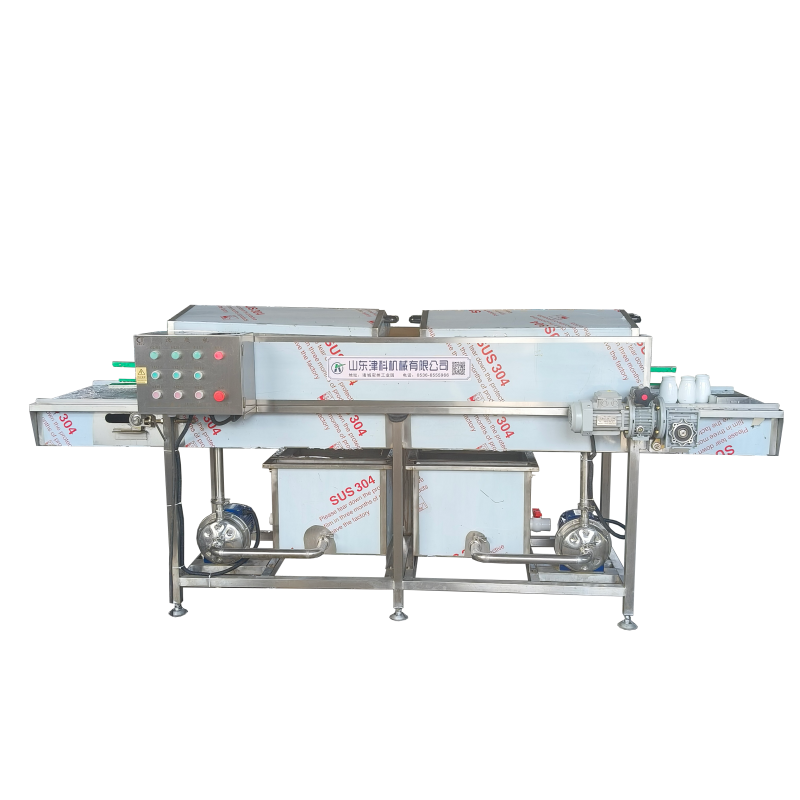 NEW▶ videobottle washing machine
 NEW▶ videoAutomatic Chili Pepper Slicing Line for Industrial Chili Shredding and Food Processing
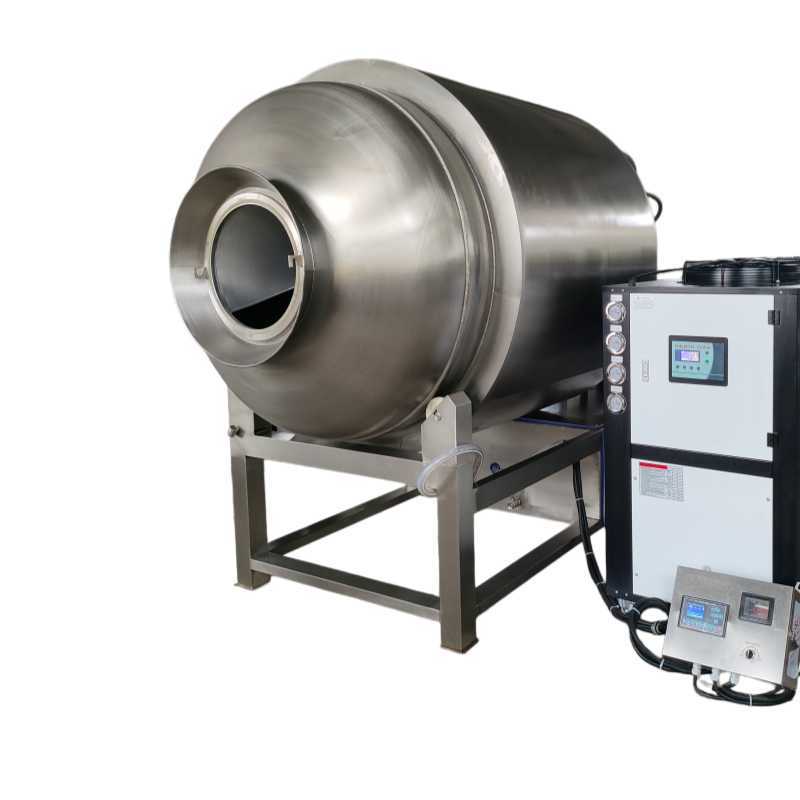 NEWVacuum Tumbler Machine
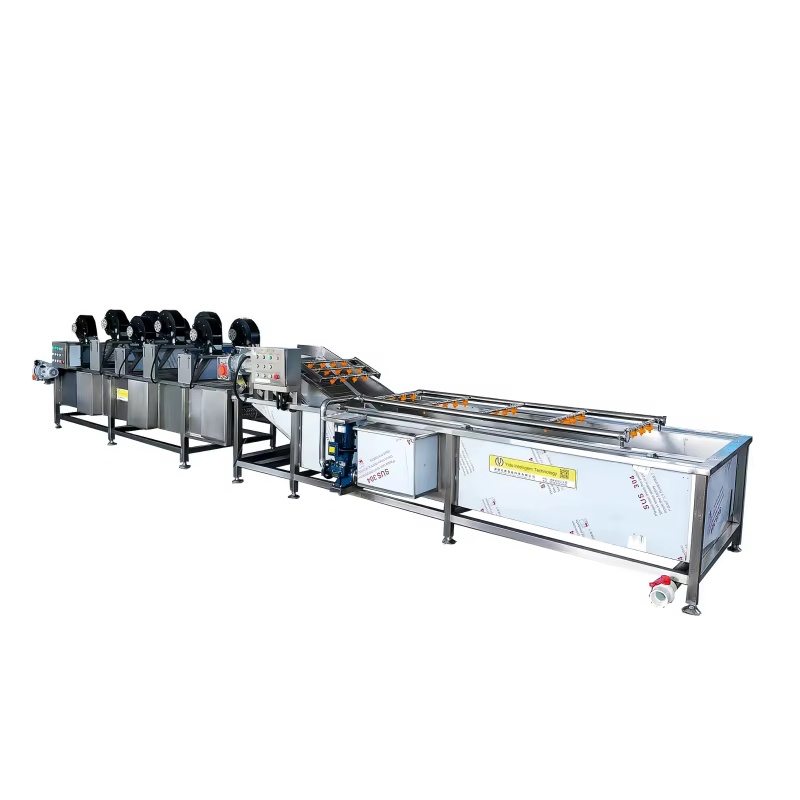 NEW▶ videoAutomatic Vegetable Processing Line for Fresh Cut Vegetables: Complete Vegetable Washing, Cutting and Packaging Solutions for Food Processing Factories
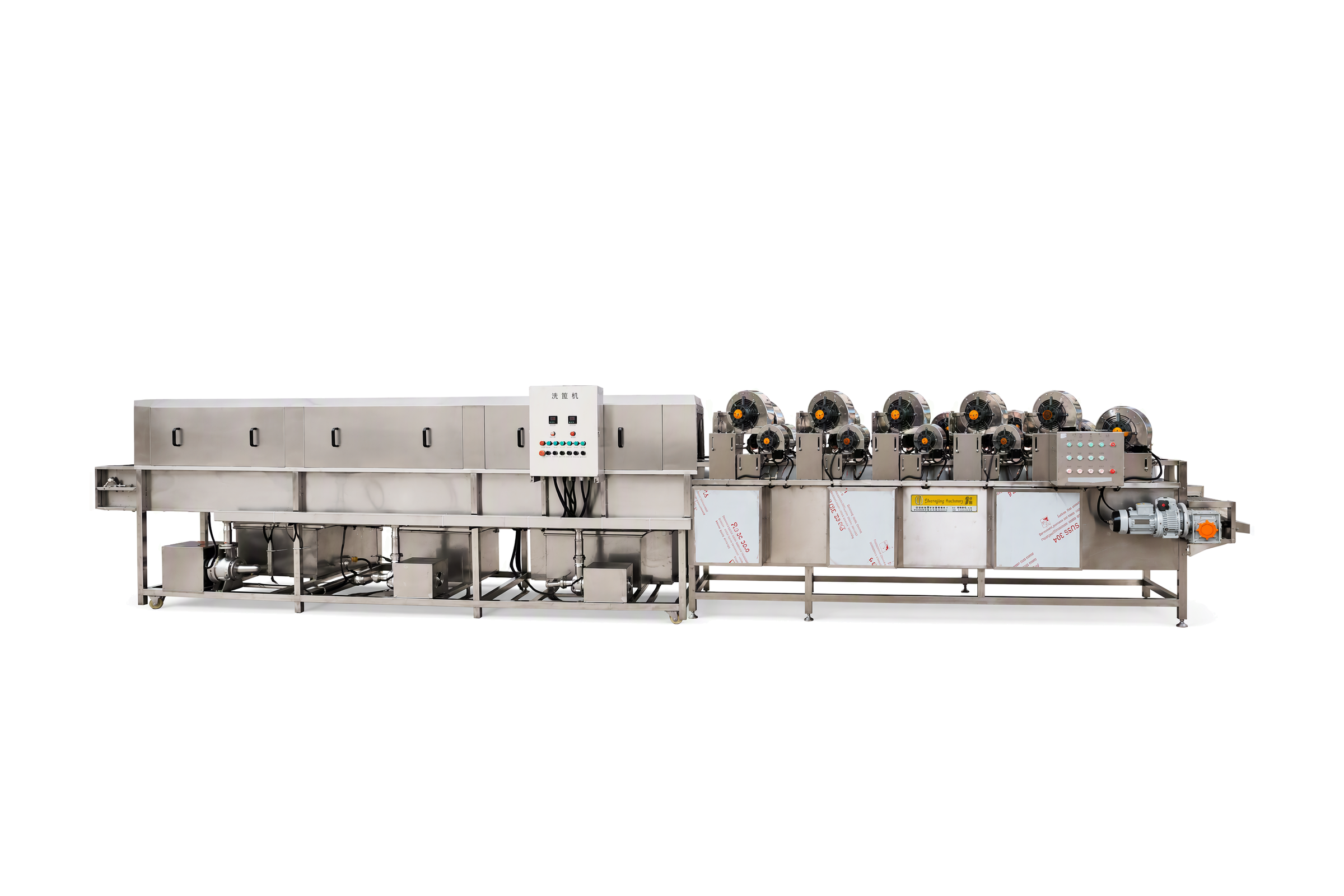 NEW▶ videoHigh Efficiency Automatic Plastic Crate Washing Line for Food Processing Plants