
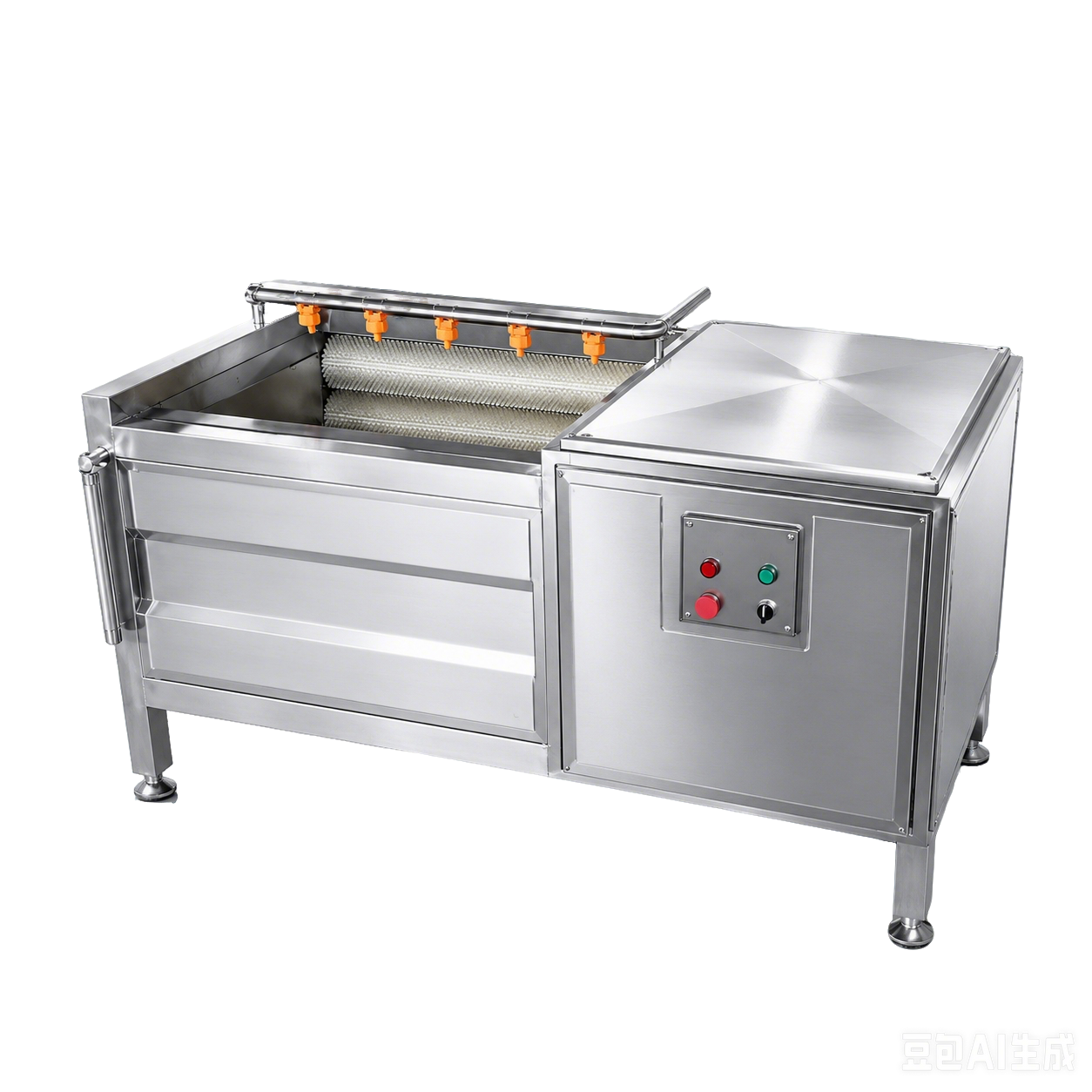
 NEW▶ videoIndustrial Vegetable Brush Washing Machine for Automatic Root Vegetable Cleaning and Peeling
bottle washing machine
Brand: YIDO
Product Description
Automatic Bottle Washing Machine | Industrial Bottle Cleaning Equipment
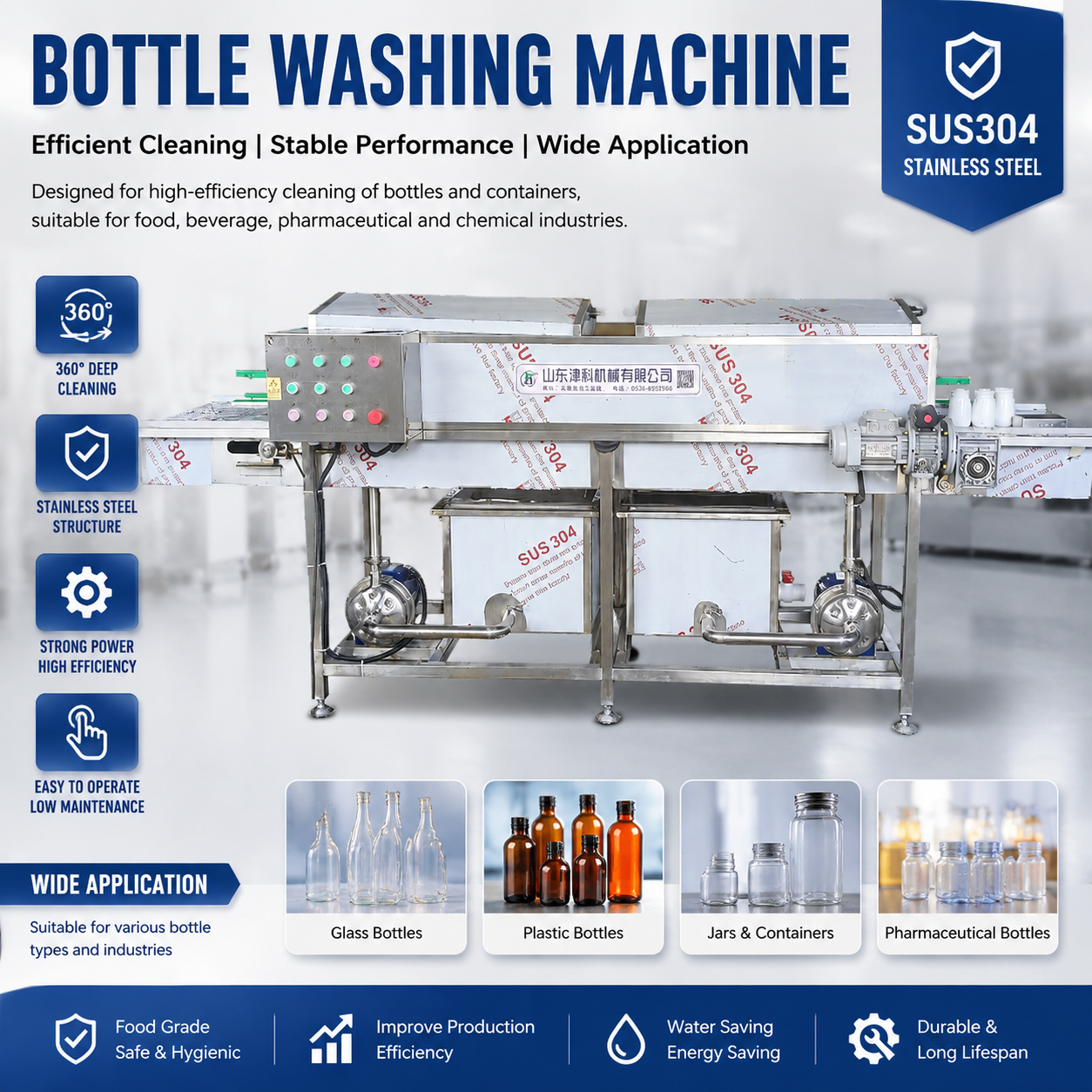
1. Bottle Washing Machine Overview
The automatic bottle washing machine is a professional cleaning solution widely used in the food, beverage, dairy, pharmaceutical, and packaging industries. It is designed to clean the internal and external surfaces of glass bottles, plastic bottles, and other compatible containers. Using high-pressure spraying, circulating water rinsing, soaking, or multi-stage washing processes, the machine helps remove dust, product residues, and other surface contaminants before filling, capping, and packaging. Different washing structures and automation configurations can be selected according to bottle type, material, contamination level, and production requirements.
With the continuous growth of the global beverage, bottled water, juice, dairy, condiment, and prepared food markets, manufacturers are placing greater emphasis on container cleanliness, production efficiency, and hygiene management. An automatic bottle washing machine helps reduce manual cleaning operations, improve washing consistency, and optimize the production process. It can be connected to automatic filling machines, capping machines, labeling machines, and conveyor systems to create a complete bottle production line. Equipment specifications can be customized according to bottle dimensions, shapes, materials, washing methods, and target production capacity.
2. Bottle Washing Process
The automatic bottle washing process generally includes bottle feeding, positioning, pre-rinsing, main washing, final rinsing, draining, and discharge. First, empty bottles enter the machine through a conveyor system and are positioned or held securely according to the machine design. The spray system then rinses the internal and external surfaces to remove loose dust and residues. Depending on the equipment configuration, bottles may undergo soaking, circulating water washing, or multiple spray-cleaning stages for more thorough treatment. After the main washing process, clean rinsing water is used for final rinsing. The bottles then pass through a draining or air-drying section before being transferred to filling, capping, or other packaging equipment.
Typical Processing Flow:
Empty Bottle Feeding → Bottle Positioning → Pre-Rinsing → Main Washing → Fresh Water Rinsing → Draining or Air Drying → Automatic Discharge → Filling and Packaging
The actual washing process can be adjusted according to bottle material, shape, contamination level, and hygiene requirements. Reusable glass bottles may require additional soaking, washing, and disinfection procedures depending on the intended application.
3. Main Equipment Components
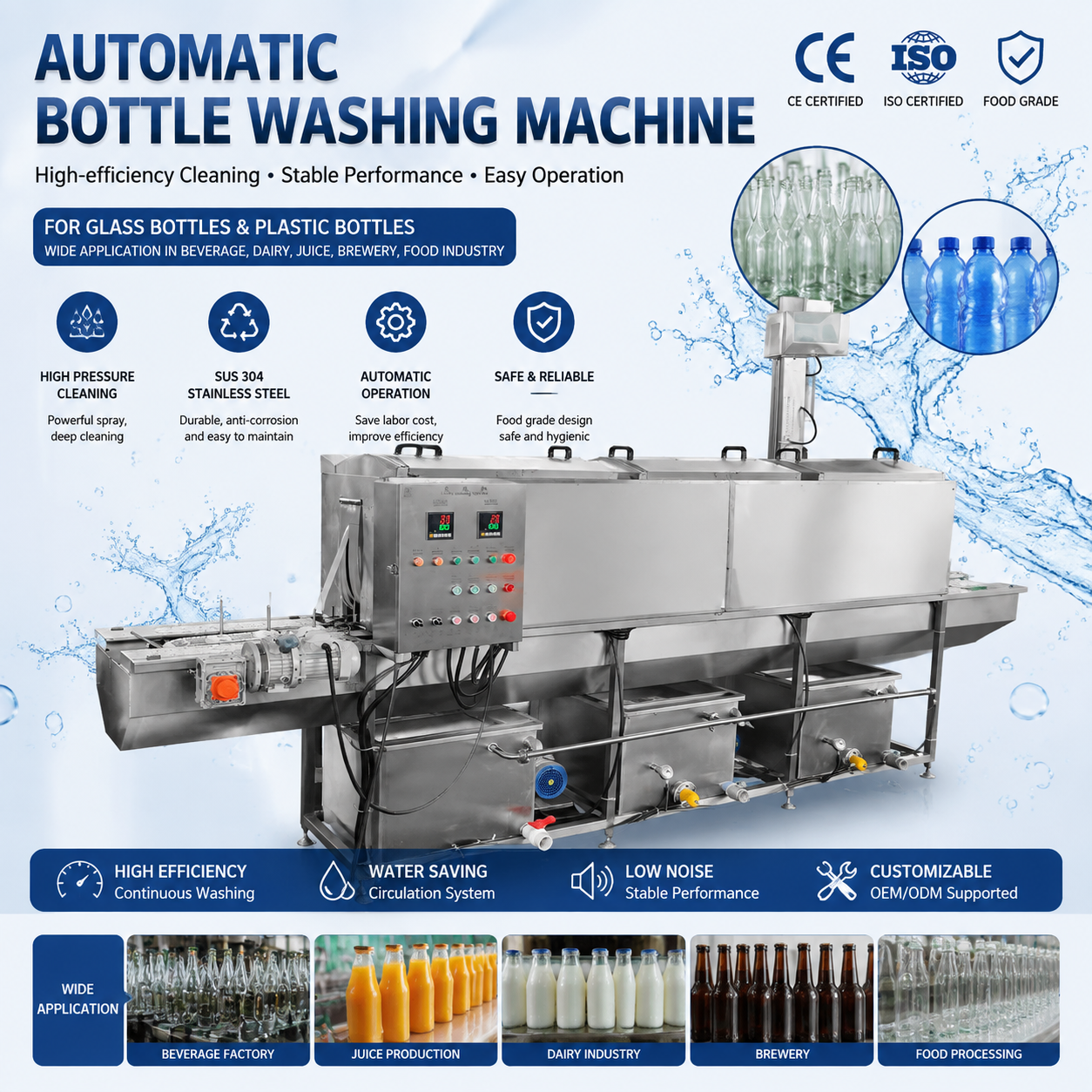
1. Bottle Conveyor System
The bottle conveyor system transports empty bottles into the washing area and transfers cleaned bottles to subsequent processing equipment. Conveyor speed can be adjusted according to the production cycle, helping reduce manual handling and maintain continuous operation. Conveyor width and structure can be customized according to bottle dimensions and required production capacity.
2. Bottle Positioning System
The bottle positioning system holds or adjusts bottles during the washing process to ensure that the bottle openings, bodies, and bottoms are properly aligned with the cleaning components. Proper positioning helps improve spray coverage, reduce cleaning blind spots, and accommodate different bottle sizes and shapes.
3. High-Pressure Spray Cleaning System
The high-pressure spray cleaning system uses multiple nozzles to direct water onto the internal and external surfaces of bottles. It helps remove dust, stains, and other residues. Nozzle positions, spray angles, water pressure, and flow rates can be adjusted according to bottle shapes and cleaning requirements to improve washing efficiency and consistency.
4. Water Circulation and Filtration System
The water circulation and filtration system collects, filters, and circulates washing water during operation. It helps remove suspended impurities and reduce water consumption. Different filtration components and independent water tanks can be configured according to production requirements. Final rinsing water should be managed separately when required by product-contact and hygiene standards.
5. Draining and Air Drying System
The draining and air-drying system removes residual water from bottle surfaces after washing, helping reduce water droplets entering the subsequent filling process. Depending on customer requirements, the machine can be equipped with draining conveyors, air knives, or high-speed air-drying equipment to improve downstream production efficiency.
4. Production Capacity
The automatic bottle washing machine can be configured for small beverage workshops, medium-sized food factories, and large industrial bottle production facilities. For small-batch production, semi-automatic or compact washing machines may be suitable. For continuous industrial production, automatic feeding, positioning, spray washing, rinsing, and bottle discharge systems can be integrated to improve overall efficiency.
Actual production capacity depends on bottle dimensions, shape, material, washing time, spray configuration, conveyor speed, and automation level. Different bottle types may require different fixtures or adjustments to the washing structure. Before selecting equipment, manufacturers should provide bottle samples or specifications, including bottle height, diameter, hourly processing capacity, and cleaning requirements.
5. Applicable Bottles and Containers
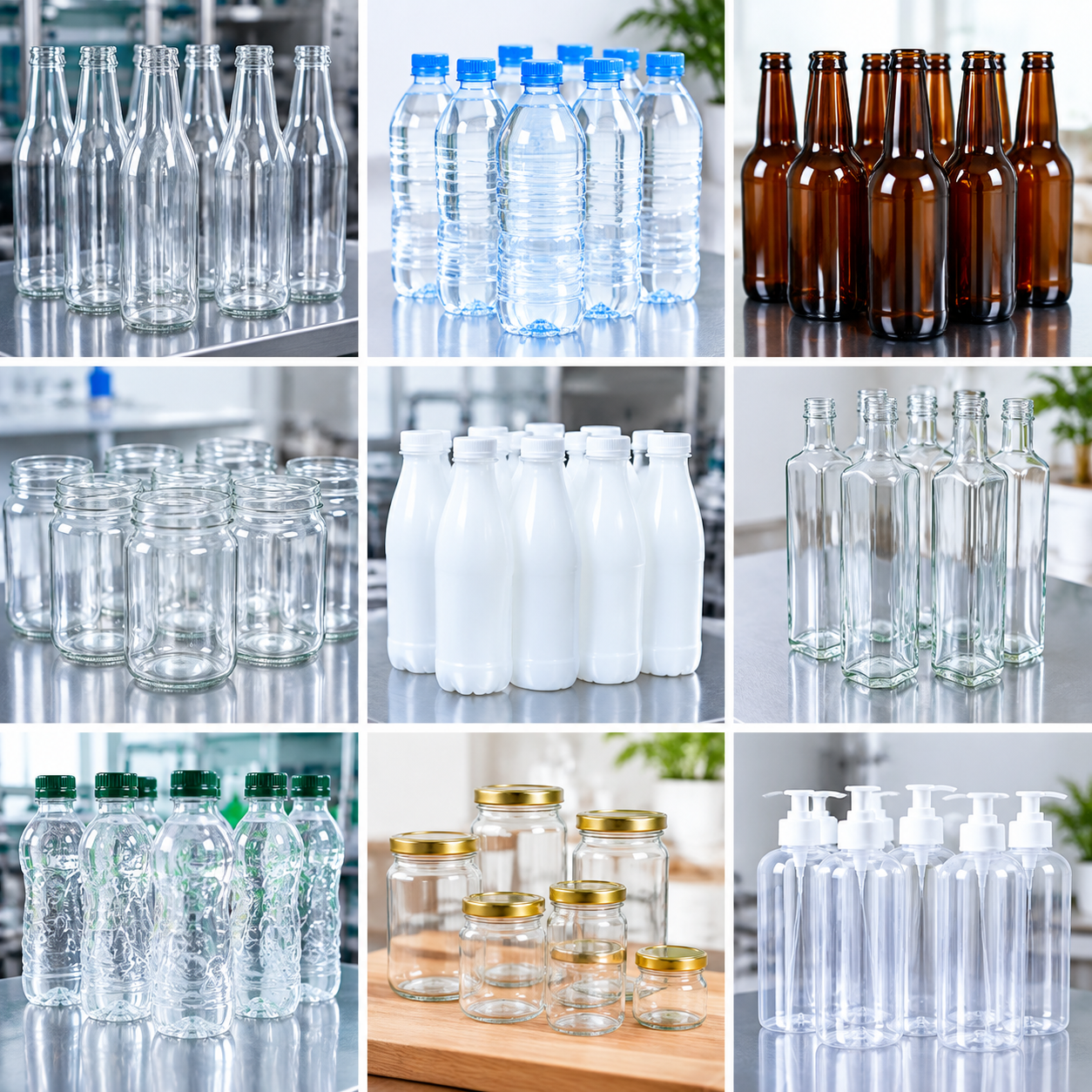
The bottle washing machine can be configured for different types of packaging containers.
Glass Bottles: Beverage bottles, juice bottles, beer bottles, condiment bottles, and other compatible glass containers.
Plastic Bottles: PET beverage bottles, mineral water bottles, juice bottles, and other compatible plastic containers.
Food Packaging Bottles: Sauce bottles, honey bottles, cooking oil bottles, and other food containers.
Dairy Packaging Bottles: Milk bottles, yogurt drink bottles, and other compatible dairy containers.
Industrial Packaging Containers: Other containers suitable for the machine's materials and washing process.
Different bottle materials and shapes require appropriate washing methods. Glass bottles generally offer good temperature resistance but require attention to impact and thermal shock. Plastic bottles must be washed within the temperature range suitable for their material. The applicable bottle types should be confirmed according to the machine design and container specifications.
6. Finished Containers and Applications
After washing, bottles can be used for packaging a wide range of products, including:
Bottled drinking water
Fruit juice and vegetable beverages
Carbonated drinks
Dairy products and probiotic beverages
Soy sauce, vinegar, and condiments
Cooking oil
Honey and syrup
Other packaged food and beverage products
The bottle washing machine can be integrated with automatic filling machines, capping machines, labeling machines, coding machines, and packaging equipment to create a complete bottling production line. This configuration helps manufacturers achieve continuous processing from empty bottle cleaning to finished product packaging.
7. Key Advantages
The automatic bottle washing machine uses mechanical cleaning processes to reduce manual operations and improve washing efficiency and consistency. Multi-angle spray cleaning helps reach the internal and external surfaces of bottles. Combined with soaking or circulating rinsing processes, the machine can provide suitable cleaning solutions for different bottle shapes and contamination levels. Automatic conveying and positioning structures help reduce manual handling and maintain a stable production rhythm.
For water management, the machine can be equipped with circulating water tanks and filtration systems to remove impurities from washing water and support partial water reuse when permitted by process and hygiene requirements. Multi-stage washing structures allow pre-rinsing, main washing, and final rinsing to be arranged according to the actual cleaning process. These features help manufacturers optimize washing procedures and improve production management.
In addition, the bottle washing machine can be connected to filling, capping, labeling, and packaging equipment to build an automated bottling production line. The machine can be customized according to bottle dimensions, materials, production capacity, and factory space. This helps businesses improve production efficiency, reduce labor requirements, and adapt to different packaging demands. It is important to note that ordinary washing is not equivalent to sterilization. If disinfection or aseptic filling is required, suitable validated disinfection, sterilization, or aseptic processing systems must be included.
8. Applications
The automatic bottle washing machine is widely used in food, beverage, and industrial packaging industries.
Beverage Manufacturing Plants: For cleaning empty bottles used for mineral water, juice, carbonated drinks, and other bottled beverages.
Dairy Processing Plants: For cleaning compatible milk bottles, yogurt drink bottles, and other dairy packaging containers.
Condiment Manufacturers: For cleaning bottles used for soy sauce, vinegar, sauces, and other condiments.
Cooking Oil Factories: For cleaning cooking oil bottles and related packaging containers.
Honey and Syrup Manufacturers: For cleaning packaging bottles used for honey, syrup, and similar products.
Glass Bottle Recycling and Reuse Facilities: For washing reusable glass bottles according to the required process.
Food Packaging Companies: For cleaning and preparing bottles before filling and packaging.

9. Frequently Asked Questions
Q1: What types of bottles can the bottle washing machine clean?
A: Depending on the equipment configuration, it can clean glass bottles, PET plastic bottles, and other compatible containers. The machine should be selected according to bottle material, dimensions, shape, and cleaning requirements.
Q2: Can the bottle washing machine clean both the inside and outside of bottles?
A: Yes. The machine can be equipped with internal and external spray-cleaning structures. The cleaning coverage depends on the nozzle arrangement and bottle design.
Q3: Can the bottle washing machine be customized?
A: Yes. The equipment can be customized according to bottle diameter, height, opening size, material, hourly capacity, and washing process requirements.
Q4: Can the bottle washing machine recycle cleaning water?
A: A water circulation and filtration system can be installed to remove impurities from washing water and support partial water reuse when permitted by process and hygiene requirements. Final rinsing water should be managed according to applicable food safety standards.
Q5: Can the bottle washing machine connect to a filling production line?
A: Yes. It can be connected to automatic filling machines, capping machines, labeling machines, coding machines, and packaging equipment to create a complete bottling production line.
Q6: Does the bottle washing machine have a disinfection function?
A: Standard bottle washing machines are mainly designed to remove dust, stains, and other residues. If disinfection or sterilization is required, additional systems must be configured according to the product and packaging process.
Q7: How do I choose the right bottle washing machine?
A: Please provide the bottle material, diameter, height, bottle shape, hourly production capacity, and cleaning requirements. These details help determine the appropriate washing method, spray structure, conveyor system, and automation configuration.
Related Products
NEW▶ videoIndustrial Vegetable Brush Washing Machine for Automatic Root Vegetable Cleaning and Peeling NEW▶ videoAutomatic Chili Pepper Slicing Line for Industrial Chili Shredding and Food Processing
 NEWVacuum Tumbler Machine
 NEW▶ videoAutomatic Vegetable Processing Line for Fresh Cut Vegetables: Complete Vegetable Washing, Cutting and Packaging Solutions for Food Processing Factories
 NEW▶ videoHigh Efficiency Automatic Plastic Crate Washing Line for Food Processing Plants
 NEWDried fruit and vegetable production line