
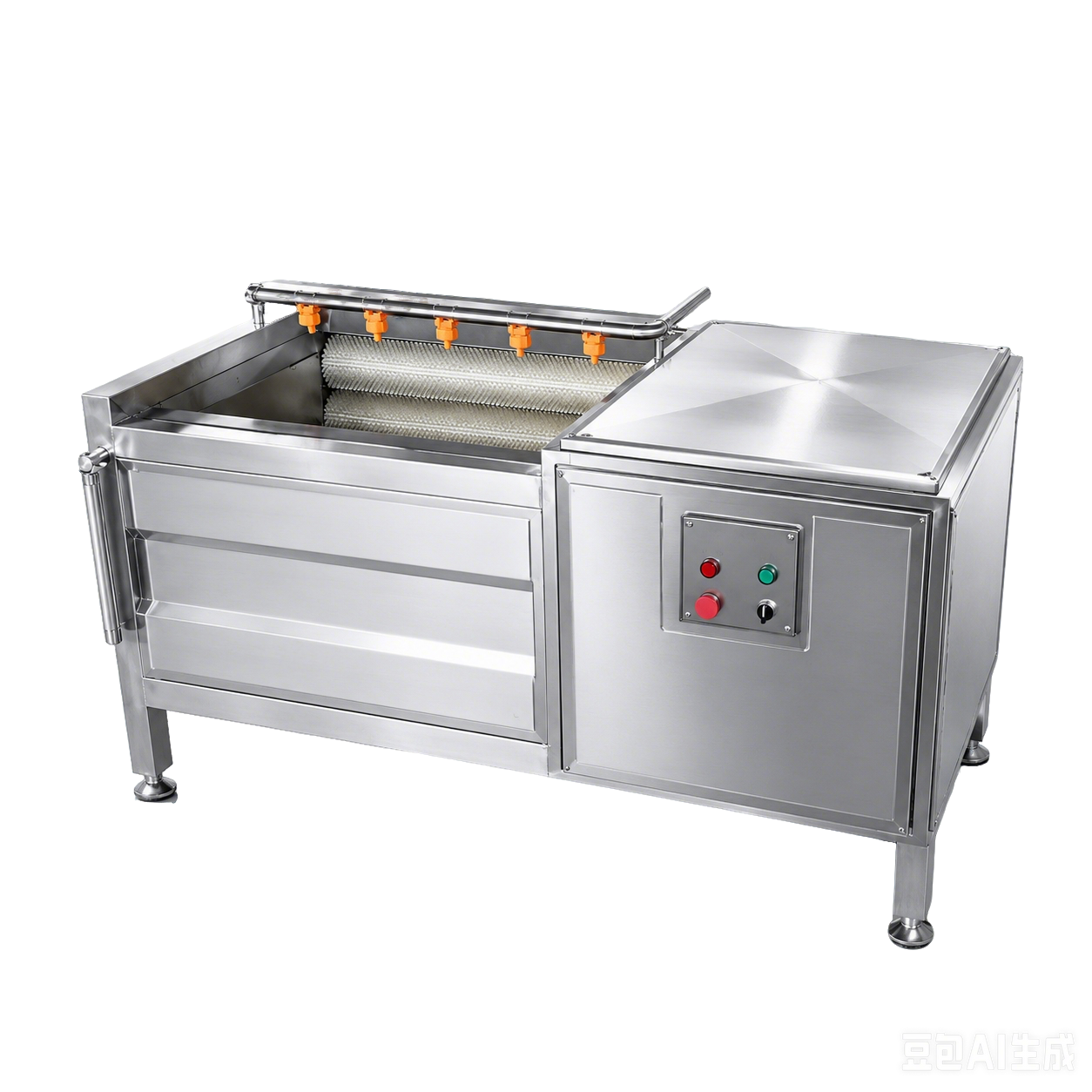
 NEW▶ videoIndustrial Vegetable Brush Washing Machine for Automatic Root Vegetable Cleaning and Peeling
Kimchi production line
Automatic Kimchi Production Line Kimchi Processing Equipment |Fermented Vegetable Production Line |Industrial Food Processing Solution
Brand: YIDO
Product Description
Product Overview
The Automatic Kimchi Production Line is an advanced processing solution designed for manufacturing high-quality kimchi, Korean kimchi, spicy cabbage kimchi, radish kimchi, cucumber kimchi and other fermented vegetable products. With the increasing global demand for healthy foods, probiotic products, natural fermented foods and convenient ready-to-eat meals, kimchi has developed from a traditional specialty food into a popular product category in the international food market.
Modern consumers are not only concerned about taste but also pay more attention to food safety, nutrition, production standards and product consistency. Therefore, more food manufacturers are upgrading traditional manual production methods and investing in automated kimchi processing equipment to improve efficiency and meet global market requirements.
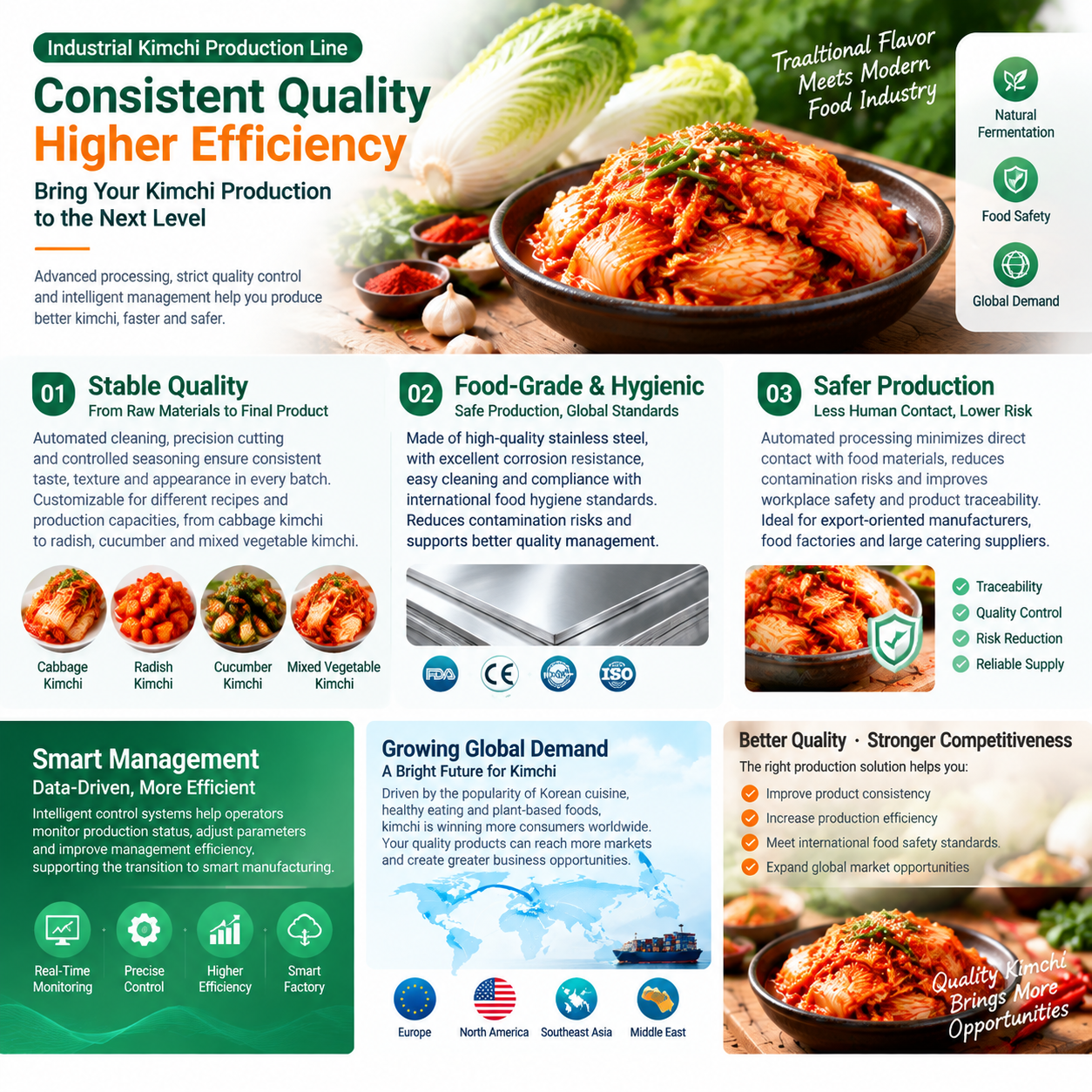
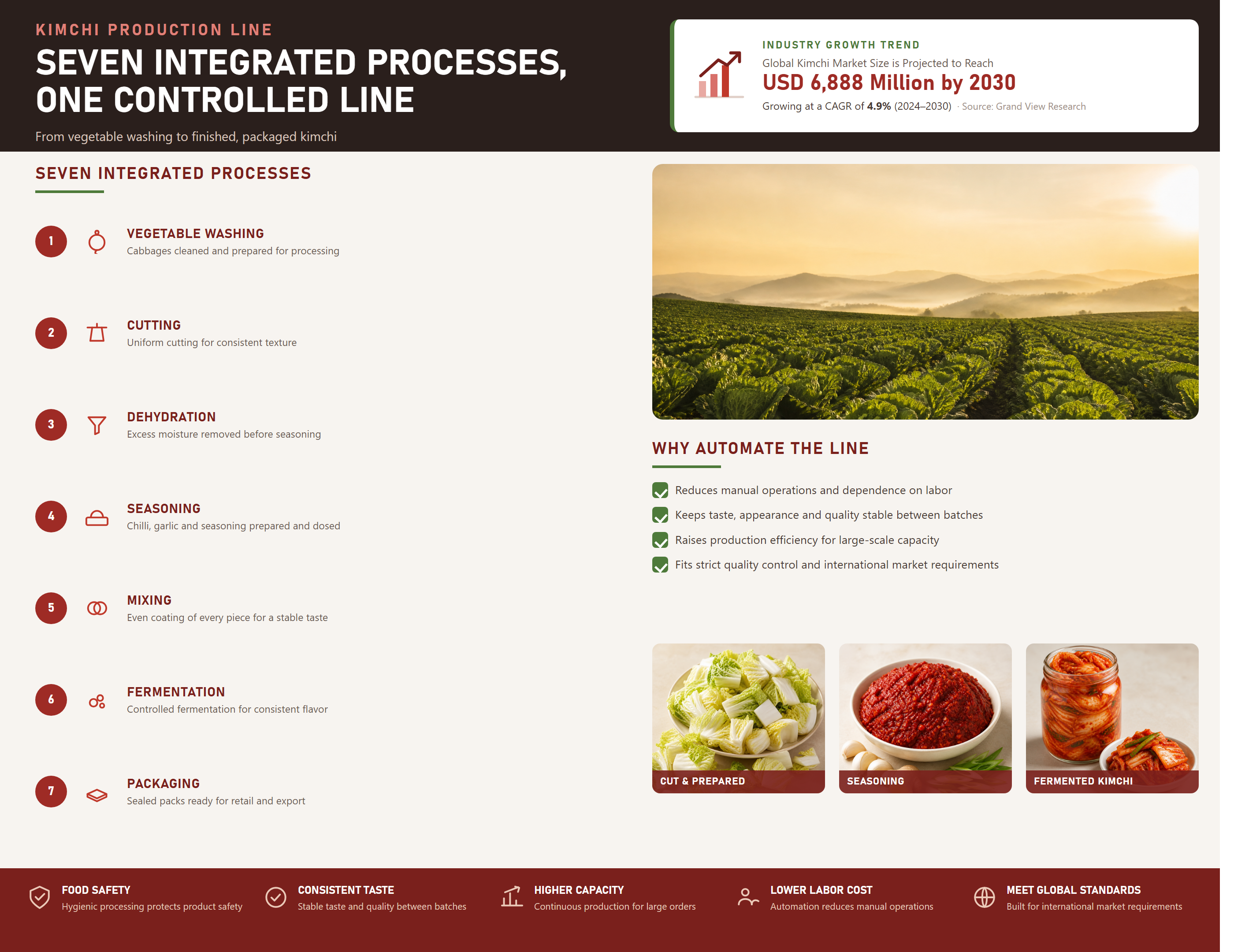
The automatic kimchi production line integrates multiple processing steps including vegetable washing, sorting, cutting, dehydration, salting, seasoning, mixing, fermentation and packaging, creating a complete solution from raw vegetables to finished kimchi products. Compared with traditional manual processing, automated production significantly reduces labor costs, improves production efficiency and ensures stable product quality in terms of flavor, color, texture and hygiene.
The production line is manufactured with food-grade 304 stainless steel and equipped with intelligent control technology. It is suitable for kimchi factories, vegetable processing companies, central kitchens, seasoning food manufacturers and export-oriented food enterprises, providing a complete fermented vegetable processing solution.
Key Features
1. Automatic Production for Higher Efficiency
The automatic kimchi production line adopts a continuous processing system that connects multiple production stages together, achieving efficient and large-scale manufacturing.
Automated equipment reduces manual operations, increases production speed and lowers labor costs, making it ideal for factories with large-volume orders.
Compared with traditional handmade production, automatic processing minimizes human operation differences and ensures consistent quality for every production batch, helping companies improve competitiveness in global markets.
2. Precise Processing Ensures Stable Kimchi Quality
The quality of kimchi depends greatly on vegetable preparation, seasoning ratio and fermentation conditions.
Through professional vegetable washing machines, cutting equipment, dehydration systems and automatic seasoning mixers, the production line can achieve:
Uniform vegetable cutting size
Accurate seasoning control
Improved product texture
Stable fermentation quality
Manufacturers can produce various kimchi products according to different market requirements, including:
Napa cabbage kimchi
Spicy kimchi
Radish kimchi
Cucumber kimchi
Low-salt kimchi
Ready-to-eat fermented vegetable products
This allows companies to meet different consumer preferences worldwide.
3. Food Grade 304 Stainless Steel Design
The main equipment of the kimchi production line is made of food-grade 304 stainless steel, meeting modern food processing hygiene standards.
Equipment advantages:
✔ Excellent corrosion resistance
✔ Easy cleaning and maintenance
✔ Reduced contamination risks
✔ Long service life
✔ Suitable for continuous production
The hygienic design helps food manufacturers build a safer and more reliable production environment while meeting international food safety requirements.
4. Intelligent Control System for Better Production Management
The modern kimchi production line can be equipped with PLC automatic control systems and touchscreen operation interfaces to achieve:
Automatic parameter adjustment
Production process monitoring
Simple operation
Reduced human errors
Manufacturers can manage production processes more accurately, improve factory efficiency and move toward digital food manufacturing.
5. Flexible Customization for Different Production Needs
Different food companies have different requirements for capacity, product types and factory layouts.
We provide customized solutions based on customer needs:
Small-scale kimchi processing line
Medium kimchi production system
Large industrial kimchi manufacturing line
Integrated kimchi processing and packaging solution
Helping customers build a modern fermented food factory suitable for their business goals.
Working Principle
The automatic kimchi production line uses multiple machines working together to complete the entire production process.
1. Raw Vegetable Washing and Sorting
Fresh vegetables such as cabbage, radish and cucumber first enter the washing section.
The automatic washing system removes:
Soil
Impurities
Surface residues
After washing, vegetables are sorted to ensure high-quality raw materials enter the next processing stage.
2. Vegetable Cutting Processing
Clean vegetables are transferred to cutting machines according to product requirements.
The equipment can perform:
Shredding
Slicing
Cutting into sections
Customized size cutting
Uniform cutting improves seasoning absorption and fermentation consistency.
3. Dehydration and Salting Process
After cutting, vegetables enter the dehydration or salting process.
This stage helps:
Control moisture content
Improve texture
Enhance fermentation stability
Providing better preparation for seasoning and fermentation.
4. Automatic Seasoning and Mixing
Vegetables enter automatic seasoning mixers where ingredients are added according to recipes, including:
Chili powder
Salt
Seasonings
Fermentation ingredients
The mixing system ensures even distribution of seasoning and creates consistent flavor in every batch.
5. Fermentation and Packaging
After seasoning, kimchi products enter the fermentation and packaging process.
According to different market requirements, products can be packed through:
Vacuum packaging
Bag packaging
Tray packaging
The finished products have longer shelf life and are easier for storage, transportation and international distribution.
Applications
The automatic kimchi production line is widely used in:
Fermented Food Industry
Suitable for:
Korean kimchi production
Spicy cabbage kimchi
Fermented vegetable manufacturing
Pickled vegetable processing
Vegetable Processing Industry
Suitable for:
Napa cabbage processing
Radish processing
Cucumber processing
Root vegetable processing
Convenience Food Industry
Used for:
Ready-to-eat kimchi products
Restaurant ingredient supply
Catering food supply chains
Food Manufacturing Enterprises
Suitable for:
Kimchi factories
Central kitchens
Seasoning manufacturers
Export food producers
Suitable Materials
The production line can process various vegetable materials:
Napa cabbage
Radish
Cucumber
Carrot
Cabbage
Mustard greens
Other leafy and root vegetables
Finished products include:
Korean kimchi
Spicy cabbage kimchi
Radish kimchi
Mixed vegetable kimchi
Fermented vegetable products
Technical Parameters
Item | Specification |
|---|---|
Production Capacity | Customized according to customer requirements |
Processing Materials | Napa cabbage, radish, cucumber and other vegetables |
Machine Material | Food-grade 304 stainless steel |
Control System | PLC automatic control system |
Processing Steps | Washing, cutting, dehydration, seasoning, mixing, fermentation, packaging |
Production Mode | Automatic continuous production |
Application | Kimchi factory, vegetable processing plant, food manufacturing company |
Machine Details
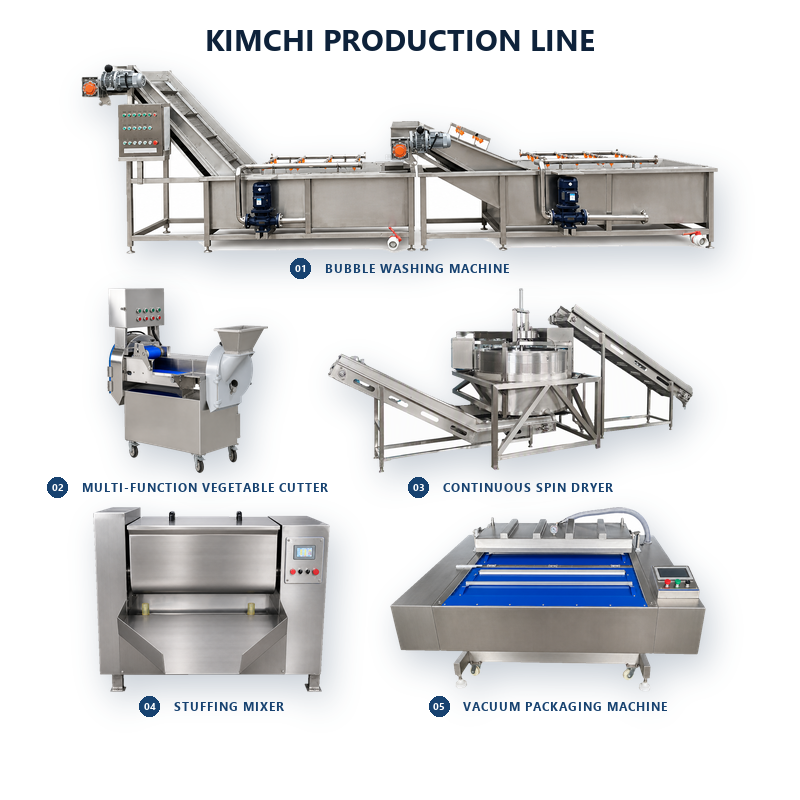
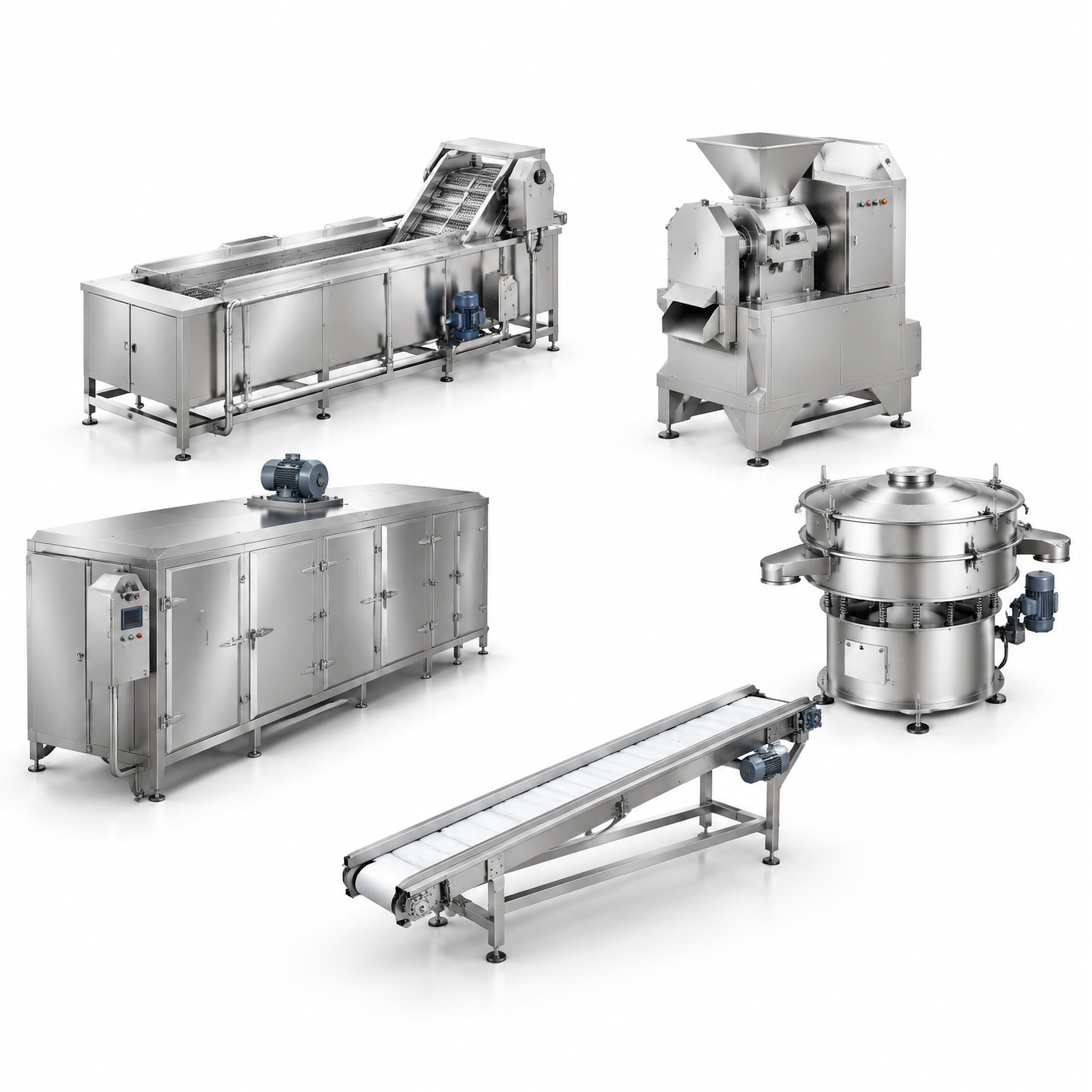
Vegetable Washing Machine
Advantages:
Efficient removal of dirt and impurities
Improved cleaning efficiency
Ensures raw material hygiene and safety
Multifunctional Vegetable Cutting Machine
Advantages:
Supports different cutting requirements
Increases processing speed
Ensures uniform product size
Dehydration Equipment
Advantages:
Quickly removes excess water
Improves kimchi texture
Enhances fermentation quality
Automatic Seasoning Mixer
Advantages:
Uniform seasoning distribution
Improved product flavor
Suitable for continuous production
Packaging Equipment
Advantages:
Improves product appearance
Extends storage life
Facilitates transportation and sales
Customization Options
We provide complete kimchi production solutions according to different customer requirements.
Customization includes:
✔ Production capacity
✔ Product types
✔ Factory layout
✔ Automation level
✔ Packaging method
✔ Market requirements
Available solutions:
Small kimchi production solution
Commercial kimchi processing system
Large intelligent kimchi manufacturing factory
Complete kimchi processing and packaging project
FAQ
1. What products can the kimchi production line make?
The production line can produce Korean kimchi, spicy cabbage kimchi, radish kimchi, cucumber kimchi and various fermented vegetable products.
2. Can the production line be customized for different tastes?
Yes. The system can be customized according to different recipes, product types and market requirements.
3. Is the kimchi production line fully automatic?
Yes. It can integrate automatic washing, cutting, seasoning, conveying and packaging systems for continuous production.
4. What material is used for the equipment?
The main equipment is made of food-grade 304 stainless steel, which meets international food processing hygiene standards.
5. Can you provide a complete turnkey solution?
Yes. We provide complete solutions including process design, equipment configuration, installation and technical support.
Why Choose Automatic Kimchi Production Line?
✔ Professional food processing machinery manufacturer
✔ High-quality food-grade stainless steel equipment
✔ Customized production solutions
✔ Improved efficiency and reduced labor costs
✔ Global technical support service
Investing in an automatic kimchi production line not only improves production efficiency but also helps food companies build a safer, smarter and high-quality fermented food factory, creating long-term competitiveness in the global healthy food market.
Related Products
NEW▶ videoIndustrial Vegetable Brush Washing Machine for Automatic Root Vegetable Cleaning and Peeling NEW▶ videobottle washing machine
 NEW▶ videoAutomatic Chili Pepper Slicing Line for Industrial Chili Shredding and Food Processing
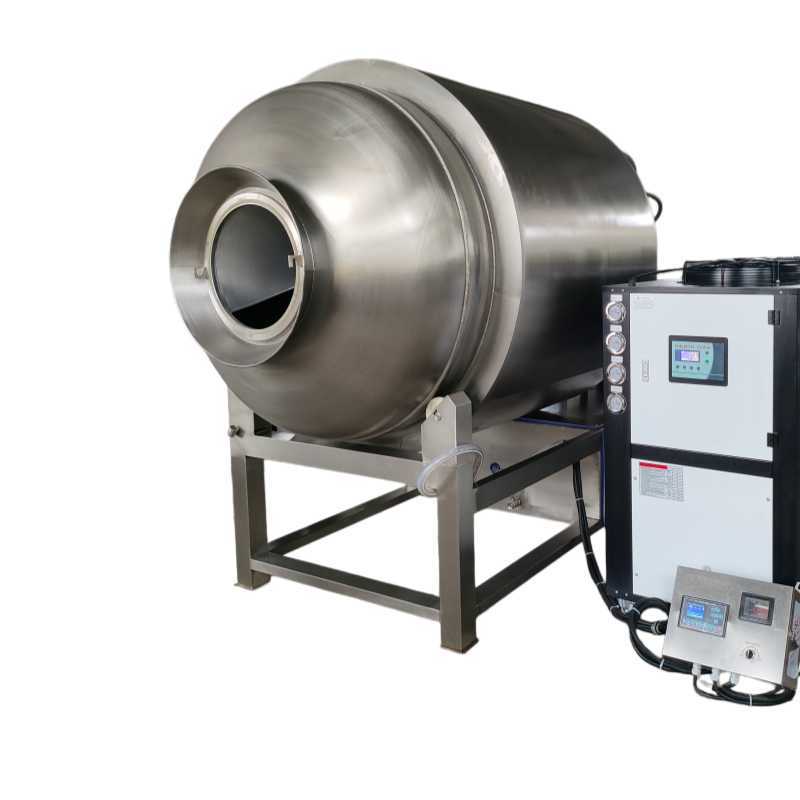 NEWVacuum Tumbler Machine
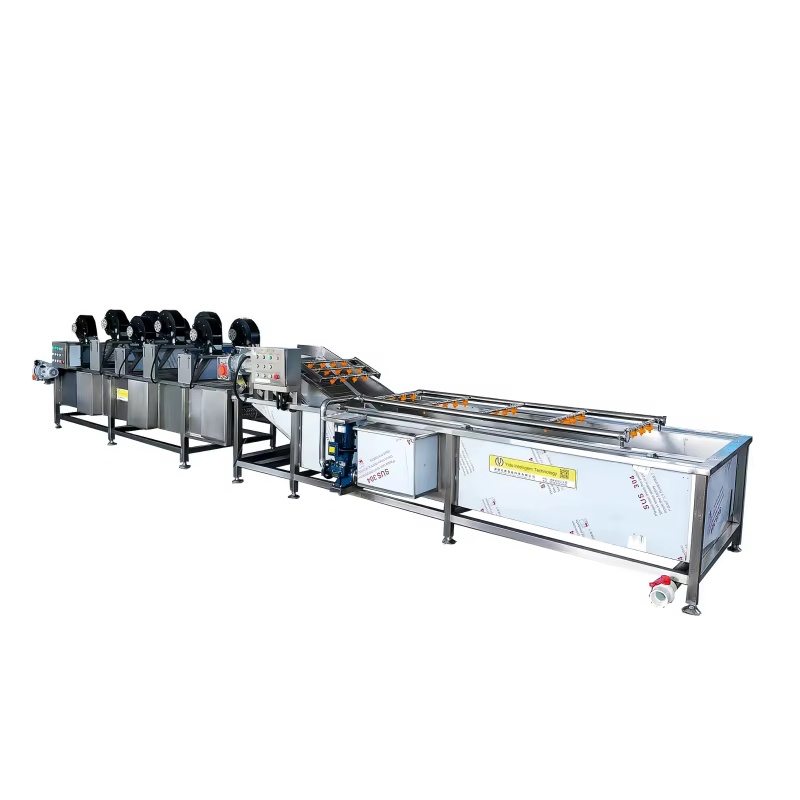 NEW▶ videoAutomatic Vegetable Processing Line for Fresh Cut Vegetables: Complete Vegetable Washing, Cutting and Packaging Solutions for Food Processing Factories
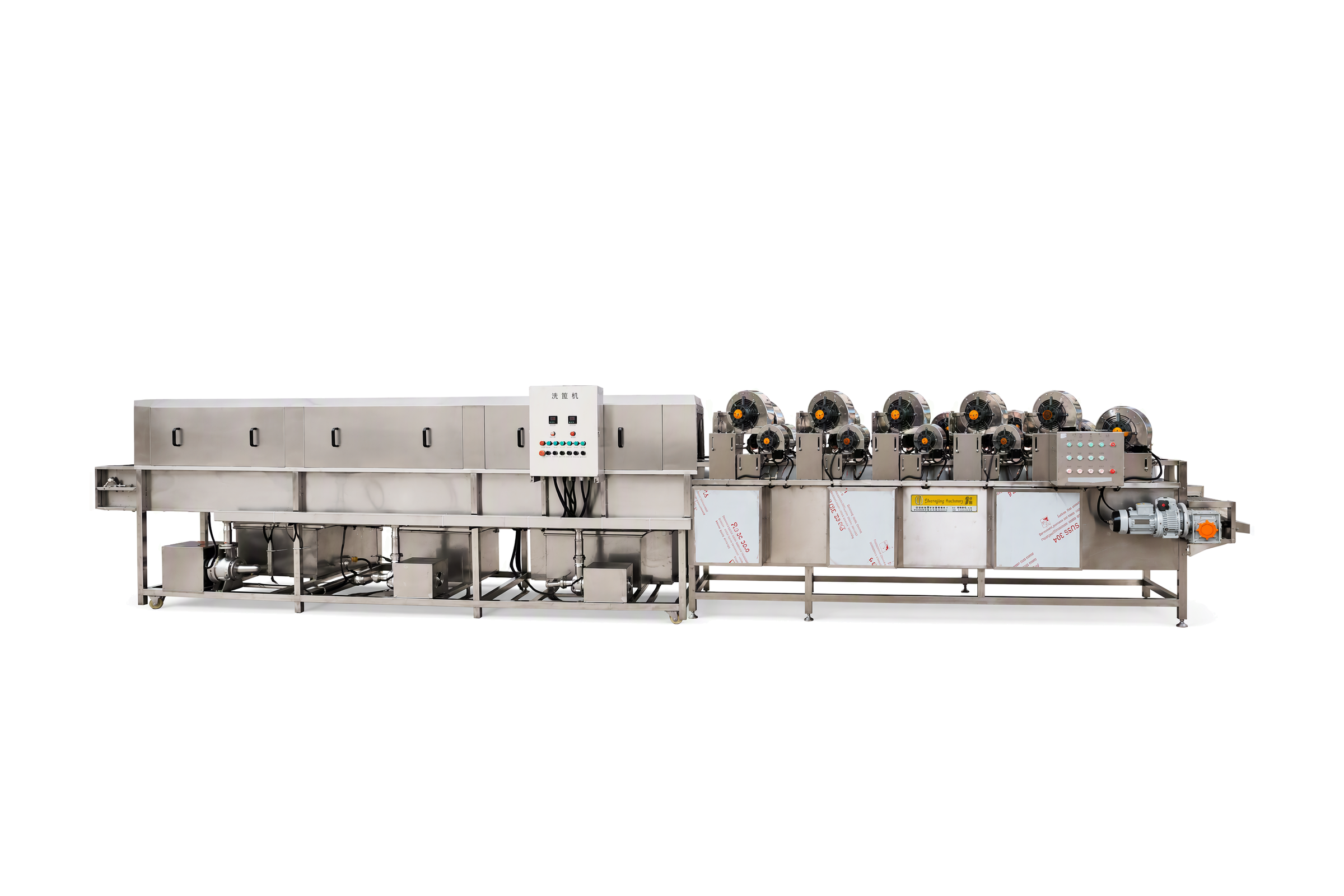 NEW▶ videoHigh Efficiency Automatic Plastic Crate Washing Line for Food Processing Plants