
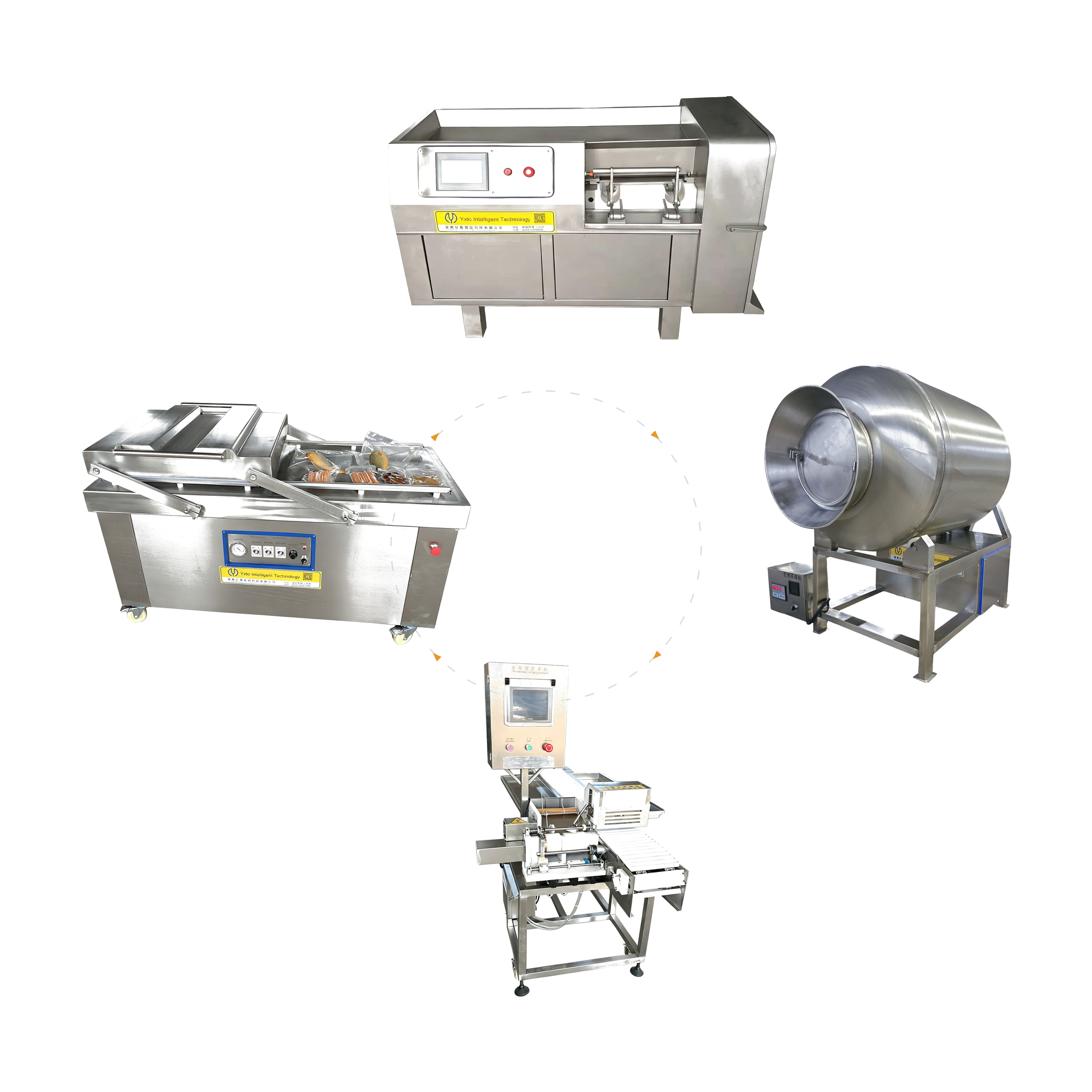
 NEW▶ videoAutomatic Meat Skewer Production Line | Complete BBQ Skewer Processing Solution
Beef production line
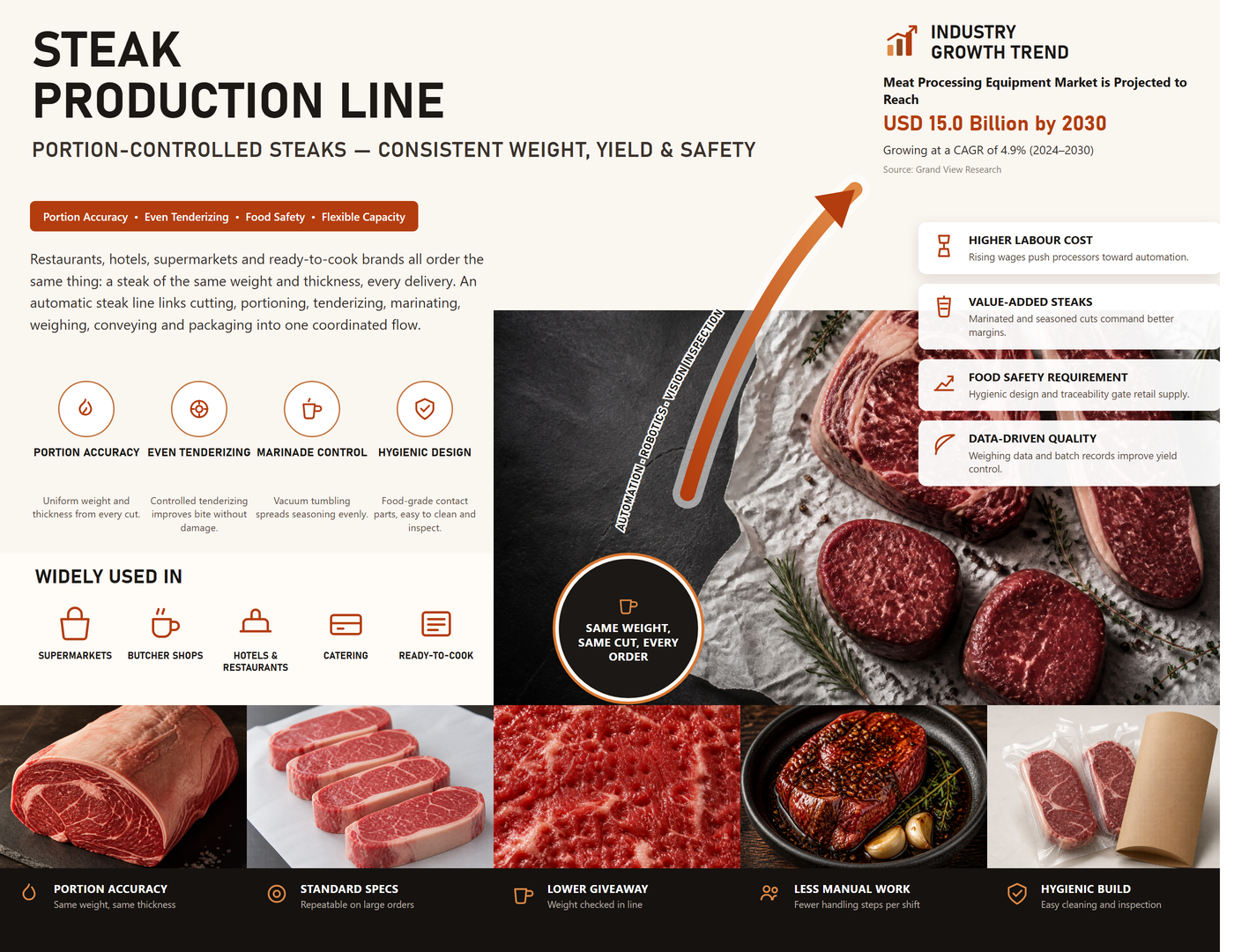
Automatic steak processing production line for meat factories. Customized solutions for meat cutting, portioning, tenderizing, marinating, weighing, and packaging with efficient, hygienic production.
Brand: YIDO
Product Description
Automatic Steak Processing Line
1. Steak Processing Line Overview
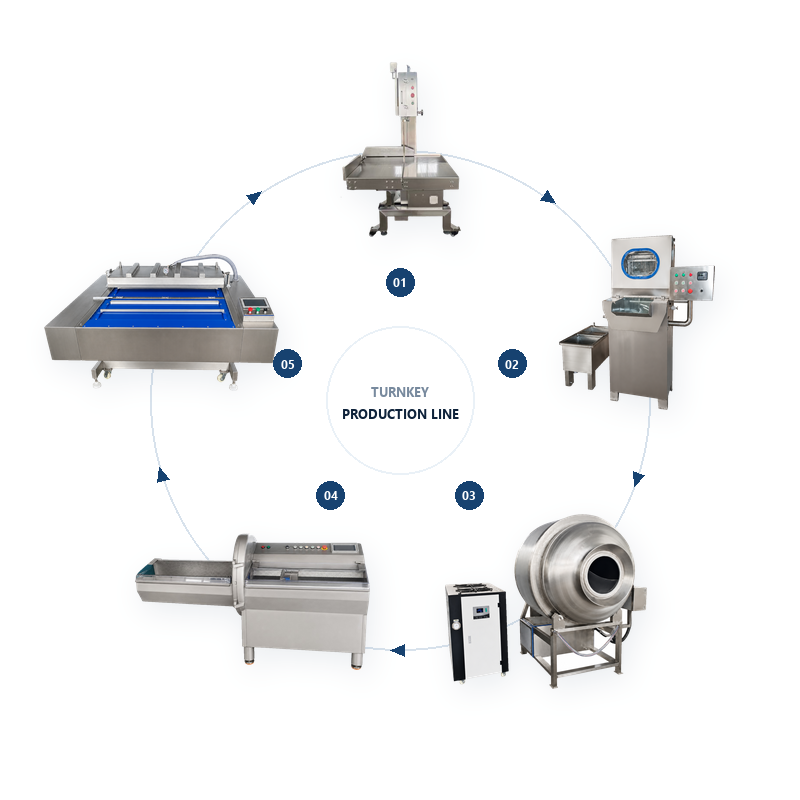
The automatic steak processing line is a professional solution designed for meat processing plants, prepared food manufacturers, central kitchens, and frozen food producers. Depending on the product requirements, the line can integrate a meat cutting machine, meat chopping machine, brine injector, vacuum meat tumbler, and vacuum packaging machine to complete key processing steps, including meat cutting, steak portioning, brine injection, vacuum tumbling, and packaging. By combining suitable equipment, manufacturers can improve processing efficiency, reduce repetitive manual operations, and achieve greater consistency in steak dimensions, marinating results, and packaging specifications.
With the continued development of the global meat industry and the growing demand for convenient and ready-to-cook foods, manufacturers face increasing requirements for product quality, taste, hygiene management, and production efficiency. An automatic steak processing line helps meet these requirements by supporting the production of fresh steaks, marinated steaks, portion-controlled meat products, and steaks prepared for chilled or frozen distribution. The equipment configuration can be customized according to raw materials, product specifications, target capacity, processing technology, and factory layout, providing flexible solutions for meat processing businesses of different sizes.
2. Steak Processing Flow
The steak processing process typically includes raw material inspection, meat cutting, steak portioning, brine injection, vacuum tumbling, and vacuum packaging. First, beef is inspected and prepared according to the product requirements. The meat cutting machine then cuts the raw material into suitable pieces or slices, while the meat chopping machine processes the steaks according to the required dimensions and thickness. For marinated steak products, the brine injector introduces prepared brine or seasoning solutions into the meat. The vacuum meat tumbler then helps distribute the marinade and promotes its absorption. Finally, the finished steaks are vacuum-packed according to their intended storage and distribution requirements, followed by appropriate quality inspection and chilled or frozen storage.
Typical Processing Flow:
Beef Raw Material → Inspection and Preparation → Meat Cutting → Steak Portioning → Brine Injection → Vacuum Tumbling → Vacuum Packaging → Finished Product Inspection and Storage
The actual processing sequence can be adjusted according to the product type. Brine injection and vacuum tumbling are optional processes and are not necessary for every steak product.
3. Main Equipment
1. Meat Cutting Machine
The meat cutting machine is used to cut beef, pork, and other compatible meats into pieces or slices of the required dimensions. It supports different steak processing requirements and helps improve production efficiency and product consistency. Appropriate cutting equipment can also optimize subsequent portioning, marinating, and packaging operations. The machine should be selected according to the raw material condition, cutting size, processing capacity, and final product specifications.
2. Meat Chopping Machine
The meat chopping machine is used for chopping or cutting steaks, pork chops, and other compatible meat products according to specific processing requirements. It helps control product dimensions and thickness to support standardized production. Consistent steak specifications are particularly important for foodservice suppliers, retail meat processors, and prepared food manufacturers. The machine configuration and processing capabilities should be selected according to the actual product requirements.
3. Meat Brine Injector
The meat brine injector introduces brine, marinade, or seasoning solutions into compatible meat products to improve the distribution of the liquid within the meat. It is suitable for marinated beef steaks, pork chops, and other injected meat products. Proper injection processing can help improve marinating consistency, flavor, and juiciness. Injection rates, needle configurations, and processing parameters can be selected according to the meat type, recipe, and finished product requirements.
4. Vacuum Meat Tumbler
The vacuum meat tumbler combines controlled tumbling with a vacuum environment to improve contact between the meat and marinade. This process helps distribute seasoning solutions and supports consistent marinade absorption. It is commonly used for marinated steaks, pork chops, and other processed meat products. The machine can be selected according to batch capacity, raw material characteristics, tumbling time, and processing requirements, helping manufacturers optimize marinating efficiency and product consistency.
5. Vacuum Packaging Machine
The vacuum packaging machine is used to package fresh steaks, marinated steaks, and other meat products by removing air from the packaging bag. Vacuum packaging can help reduce oxidation and facilitate storage, transportation, and retail distribution. Equipment can be selected according to steak dimensions, packaging materials, packaging speed, and production capacity. The actual preservation performance depends on packaging materials, product characteristics, hygiene control, storage temperature, and subsequent handling. Vacuum packaging does not replace the need for appropriate refrigeration or freezing.
4. Production Capacity
The automatic steak processing line can be configured for small meat processing workshops, medium-sized food factories, and large industrial production facilities. Small-scale manufacturers may choose a compact equipment combination for batch production, while larger facilities can integrate cutting, portioning, injection, tumbling, and packaging equipment to improve material flow and reduce waiting time between processing stages.
Actual production capacity depends on raw material type, steak dimensions, individual product weight, equipment specifications, injection and tumbling time, packaging method, and the level of automation. When planning a production line, manufacturers should consider the target hourly output, daily operating hours, product specifications, and factory layout. A properly configured system can meet current production requirements while allowing room for future expansion.
5. Applicable Raw Materials
The production line is primarily designed for beef processing and can also be configured for compatible pork, poultry, and other meat products, depending on the equipment model and processing method. Different meat types have different fiber structures, fat contents, temperatures, and cutting requirements. Therefore, suitable blades, cutting parameters, injection settings, and tumbling procedures should be selected according to the raw materials.
Depending on the machine specifications, the equipment may process fresh, chilled, or partially frozen meat. However, not every machine is suitable for every temperature condition. Before purchasing, manufacturers should confirm the raw material dimensions, hardness, bone content, and target product specifications to ensure that the equipment matches the intended process.
6. Final Products
The automatic steak processing line can produce a variety of meat products, including standard beef steaks, portion-controlled steaks, marinated steaks, seasoned steaks, and standardized meat portions for foodservice applications. With suitable equipment configurations and compatible raw materials, the line may also be adapted for pork chops, chicken steaks, and other meat products.
Finished products can be supplied to retailers, restaurant chains, central kitchens, prepared food manufacturers, and frozen food distributors. Manufacturers can adjust steak thickness, weight, seasoning recipes, and packaging specifications according to market demand. Standardized processing and packaging help improve batch-to-batch consistency and meet different customer purchasing requirements.
7. Key Advantages
The automatic steak processing line optimizes meat processing through an integrated equipment configuration, helping manufacturers improve production efficiency and reduce repetitive manual work. The meat cutting machine and meat chopping machine support standardized product dimensions, while the brine injector and vacuum meat tumbler help improve marinating consistency and flavor distribution. The vacuum packaging machine facilitates product packaging, storage, and transportation. Equipment can be combined according to actual requirements, helping businesses avoid unnecessary investment.
In terms of hygiene and quality management, a well-designed equipment layout, standardized cleaning procedures, and appropriate food-contact materials can support a more consistent production management system. Standardized processing parameters, batch records, and quality inspections help manufacturers control product specifications and reduce process variations. Increasing automation can also help optimize labor allocation, reduce material waste, and improve order-handling efficiency.
For manufacturers planning to expand their product ranges, modular equipment configuration offers greater flexibility. Businesses can start with basic cutting and packaging equipment and gradually add brine injection and vacuum tumbling according to market demand. The actual improvements in efficiency, product quality, and operating costs depend on raw materials, processing parameters, equipment selection, and production management.
8. Applications
The automatic steak processing line is suitable for a wide range of meat processing and food manufacturing applications.
Meat Processing Plants: For cutting, portioning, marinating, and packaging beef steaks, pork chops, and other meat products.
Prepared Food Manufacturers: For producing seasoned steaks, marinated meat portions, and ready-to-cook meat products.
Central Kitchens: For standardized meat portioning and packaging for restaurants and catering operations.
Frozen Food Factories: For processing meat products intended for subsequent freezing, storage, and distribution.
Foodservice Suppliers: For supplying standardized meat products to hotels, restaurants, catering companies, and restaurant chains.
Meat Wholesale and Export Businesses: For producing meat portions with customized dimensions, packaging formats, and processing specifications.
9. Frequently Asked Questions
Q1: What products can an automatic steak processing line produce?
A: The line can process beef steaks, portion-controlled steaks, marinated steaks, and other compatible meat products. With suitable equipment configurations, it may also process pork chops and chicken steaks.
Q2: Can the steak processing line be customized?
A: Yes. The equipment configuration can be customized according to raw materials, product dimensions, target capacity, processing procedures, factory layout, and packaging requirements.
Q3: Is a brine injector necessary for steak processing?
A: Not every steak product requires brine injection. It is recommended for products that need injected brine or seasoning solutions. The final configuration should be based on the intended recipe and processing method.
Q4: What is the function of a vacuum meat tumbler?
A: A vacuum meat tumbler helps distribute and absorb marinade through controlled tumbling under vacuum conditions. It is commonly used to improve seasoning consistency and support the desired meat texture.
Q5: Can the production line package finished steaks?
A: Yes. A compatible vacuum packaging machine can be included to package fresh or marinated steaks. Packaging materials and storage conditions should be selected according to product characteristics and shelf-life requirements.
Q6: How do I choose the right production capacity?
A: Capacity selection depends on hourly output, steak dimensions, individual product weight, processing time, packaging speed, and daily operating hours. Providing these details helps determine a suitable equipment combination.
Related Products
NEW▶ videoAutomatic Meat Skewer Production Line | Complete BBQ Skewer Processing Solution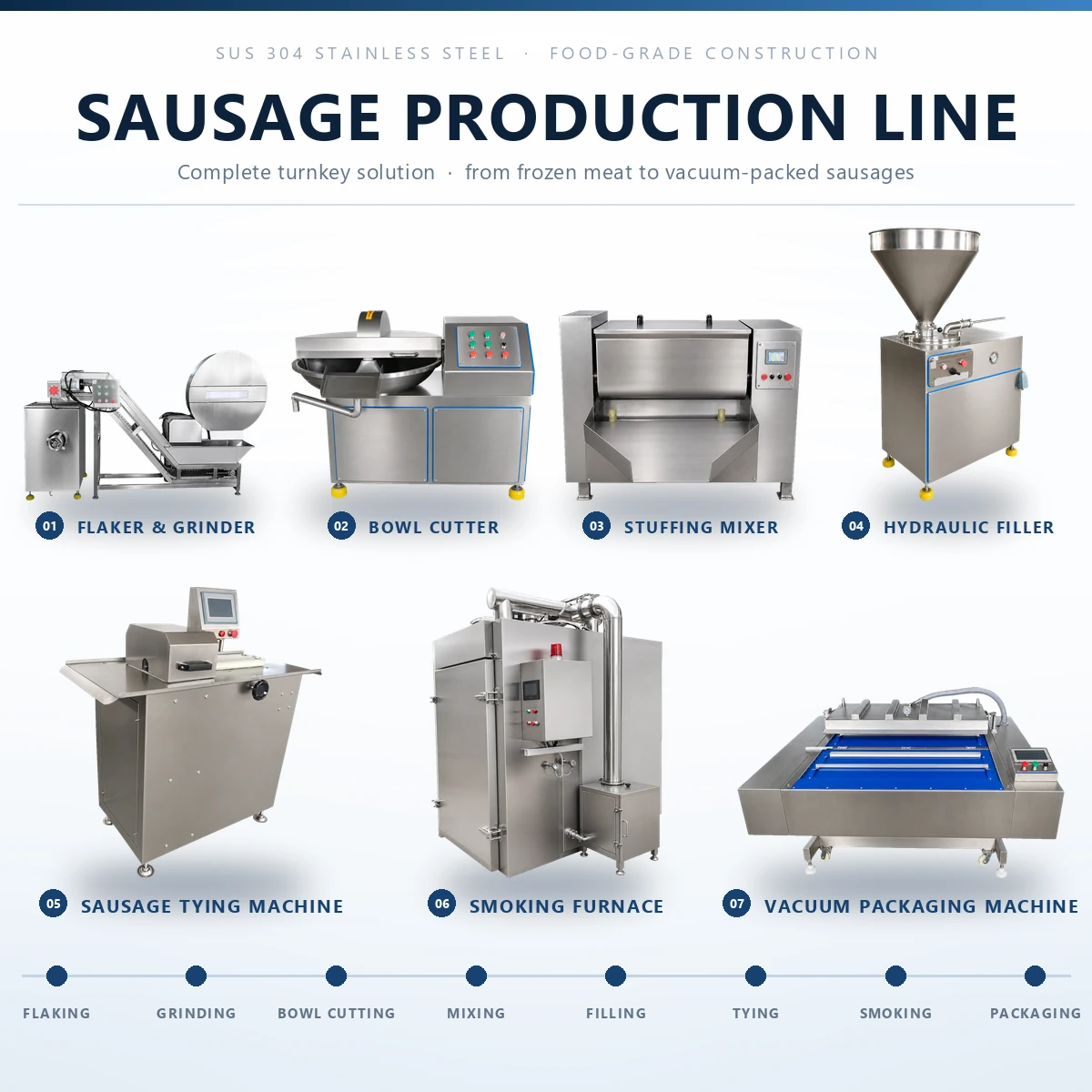 NEW▶ videoLínea de producción de salchichas
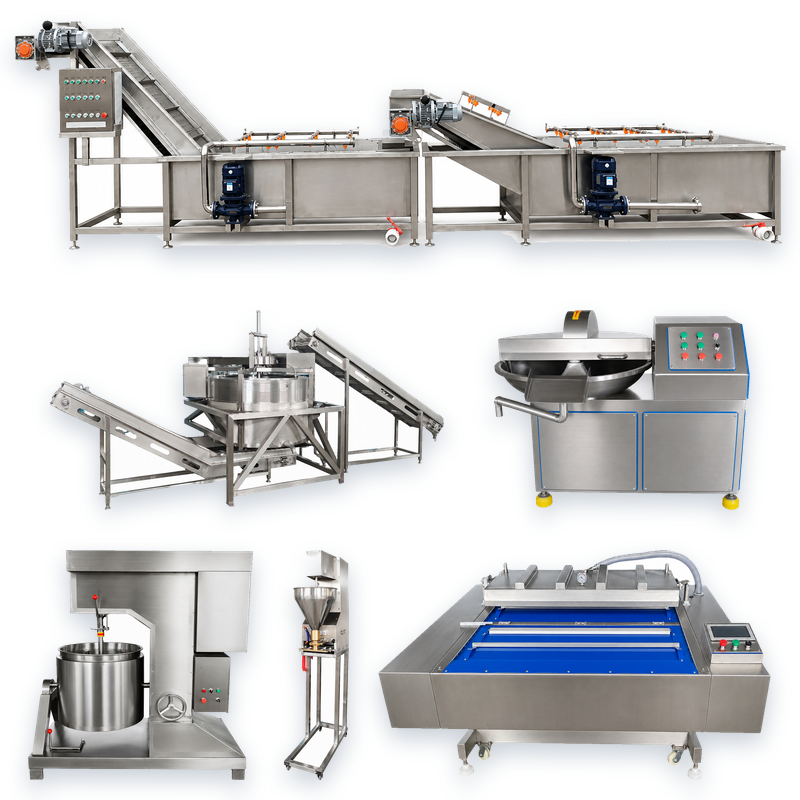 NEWShrimp Slippery Production Line
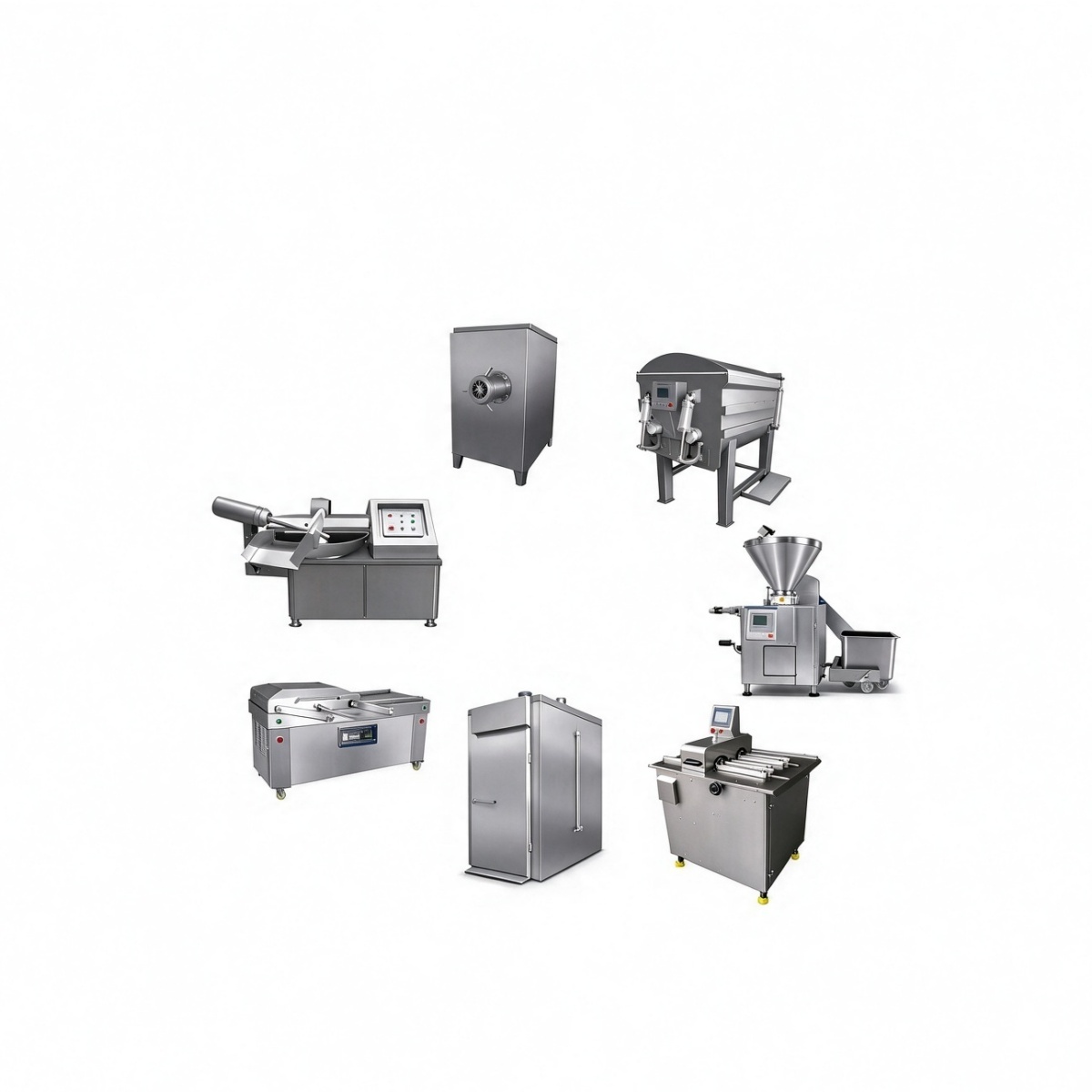 NEW▶ videoSausage Production Line | Automatic Sausage Processing Equipment for Food Factories
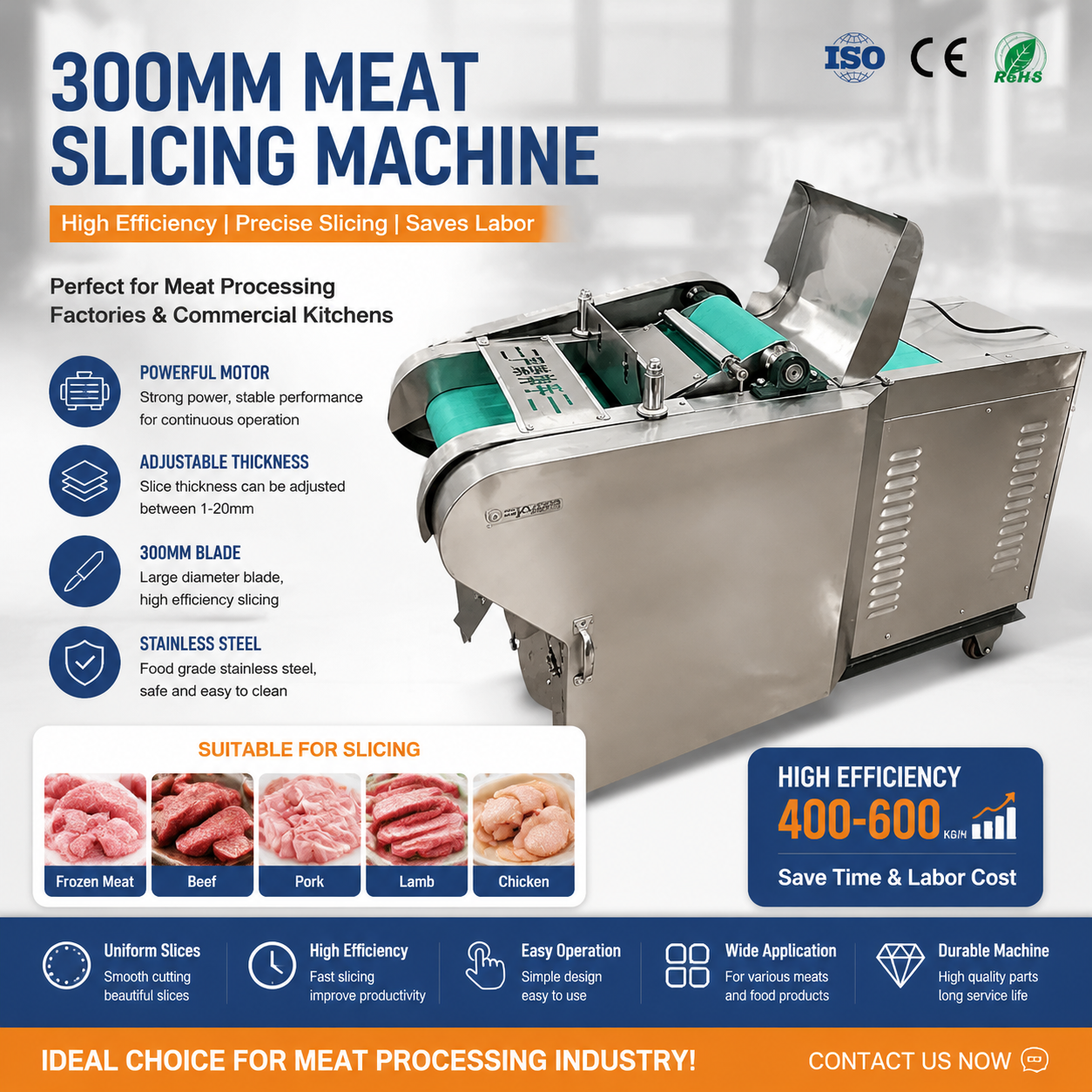 Meat Slicer for Food Processing Factory
 NEWCooked meat braised product production line
 NEW▶ videoIndustrial Ground Meat Processing Line | Frozen Meat Crushing, Grinding and Mixing Solution
 NEW▶ videoHam Curing Production Line | Brine Injector Vacuum Tumbler & Smoke House For Cooked Ham Processing