What Equipment Is Used in a Plastic Crate Washing Line? Key Benefits and Industry Trends in 2026
1. What Equipment Is Included in a Plastic Crate Washing Line?
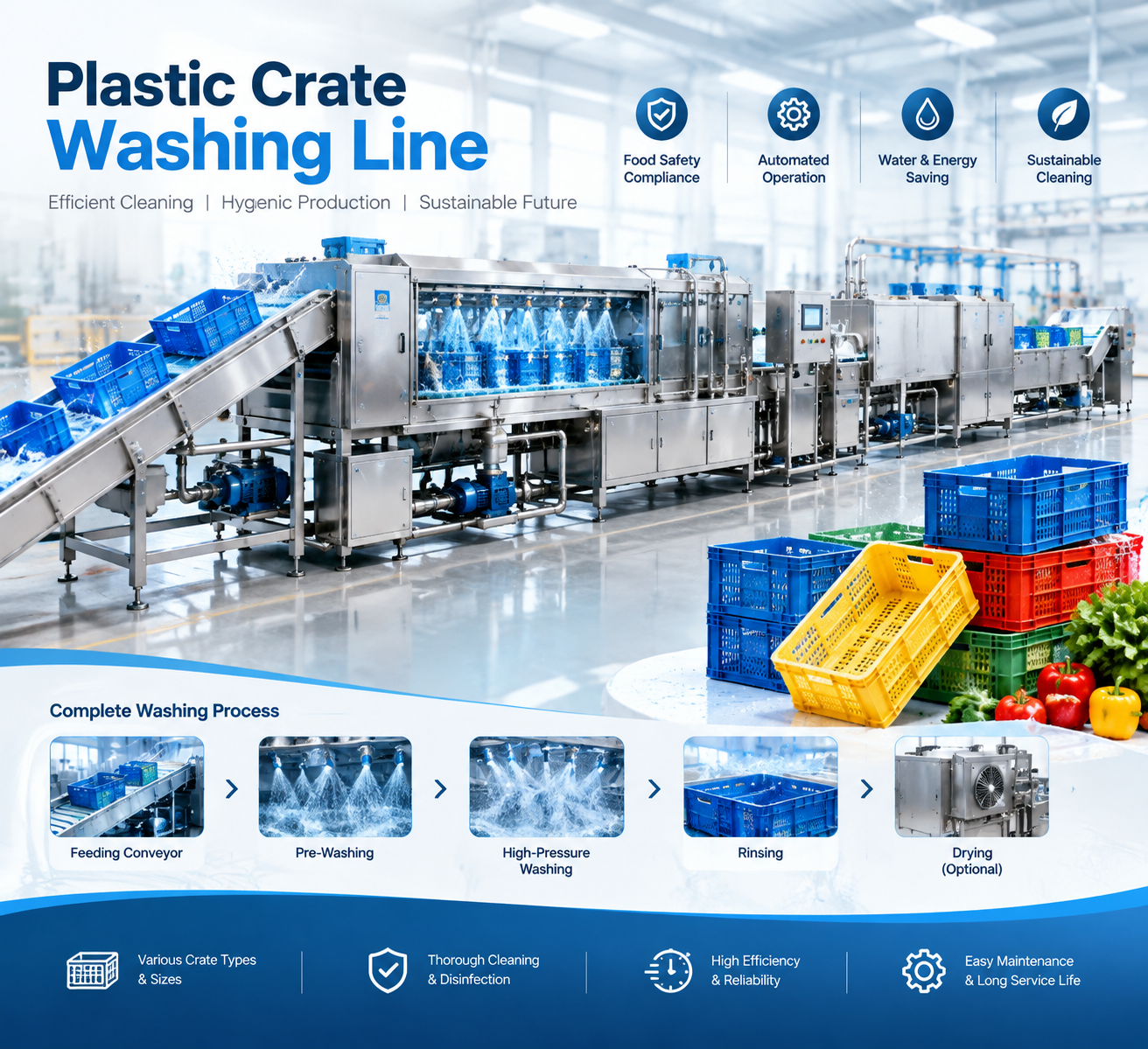
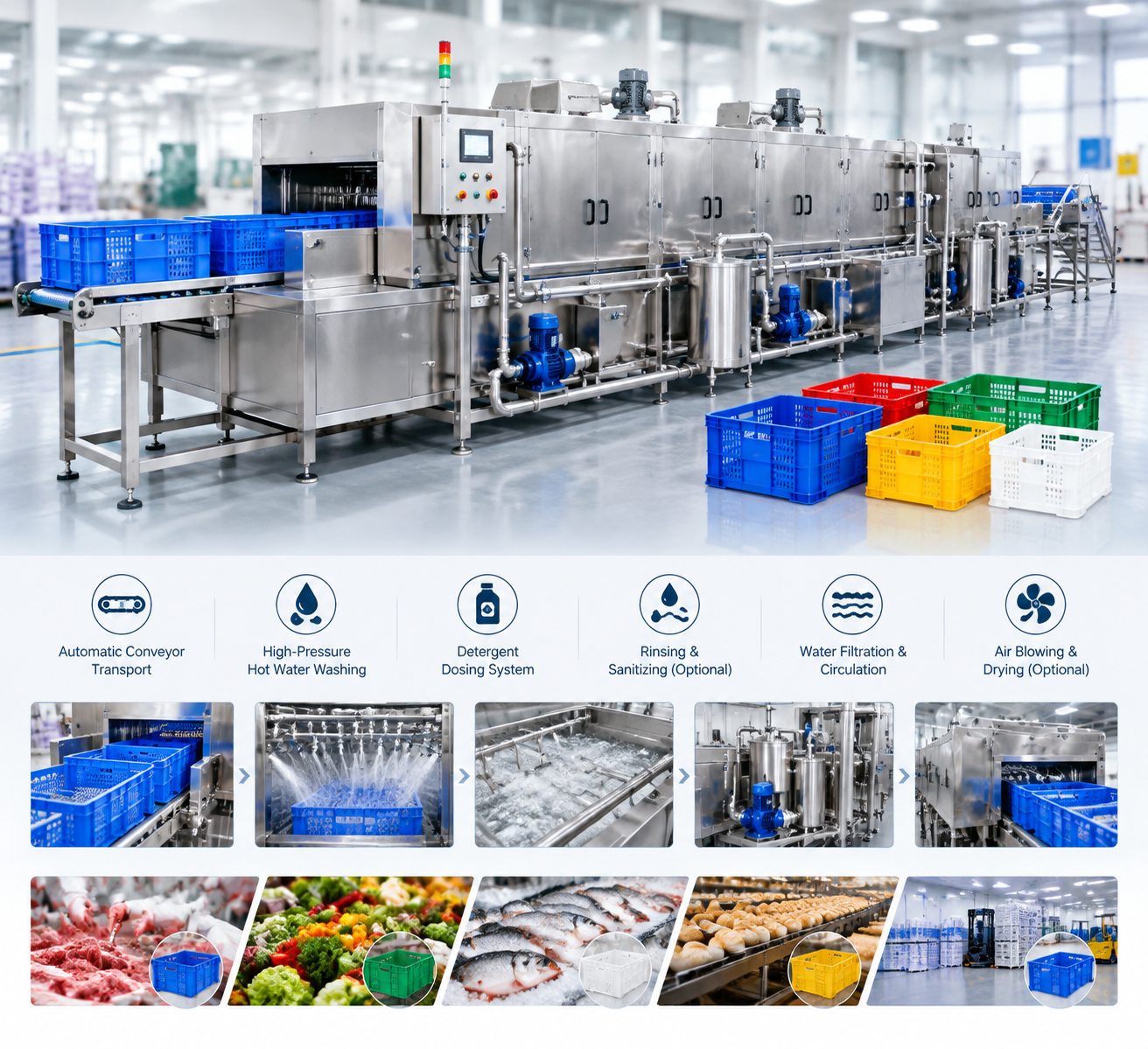
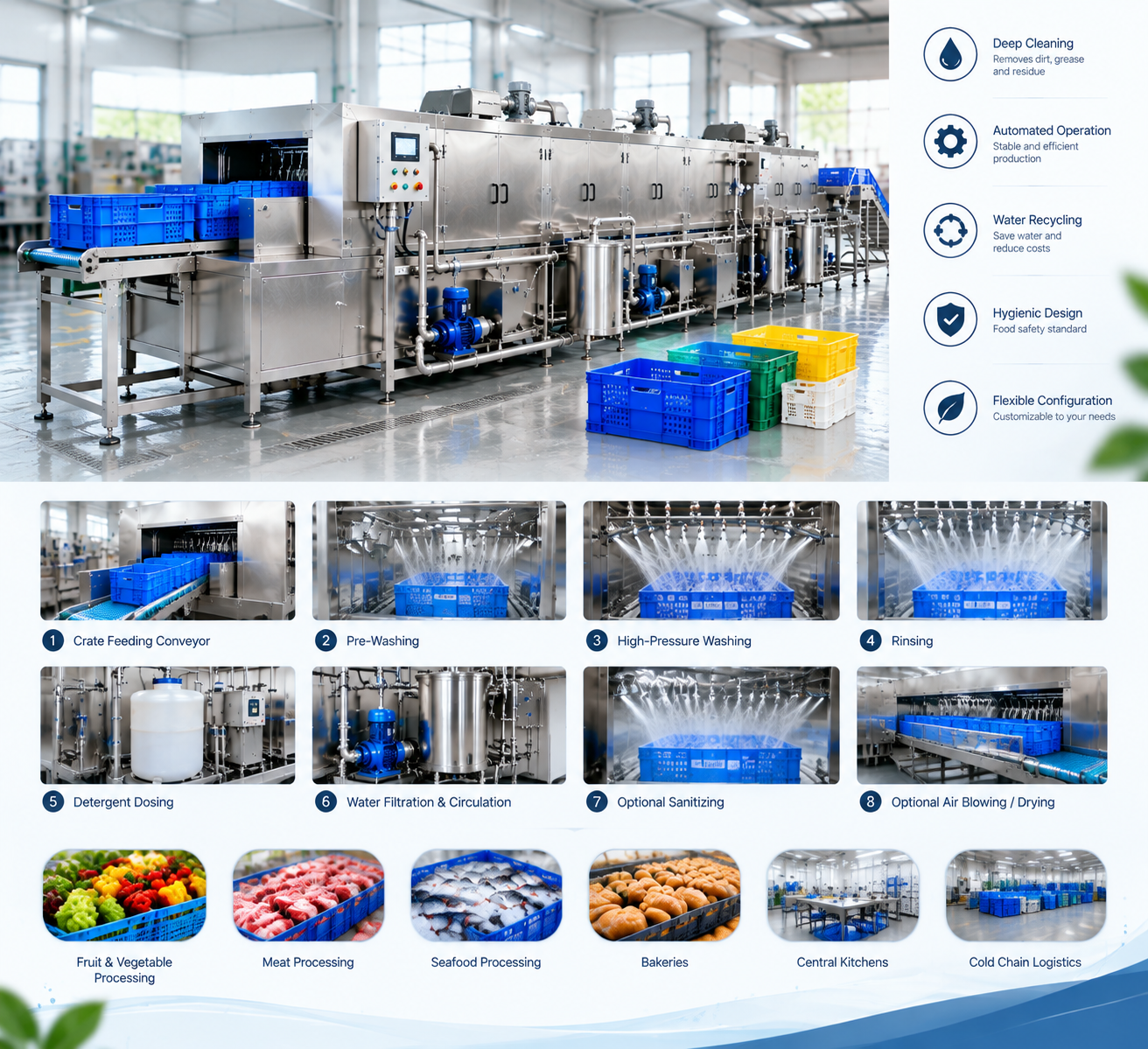
plastic crate washing line, also known as an industrial turnover basket washing line or automatic crate washer system, is designed to clean reusable plastic crates, food turnover boxes, storage baskets, and transport containers used in food processing, meat processing, fruit and vegetable production, seafood factories, bakeries, central kitchens, and cold chain logistics. A complete industrial crate washing machine line typically consists of a crate feeding conveyor, pre-washing section, high-pressure hot-water washing system, detergent dosing system, rinsing section, optional sanitizing unit, water filtration and circulation system, and optional air-blowing or drying equipment. Depending on the factory's hygiene requirements and container design, additional modules can be integrated to remove stubborn grease, meat residues, vegetable debris, labels, and other contaminants. For high-volume facilities, an automatic plastic crate washing machine with conveyor transport and PLC control helps establish a continuous cleaning workflow, reducing repetitive manual handling and making it easier to coordinate crate circulation between production, storage, and dispatch areas. The configuration should be selected according to crate dimensions, material, contamination level, required throughput, and the cleaning process validated by the factory.
2. What Are the Advantages of an Automatic Crate Washing Line?
The main advantages of an automatic turnover basket washing machine include more consistent cleaning conditions, improved labor efficiency, better production flow, and more controllable water and energy consumption. As food manufacturers face increasing pressure to improve hygiene management, reduce operating costs, and strengthen production traceability, automated washing systems are becoming an important part of modern food factory upgrades. Recent industry discussions highlight automation, hygienic equipment design, water conservation, and integrated production systems as important investment priorities for food processors. A properly designed industrial plastic crate washer uses multiple washing stages and strategically positioned spray nozzles to reach crate surfaces, corners, handles, and recessed areas. Depending on the configuration, water filtration, rinse-water reuse, temperature control, adjustable conveyor speed, and automatic detergent dosing can help optimize resource use and maintain repeatable operating conditions. Optional drying modules can reduce residual moisture before crates return to production or storage. For factories handling large quantities of reusable containers, the benefits may include reduced manual lifting, fewer cleaning bottlenecks, more predictable crate availability, and easier integration with conveyor, stacking, and destacking equipment. However, cleaning performance and operating savings depend on the crate design, soil type, machine settings, water quality, and maintenance practices; sanitation effectiveness should be verified against the facility's food safety requirements.
3. How to Choose the Right Crate Washing Machine Manufacturer in 2026?
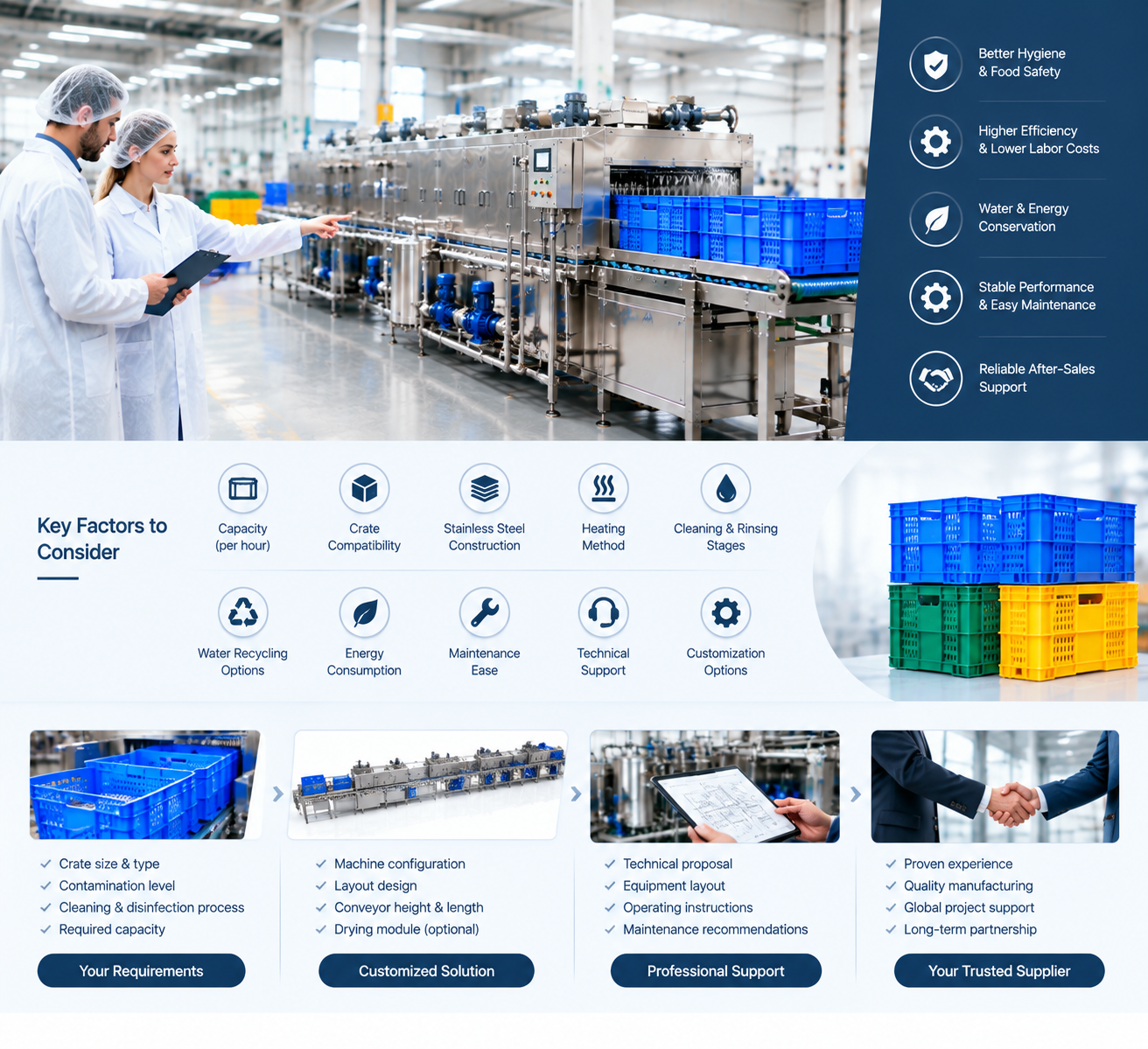
When choosing a crate washing machine manufacturer, food factories should evaluate more than the initial equipment price. Important considerations include hourly washing capacity, compatibility with existing crates, stainless steel construction, heating method, cleaning and rinsing stages, water recycling options, energy consumption, ease of maintenance, and after-sales technical support. Buyers should also confirm whether the proposed automatic crate washing line can handle their actual container dimensions and contamination conditions, and whether the supplier can customize conveyor height, machine length, drying modules, and connections to existing production equipment. For businesses seeking a customized plastic crate washing line, a practical evaluation should begin with the number of crates processed per hour, the type of residue to remove, the required cleaning and disinfection process, the available installation space, and local electrical and utility requirements. A reliable supplier should provide a clear technical proposal, equipment layout, operating instructions, maintenance recommendations, and a realistic explanation of expected performance. Zhucheng Yido Intelligent Technology Co., Ltd. can be considered as a potential food processing equipment supplier by reviewing its relevant machine configurations, manufacturing capabilities, and project support. Before purchasing, request current specifications and confirm that the proposed solution matches your production needs. Investing in a properly configured plastic crate washing machine can help food manufacturers improve reusable-container management, support consistent sanitation procedures, and build a more efficient, resource-conscious production workflow.