What Equipment Is Used in a Milk Pasteurization and Filling Line? Key Advantages for Modern Dairy Production
What Equipment Is Included in a Milk Pasteurization and Filling Line?
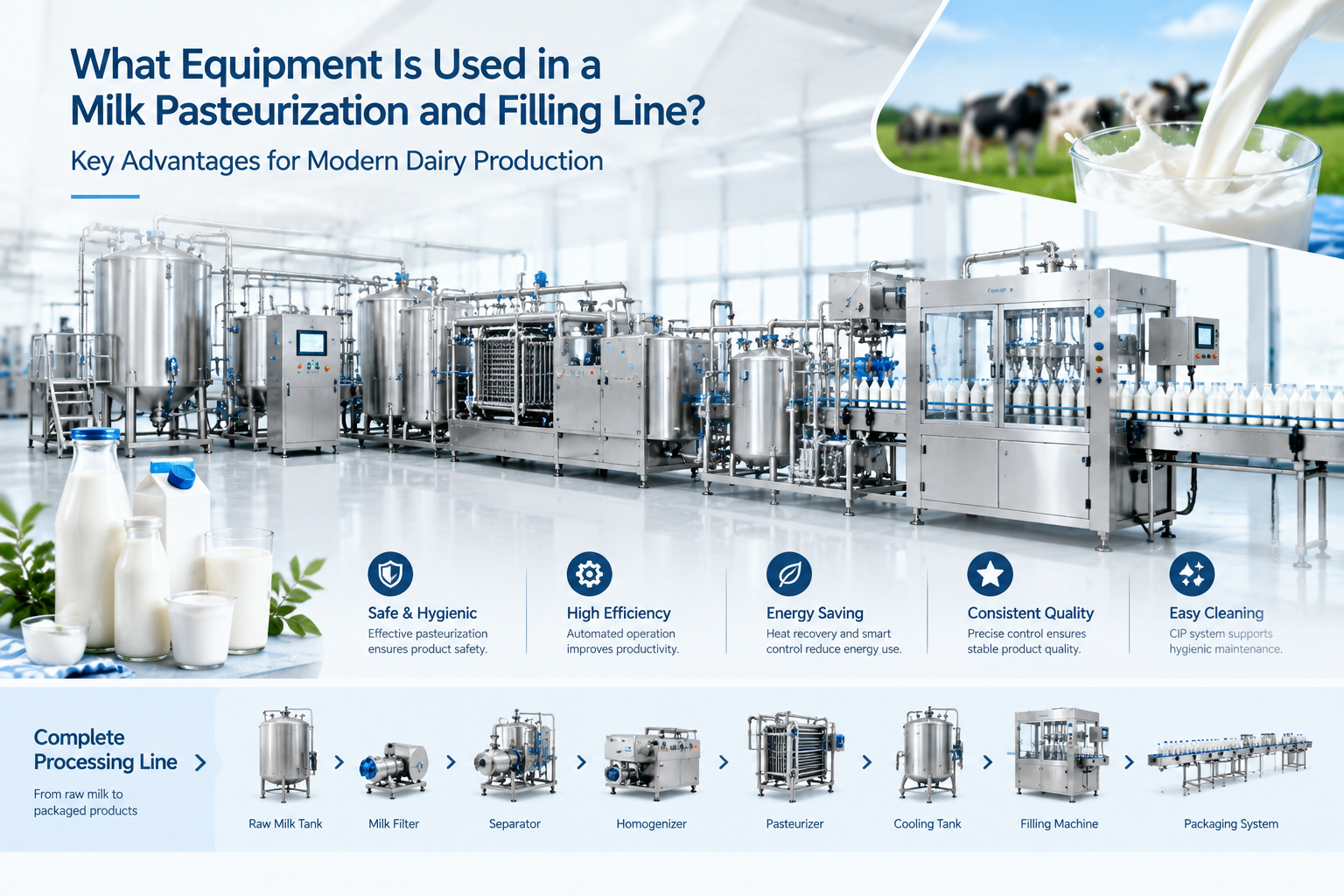
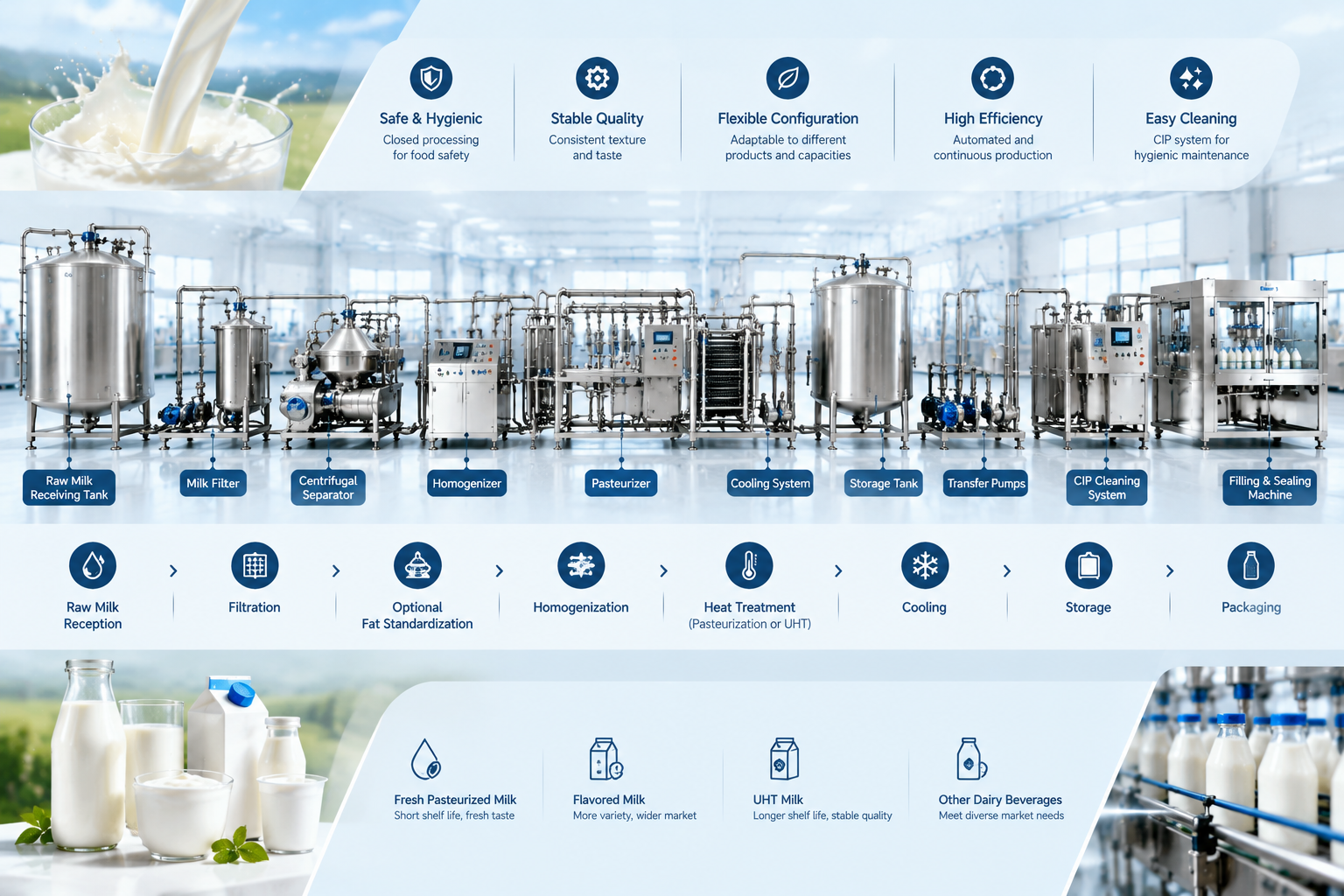
A Milk Pasteurization and Filling Line is an integrated dairy processing system designed to process raw milk into safe, consistent, packaged drinking milk. Depending on production capacity, milk type and packaging requirements, a complete Milk Processing Line may include a raw milk receiving tank, milk filter, centrifugal separator, homogenizer, pasteurizer, cooling system, storage tank, transfer pumps, CIP cleaning system, and automatic milk filling and sealing machine. The process typically involves raw milk reception, filtration, optional fat standardization, homogenization, heat treatment, cooling and packaging. Pasteurization reduces harmful microorganisms through controlled heating, while homogenization helps distribute fat evenly and maintain a consistent product texture. For products requiring extended shelf life, manufacturers may select a UHT sterilization system and compatible aseptic filling equipment. The final equipment configuration depends on whether the factory produces fresh pasteurized milk, flavored milk, UHT milk or other dairy beverages. According to established dairy processing principles, hygienic closed processing, accurate temperature control and appropriate cleaning procedures are essential to product safety and production reliability.
What Are the Main Advantages of a Milk Pasteurization and Filling Line?
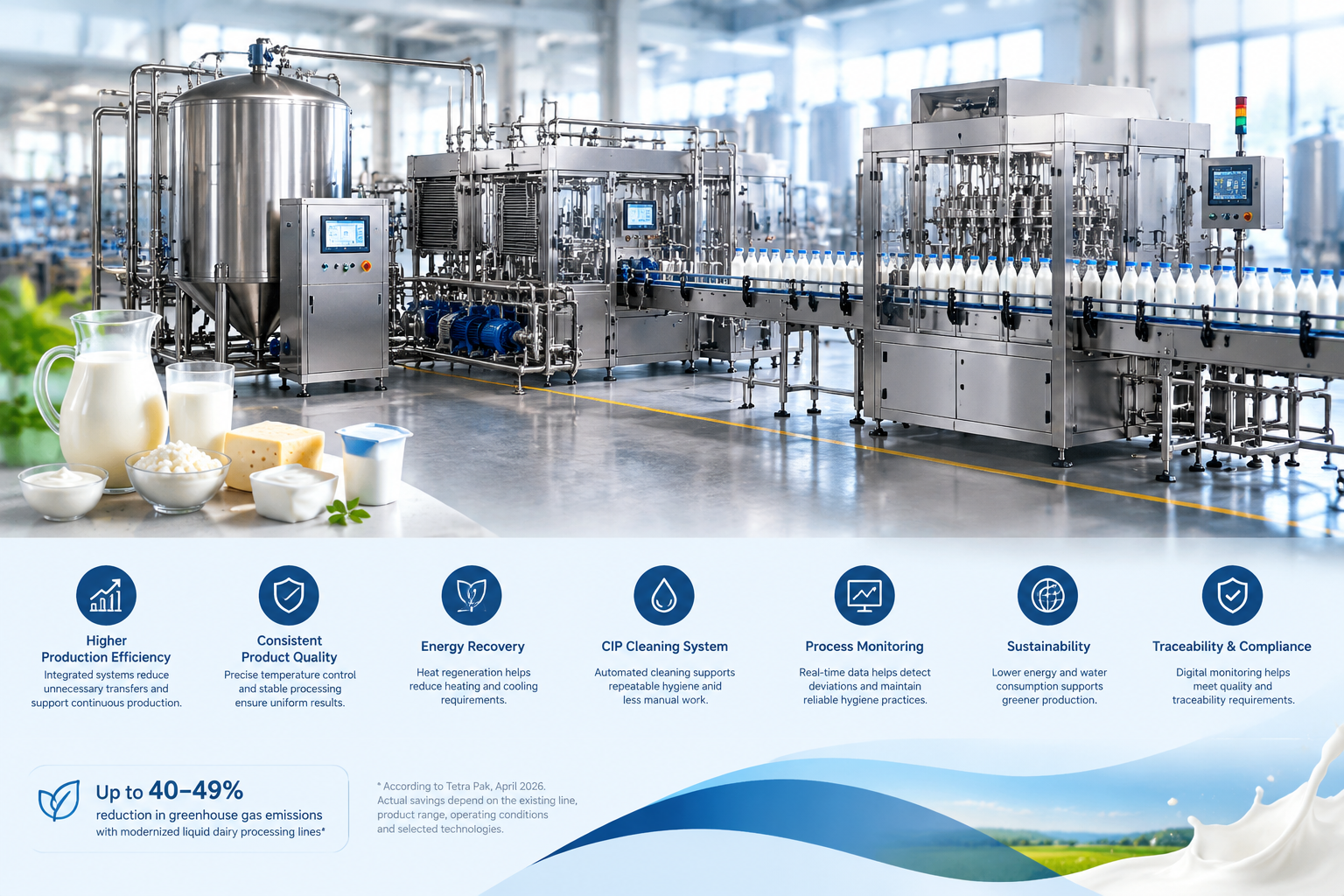
An automatic Milk Pasteurization and Filling Line helps dairy manufacturers improve production efficiency, maintain consistent product quality and reduce dependence on manual operations. Integrated conveyors, pumps, temperature controls and filling systems can coordinate different processing stages, reduce unnecessary product transfers and support continuous production. Heat regeneration in pasteurization systems can recover energy from the processed milk, helping reduce heating and cooling requirements. Automated Clean-in-Place (CIP) systems support repeatable cleaning of tanks, pipelines and processing equipment, while process monitoring can help operators identify deviations and maintain reliable hygiene practices. These advantages are particularly important as dairy processors increasingly focus on energy efficiency, water conservation, digital monitoring and production traceability. In April 2026, Tetra Pak reported that modernizing existing liquid dairy processing lines could reduce greenhouse gas emissions by 40–49% under the study's specified comparison scenarios, demonstrating the potential value of targeted equipment upgrades. Actual savings depend on the existing line, product range, operating conditions and selected technologies.
How to Choose the Right Milk Pasteurization and Filling Equipment for Your Factory?
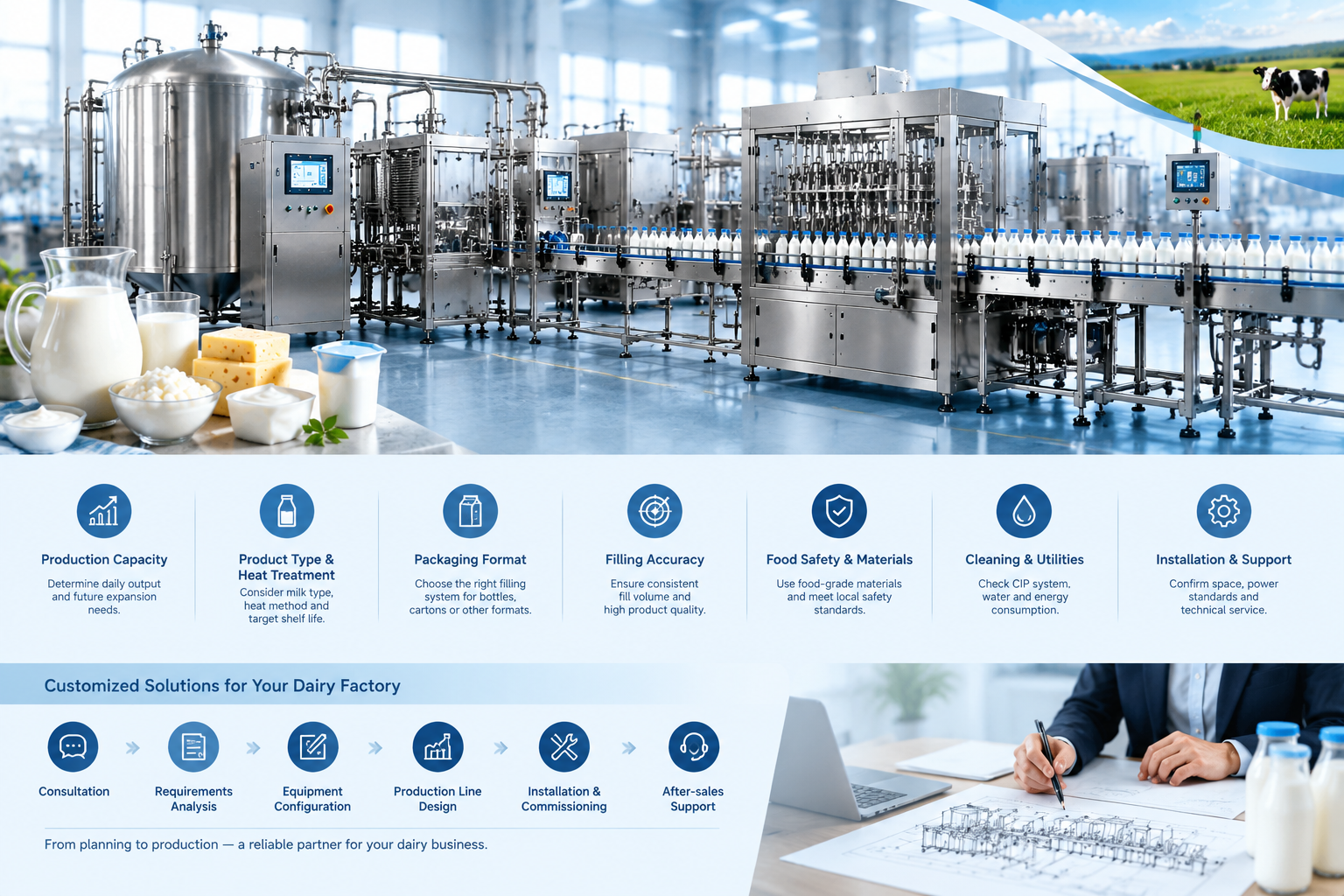
Selecting the right Industrial Milk Processing Equipment requires more than comparing machine prices or rated output. Buyers should first determine daily production capacity, such as liters per hour, the type of milk to be processed, the required heat-treatment method, packaging format, target shelf life and local food safety requirements. Other important factors include filling accuracy, bottle or carton compatibility, cleaning procedures, water and energy consumption, installation space, electrical standards and after-sales technical support. For growing dairy businesses, a customized Milk Pasteurization and Filling Production Line can integrate processing, storage, cleaning and packaging equipment according to the factory layout and future expansion plans. Zhucheng Yido Intelligent Technology Co., Ltd. can discuss equipment configuration and customized production line requirements according to each customer's application and technical specifications. Before placing an order, buyers should confirm processing capacity, product-contact materials, pasteurization parameters, automation level, cleaning requirements, installation scope and acceptance criteria with the supplier. A well-planned dairy processing line can provide a practical foundation for safe milk production, efficient operations and long-term business development.