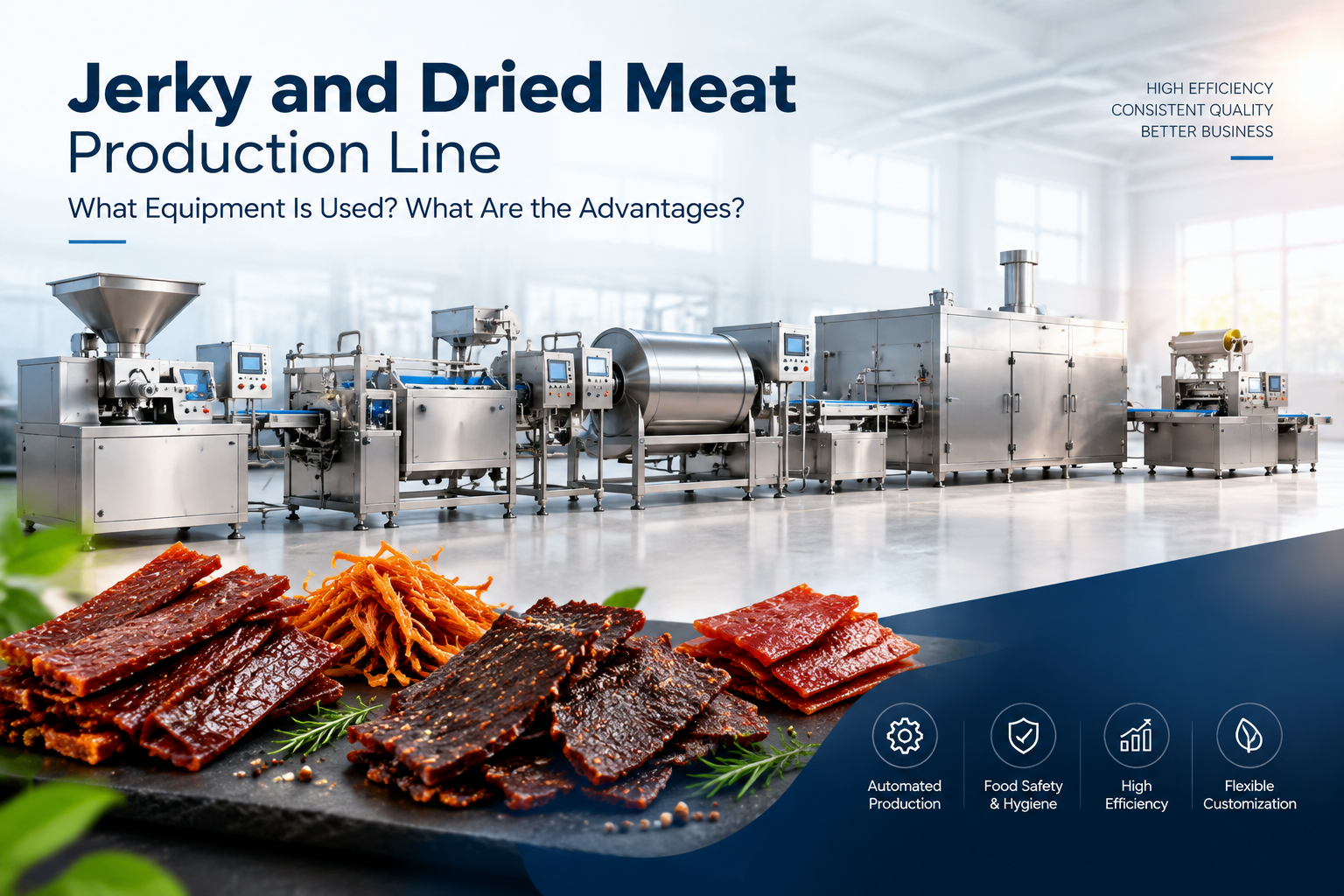
What Equipment Is Used in a Jerky and Dried Meat Production Line? What Are the Advantages?
What Equipment Is Included in a Jerky and Dried Meat Production Line?
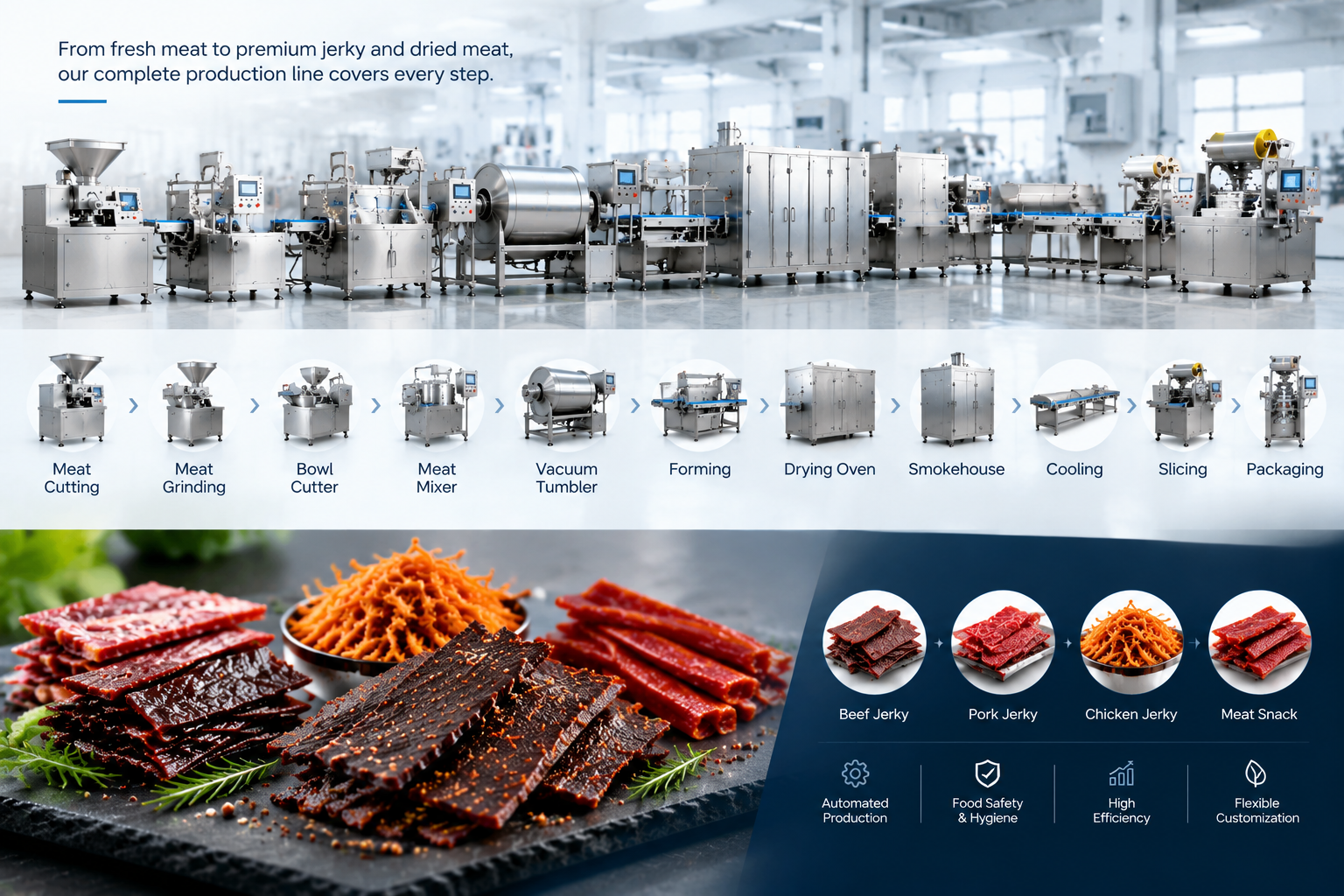
The growing demand for high-protein snacks, convenient foods, and clean-label meat products is driving the jerky and dried meat industry toward automated and standardized production. A complete jerky and dried meat production line can include a meat cutting machine, meat grinder, bowl cutter, meat mixer, vacuum tumbler, jerky forming machine, drying oven, smokehouse, cooling machine, slicing machine, and vacuum or automatic packaging machine. The equipment configuration depends on the type of finished product. For sliced beef jerky, pork jerky, or chicken jerky, the process generally includes meat cutting, marinating, vacuum tumbling, drying or smoking, cooling, and packaging. For formed meat jerky and meat snack products, grinding, chopping, seasoning, mixing, forming, baking or drying, cutting, and packaging may be required. This flexible combination of jerky processing equipment allows manufacturers to produce different meat materials, shapes, flavors, thicknesses, and packaging formats while meeting commercial production requirements.
What Are the Advantages of Automated Jerky Processing Equipment?
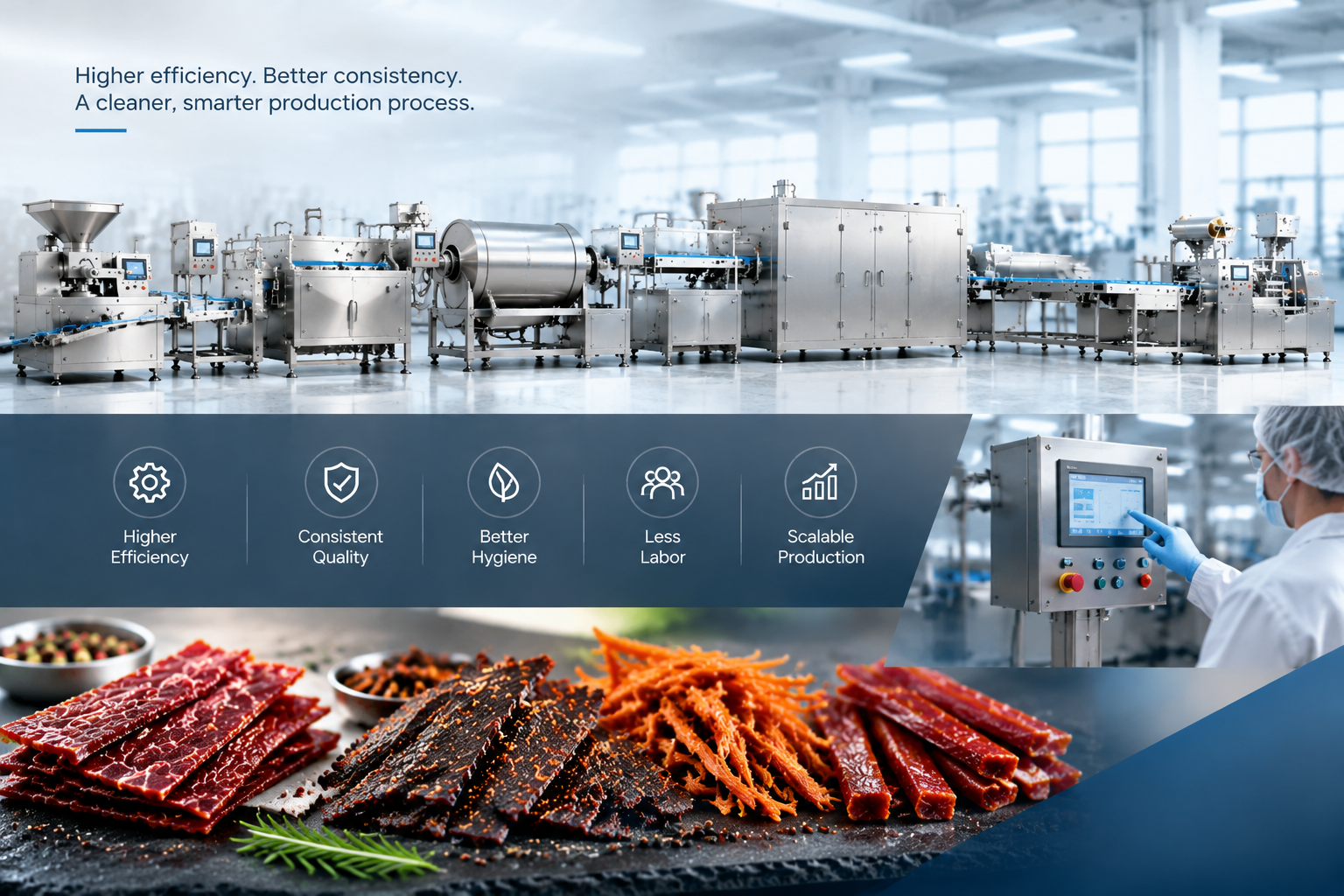
Compared with traditional manual processing, an automated meat jerky production line provides significant advantages in production efficiency, product consistency, hygiene, and labor management. Modern equipment can precisely control key parameters such as cutting thickness, mixing time, vacuum level, tumbling speed, drying temperature, humidity, and processing time. This helps maintain consistent texture, flavor, moisture content, appearance, and overall product quality between batches. Automation also reduces direct manual contact with food and supports a cleaner and more standardized production environment. For meat processing companies facing rising labor costs and difficulties in recruiting skilled workers, automated dried meat processing equipment can reduce labor requirements while increasing production capacity. Integrating multiple machines into a continuous processing line can also improve material handling, reduce unnecessary intermediate operations, and make production management more efficient. For manufacturers producing large volumes or multiple jerky products, a complete production line provides better scalability and process control than operating individual machines separately.
What Are the Future Trends in Jerky and Dried Meat Production?
Automation and Intelligent Production
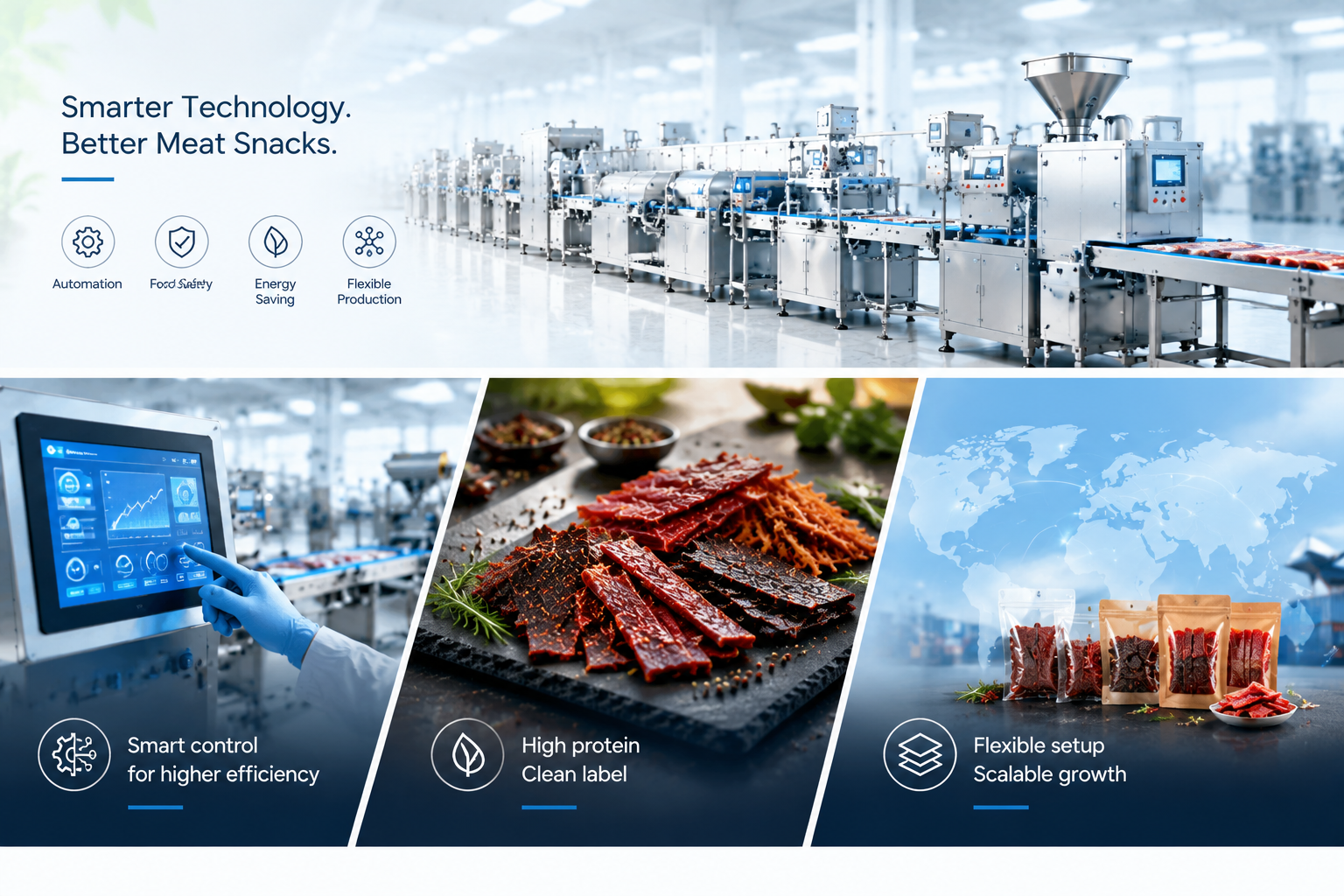
Automation, intelligent processing, food safety, energy efficiency, and flexible manufacturing are becoming important trends in the meat snack industry. Manufacturers increasingly require equipment capable of precise parameter control, stable operation, and easier production management. Automated weighing, forming, drying, slicing, and packaging systems can improve accuracy, reduce material waste, and support consistent output.
High-Protein and Clean-Label Meat Snacks
The growing popularity of high-protein and convenient snacks is creating opportunities for beef jerky, pork jerky, chicken jerky, and other dried meat products. Consumers are paying greater attention to protein content, ingredients, sugar levels, flavor variety, and convenient packaging. This trend is encouraging manufacturers to develop more product varieties and adopt flexible processing lines capable of handling different recipes and production specifications.
Flexible and Scalable Production Lines
For companies planning to enter or expand in the beef jerky, pork jerky, chicken jerky, and dried meat snack market, equipment selection is becoming increasingly important. A modular jerky production line can be configured according to production capacity, raw materials, product shape, drying method, and packaging requirements. Manufacturers can start with essential processing equipment and expand the line as demand increases. A well-designed production system integrates meat preparation, seasoning, tumbling, forming, drying, cooling, slicing, and packaging, helping food processors achieve higher capacity, stable product quality, lower labor dependence, and long-term production scalability.