What Equipment Is Used in a Fruit and Vegetable Drying Line? Key Benefits and Industry Trends
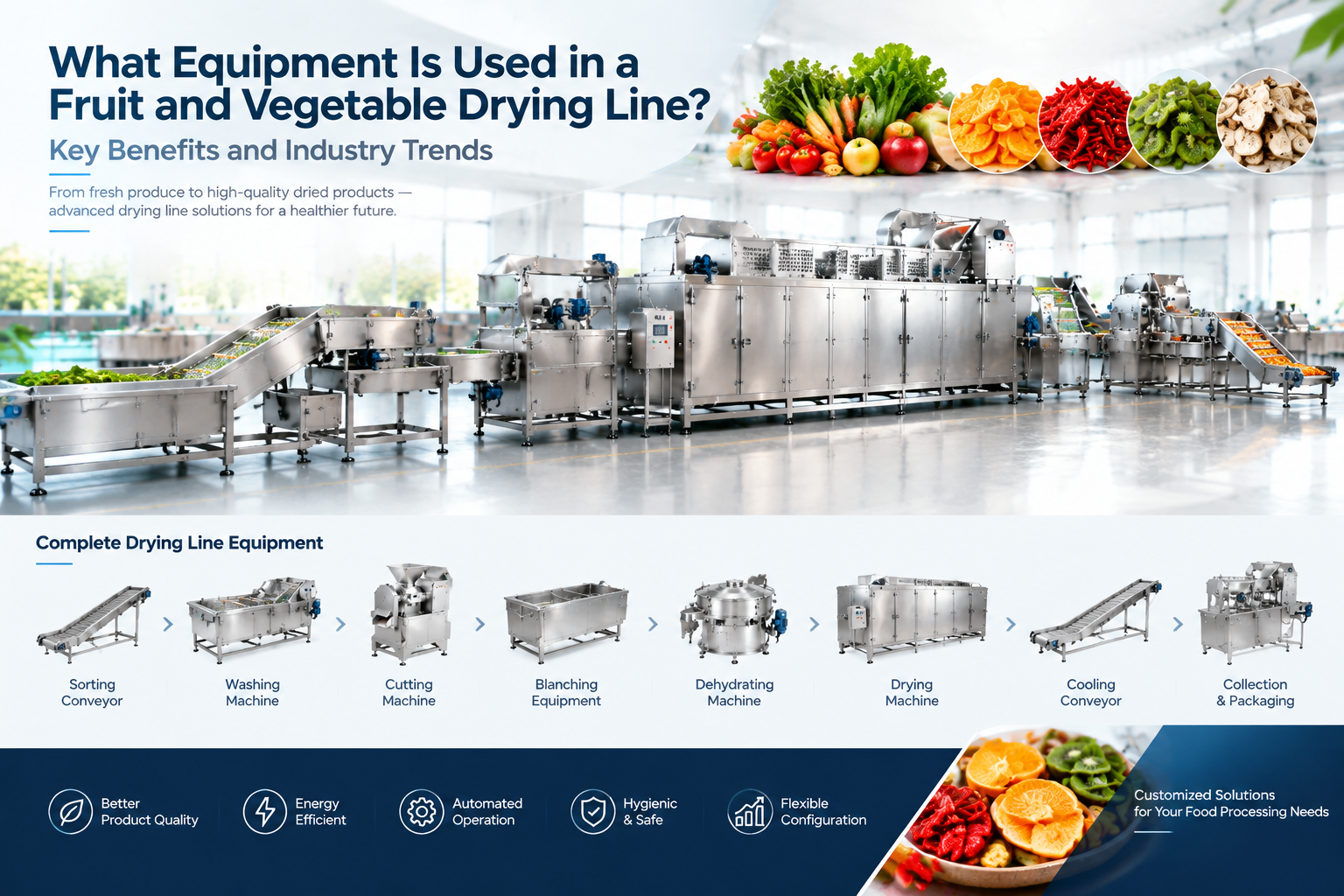
What Equipment Is Used in a Fruit and Vegetable Drying Line?
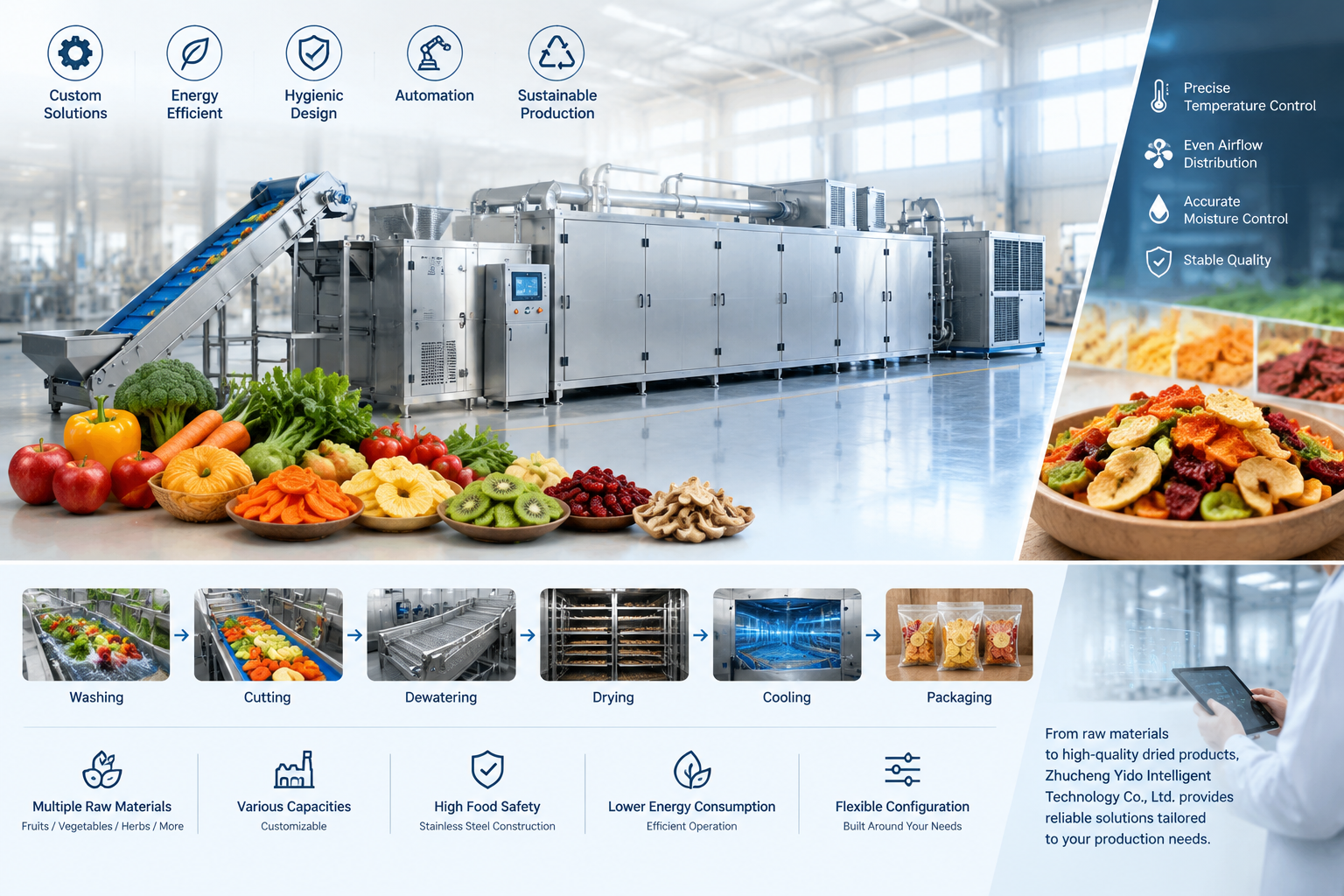
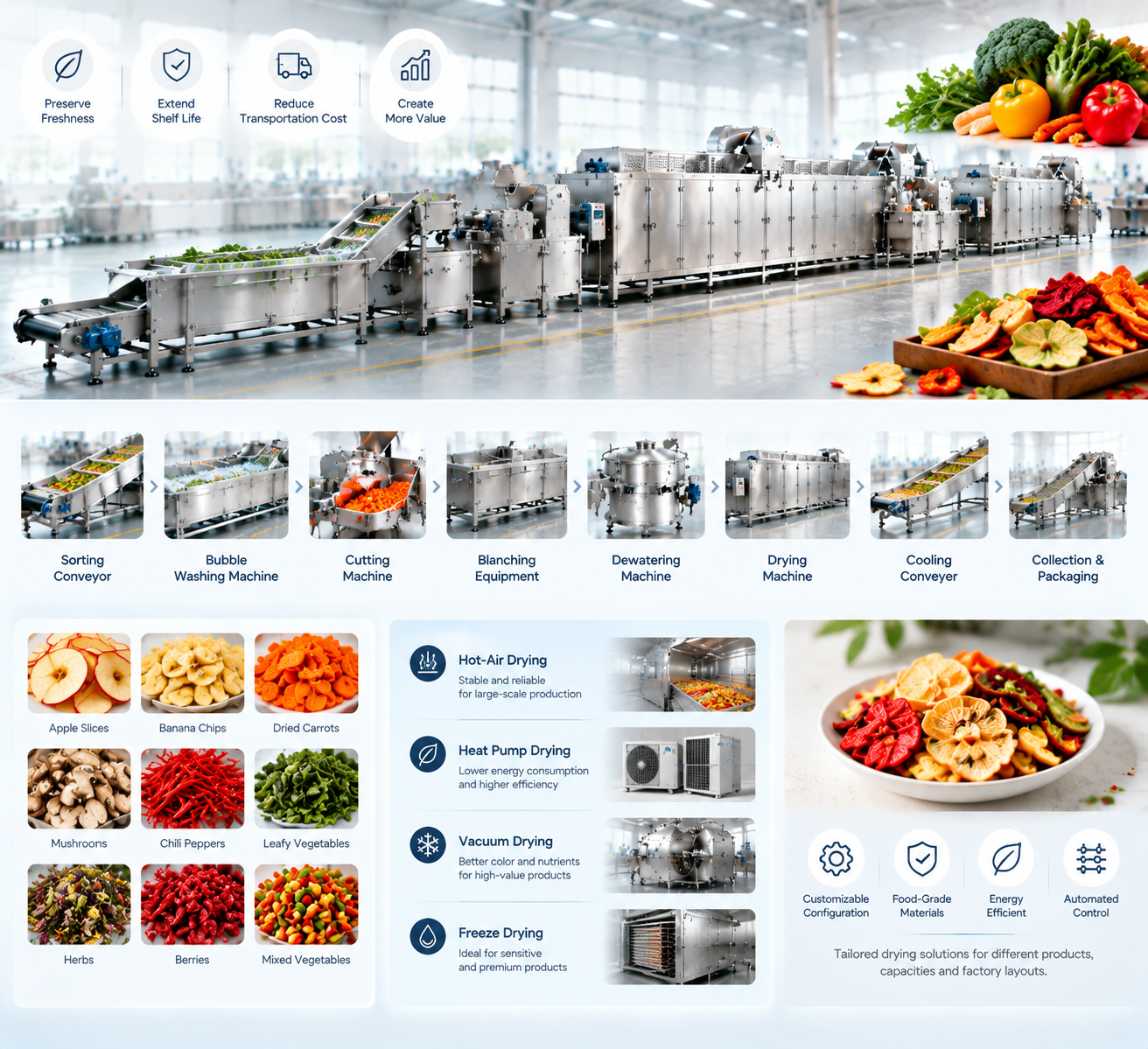
A Fruit and Vegetable Drying Line is an integrated food processing system designed to remove moisture from fruits, vegetables, herbs, and other agricultural products to improve storage stability, reduce transportation weight, and create value-added dried ingredients. Depending on the raw materials and finished product requirements, a complete Fruit and Vegetable Drying Line Processing Equipment configuration may include a sorting conveyor, bubble washing machine, vegetable or fruit cutting machine, blanching equipment, dewatering machine, industrial drying machine, cooling conveyor, and final collection or packaging equipment. Not every factory requires all these machines; the actual configuration depends on the product, production capacity, drying method, and factory layout. Conventional hot-air drying remains a practical choice for many industrial applications, while heat pump drying, vacuum drying, freeze drying, and hybrid drying technologies can be considered when energy efficiency, product appearance, or heat-sensitive nutrients are important. For example, apple slices, banana chips, dried carrots, mushrooms, chili peppers, leafy vegetables, and herbal ingredients may require different washing, cutting, pretreatment, temperature, and airflow arrangements. Therefore, selecting the right Industrial Fruit and Vegetable Drying Equipment begins with defining the finished product, target moisture content, hourly output, and required quality standards.
What Are the Main Advantages of an Automatic Fruit and Vegetable Drying Line?
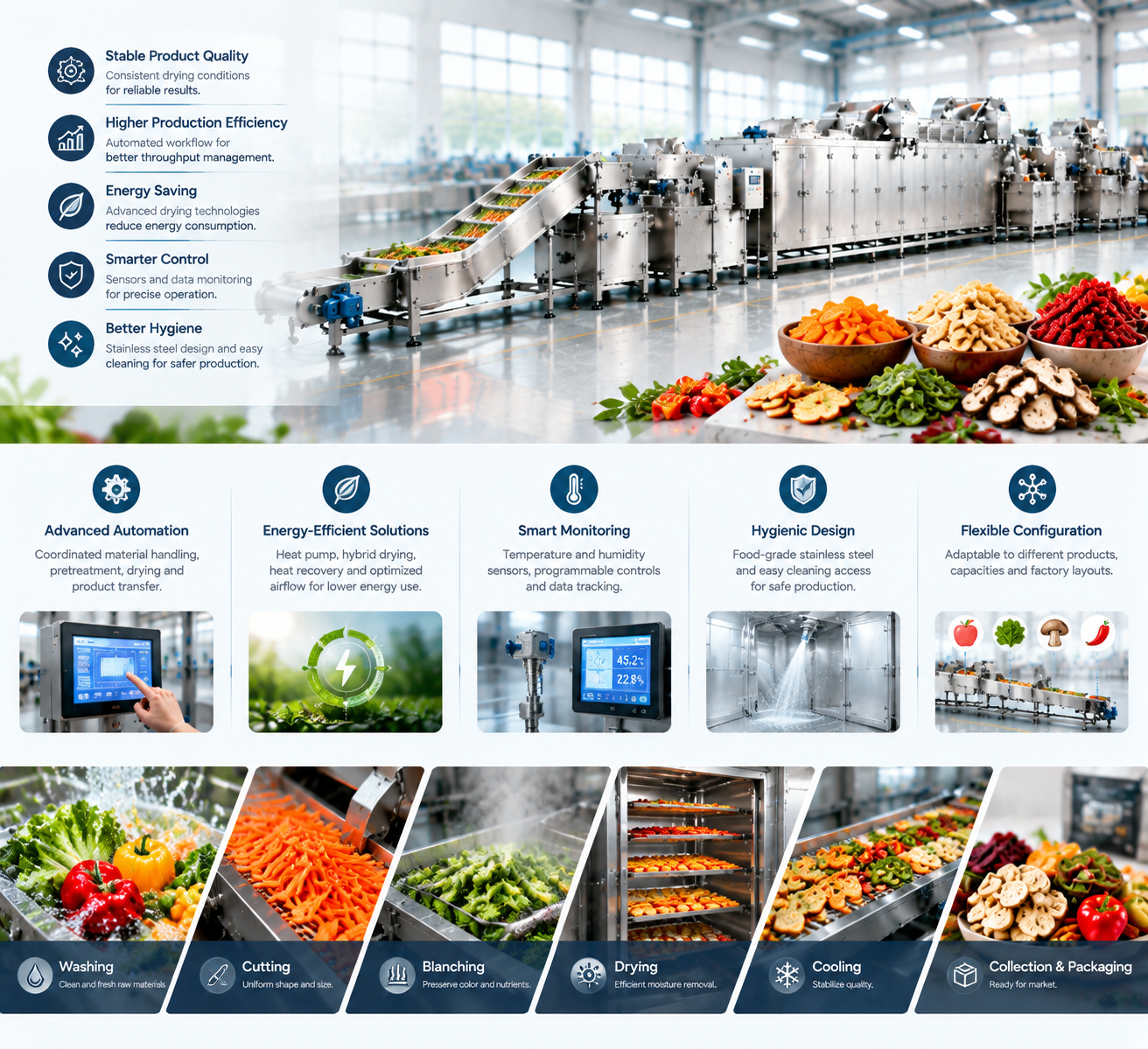
An Automatic Fruit and Vegetable Drying Line can improve production consistency by coordinating material handling, pretreatment, moisture removal, and product transfer within a more organized workflow. Compared with fragmented manual operations, a properly designed system can reduce repetitive labor, improve throughput management, and help maintain more consistent drying conditions. Energy efficiency has also become a major equipment-selection priority: research published in 2026 highlights heat pump systems, hybrid drying, heat recovery, and optimized airflow as important approaches to reducing energy consumption while maintaining product quality. Smart drying is another developing trend, with temperature and humidity sensors, programmable controls, data monitoring, and automated process adjustment helping operators manage drying conditions more precisely. These technologies do not guarantee the same savings for every product, because results depend on raw material moisture, loading density, ambient conditions, equipment design, and operating procedures. Hygienic construction and convenient cleaning access are equally important for commercial food processing plants, helping support sanitation management and reduce the risk of cross-contamination. A well-planned Commercial Fruit and Vegetable Drying System can therefore offer several practical benefits: more stable product quality, better production organization, potentially lower energy and labor costs, improved process monitoring, and greater flexibility for different product specifications. The most suitable solution balances investment cost, operating expenses, product quality, maintenance requirements, and expected production volume rather than focusing on machine price alone.
How to Choose the Right Fruit and Vegetable Drying Equipment in 2026
When choosing Fruit and Vegetable Drying Equipment, manufacturers should first confirm the raw material type, initial moisture content, target final moisture content, required texture and color, and planned production capacity. The next step is to compare drying technologies: hot-air drying is widely used for scalable production, heat pump drying may offer advantages in controlled, energy-conscious operation, and vacuum or freeze drying may be appropriate for products requiring more specialized quality characteristics and a higher equipment investment. Buyers should also evaluate the entire production workflow, including washing efficiency, cutting uniformity, dewatering performance, loading method, airflow distribution, temperature control, cooling, and downstream packaging integration. In 2026, food processing equipment investment is increasingly influenced by automation, hygienic design, sustainability, and system integration, making it important to assess the performance of the complete line rather than individual machines in isolation. Before ordering, request technical specifications, expected throughput under defined operating conditions, installation dimensions, electrical requirements, cleaning procedures, spare-parts information, and after-sales support. As a food processing machinery manufacturer, Zhucheng Yido Intelligent Technology Co., Ltd. can provide customized equipment configurations according to the product being processed, factory layout, output requirements, and intended workflow. A suitable Customized Fruit and Vegetable Drying Line should be designed around actual production needs, helping food factories improve processing efficiency, manage energy use, and build a more reliable dried-food production process.