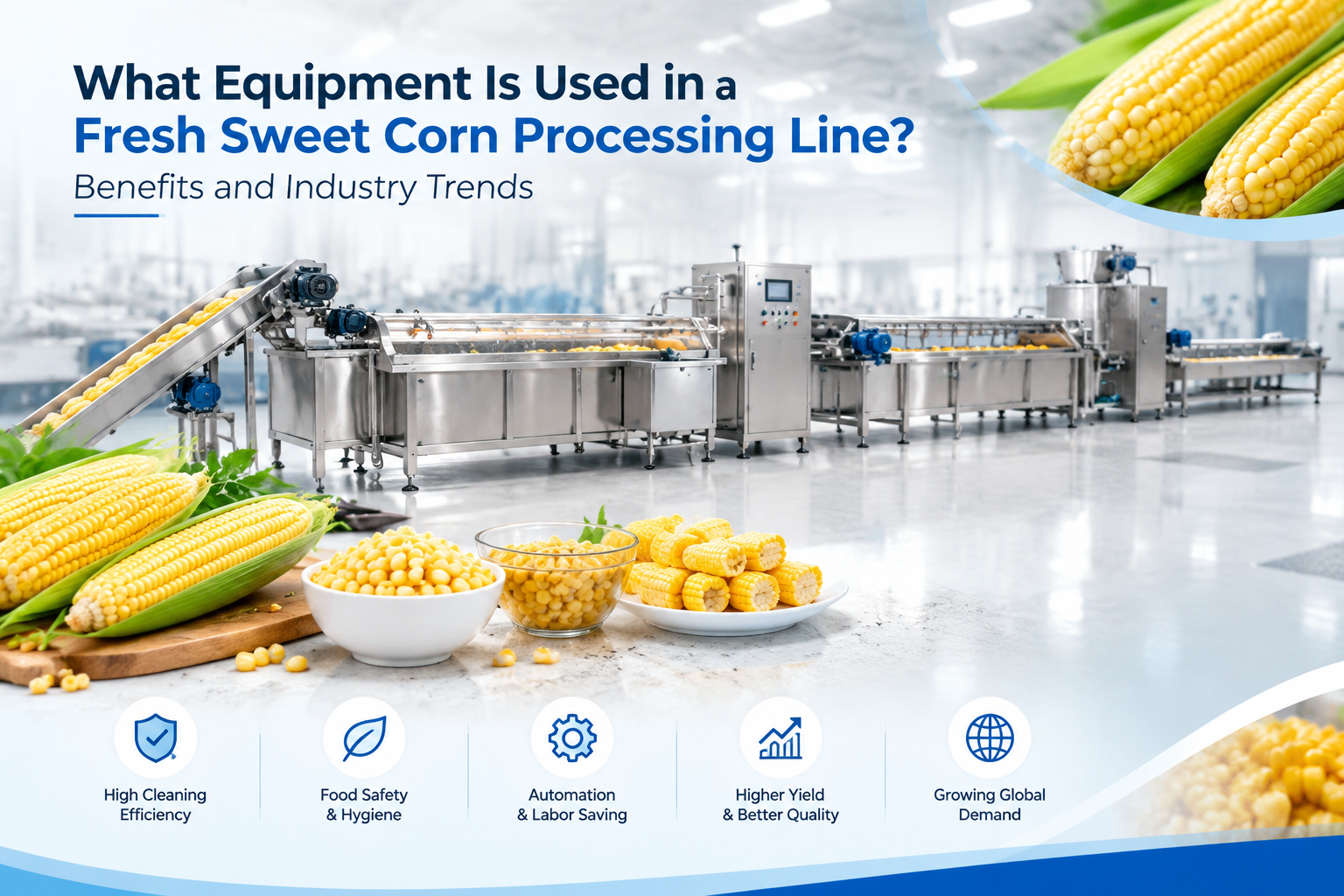
What Equipment Is Used in a Fresh Sweet Corn Processing Line? Benefits and Industry Trends
H2: What Equipment Is Used in a Fresh Sweet Corn Processing Line?
H3: 1. Corn Husking and Silk Removal Machine
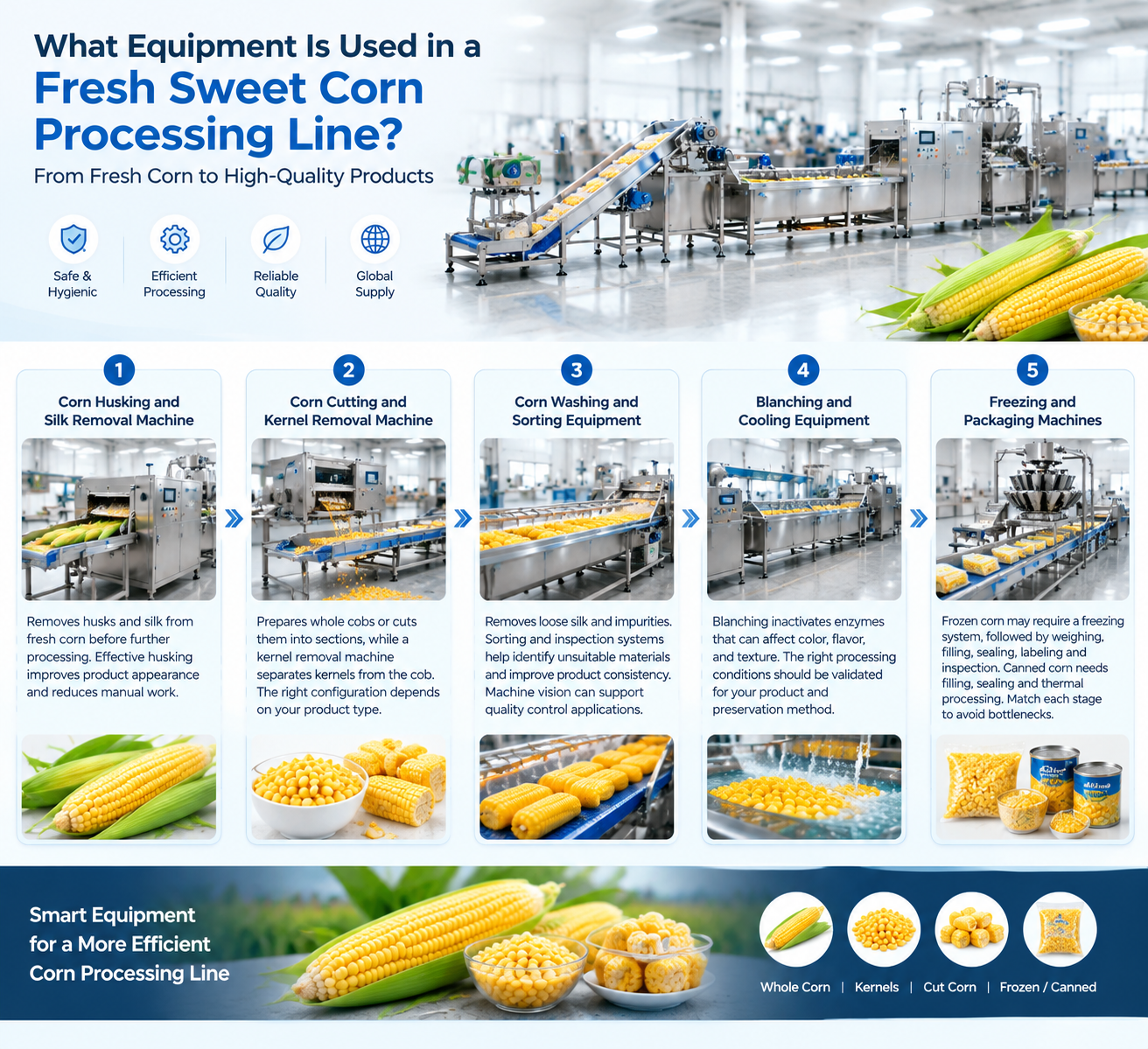
This machine removes husks and silk from fresh corn before further processing. Effective husking improves product appearance and reduces manual preparation work. When selecting equipment, consider corn size, kernel damage, cleaning requirements, and processing capacity.
H3: 2. Corn Cutting and Kernel Removal Machine
A corn cutting machine prepares whole cobs or cuts them into sections, while a kernel removal machine separates kernels from the cob. The right configuration depends on whether the factory produces whole corn, cut corn, or corn kernels for frozen and canned food products.
H3: 3. Corn Washing and Sorting Equipment
Washing equipment removes loose silk and impurities. Sorting and inspection systems help identify unsuitable materials and improve product consistency. Modern inspection technologies, including machine vision, may also support selected quality-control applications.
H3: 4. Blanching and Cooling Equipment
Blanching is commonly used before freezing or other preservation processes to inactivate enzymes that can affect color, flavor, and texture. Processing conditions should be validated for the specific product and preservation method.
H3: 5. Freezing and Packaging Machines
Frozen corn production may require a suitable freezing system, followed by weighing, filling, sealing, labeling, and inspection equipment. Canned corn requires a different configuration, including filling, sealing, and appropriate thermal processing equipment. Matching each stage helps avoid production bottlenecks.
H2: What Are the Advantages of a Fresh Sweet Corn Processing Line?
H3: 1. Higher Efficiency and Reduced Labor
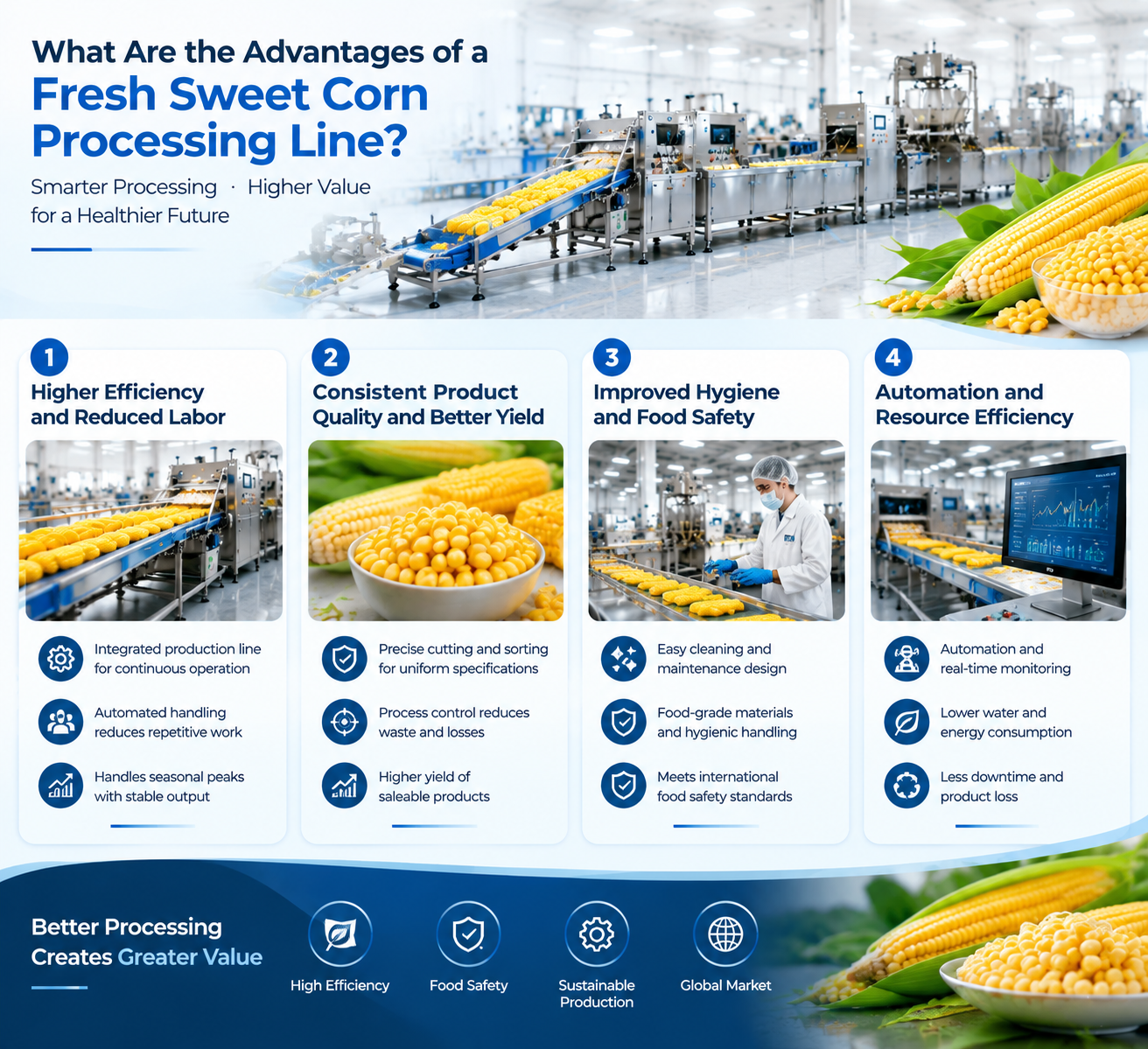
An integrated line connects feeding, husking, cutting, washing, preservation, and packaging. Automated material handling can reduce repetitive manual work and improve production continuity, particularly during seasonal harvest peaks.
H3: 2. Consistent Product Quality and Better Yield
Suitable cutting, sorting, and process-control equipment helps manufacturers maintain more consistent product specifications. Monitoring losses at each processing stage can help reduce waste and improve the yield of saleable products.
H3: 3. Improved Hygiene and Food Safety
Modern food machinery should support effective cleaning, maintenance, and hygienic product handling. Food-contact materials and equipment design should meet the requirements of the intended application and destination market.
H3: 4. Automation and Resource Efficiency
Automation, production monitoring, inspection technology, and energy-efficient equipment are important industry trends in 2026. Manufacturers should evaluate these features according to measurable benefits, such as labor requirements, downtime, water consumption, energy use, and product losses.
H2: How to Choose the Right Sweet Corn Processing Equipment
H3: 1. Define Your Final Product and Capacity
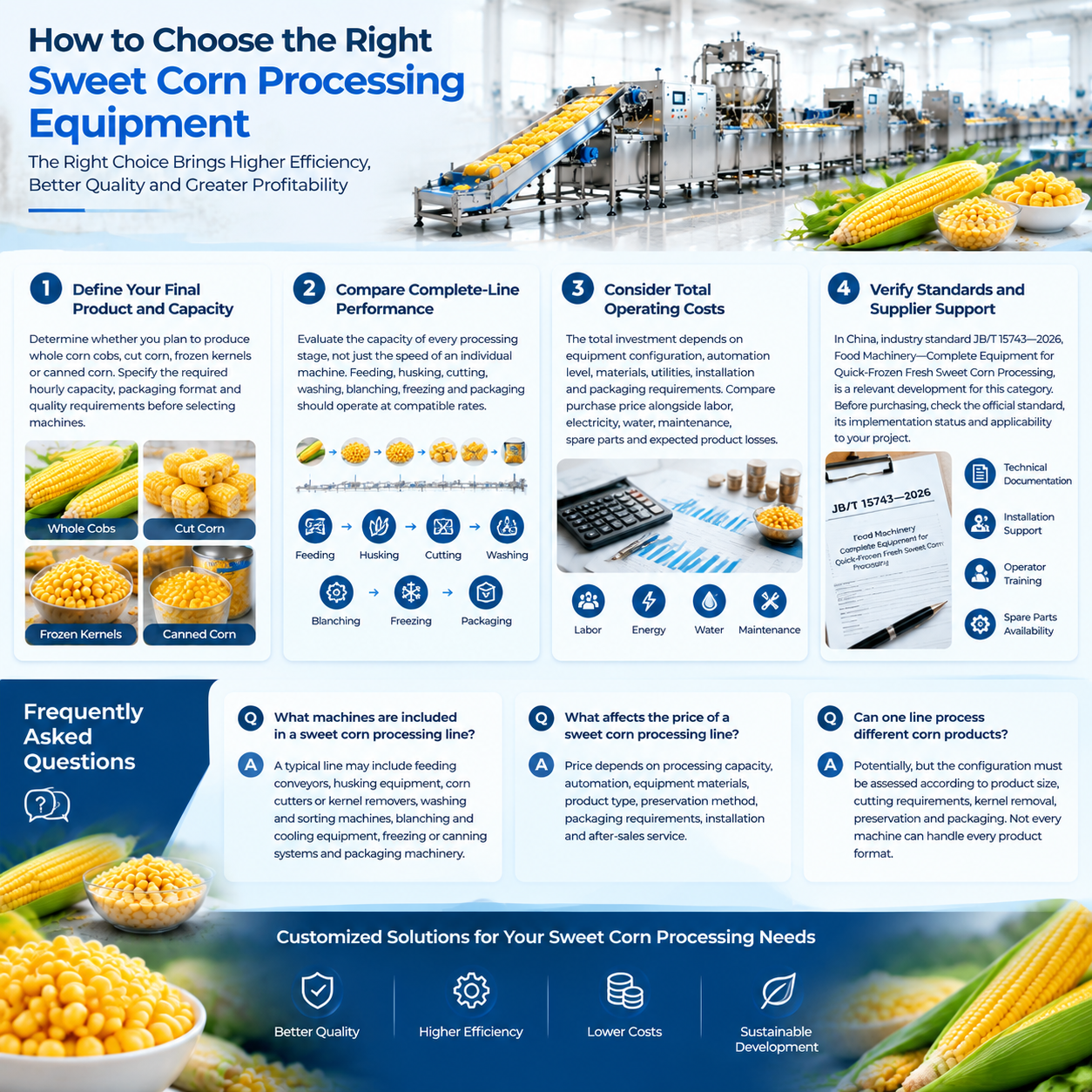
Determine whether you plan to produce whole corn cobs, cut corn, frozen kernels, or canned corn. Specify the required hourly capacity, packaging format, and quality requirements before selecting machines.
H3: 2. Compare Complete-Line Performance
Evaluate the capacity of every processing stage, not just the speed of an individual machine. Feeding, husking, cutting, washing, blanching, freezing, and packaging should operate at compatible rates.
H3: 3. Consider Total Operating Costs
The total investment depends on equipment configuration, automation level, materials, utilities, installation, and packaging requirements. Compare purchase price alongside labor, electricity, water, maintenance, spare parts, and expected product losses.
H3: 4. Verify Standards and Supplier Support
In China, industry standard JB/T 15743—2026, Food Machinery—Complete Equipment for Quick-Frozen Fresh Sweet Corn Processing, is a relevant development for this equipment category. Before purchasing, verify the official standard, its implementation status, and its applicability to your project. Also check technical documentation, installation support, operator training, and spare-parts availability.
H2: Frequently Asked Questions
H3: What machines are included in a sweet corn processing line?
A typical line may include feeding conveyors, husking equipment, corn cutters or kernel removers, washing and sorting machines, blanching and cooling equipment, freezing or canning systems, and packaging machinery.
H3: What affects the price of a sweet corn processing line?
Price depends on processing capacity, automation, equipment materials, product type, preservation method, packaging requirements, installation, and after-sales service.
H3: Can one line process different corn products?
Potentially, but the configuration must be assessed according to product size, cutting requirements, kernel removal, preservation, and packaging. Not every machine can handle every product format.