What Equipment Is Used in a Braised Food Production Line and What Are Its Advantages?
Paragraph 1 – What Equipment Is Used in a Braised Food Production Line?
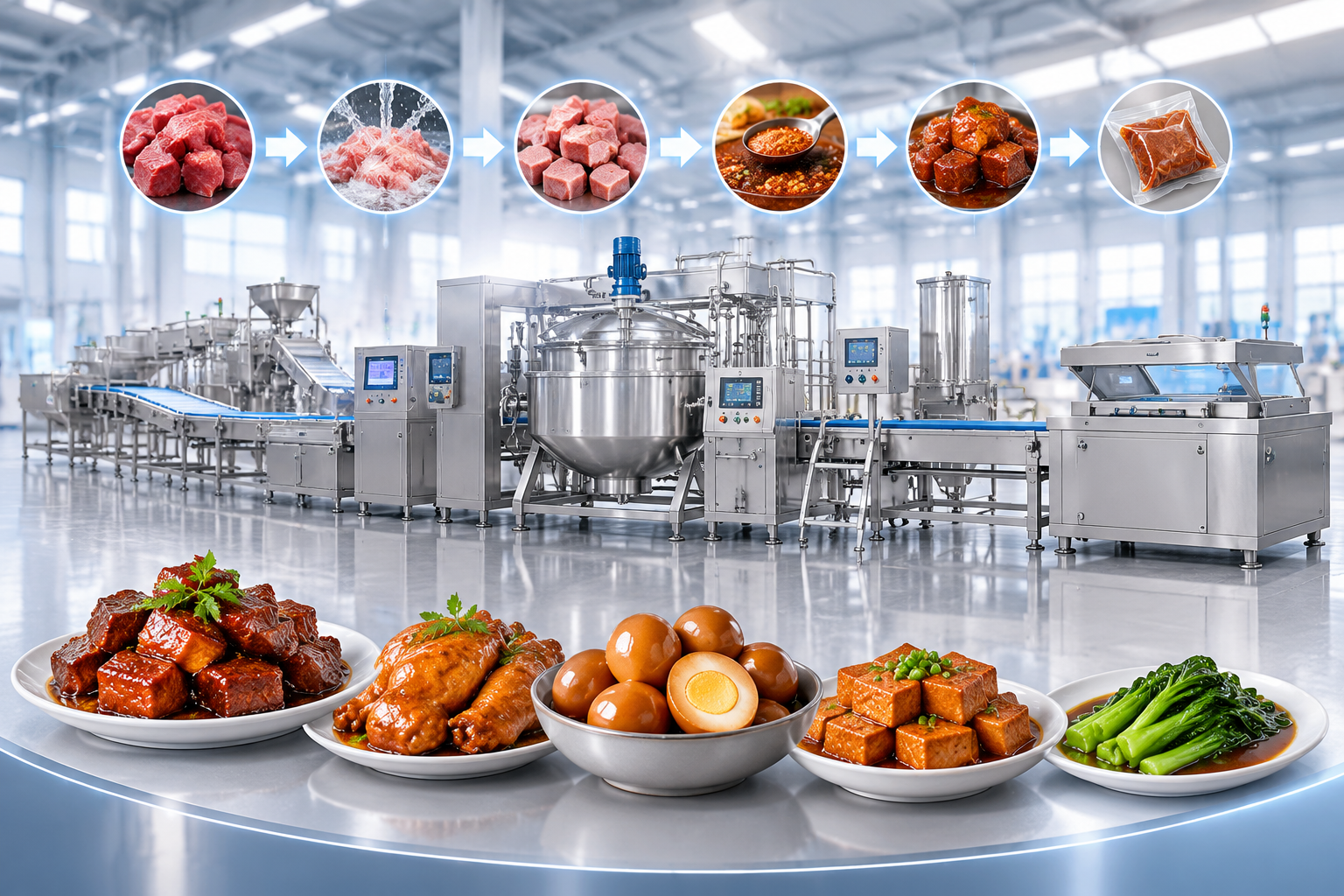
A Braised Food Production Line is an integrated food processing system designed for producing braised meat, poultry, eggs, tofu, vegetables, and other seasoned cooked foods. Depending on the raw materials, final products, and production capacity, a typical Braised Food Processing Line may include raw material sorting and conveying equipment, industrial washing machines, blanching equipment, meat or vegetable cutting machines, seasoning mixers, industrial cooking kettles, cooling conveyors, vacuum packaging machines, and metal detection equipment. The core equipment usually includes an industrial cooking system for temperature-controlled braising and seasoning, together with auxiliary machines for preparation, handling, cooling, and packaging. For example, braised beef and chicken products may require washing, cutting, pre-cooking, seasoning, and controlled cooking, while braised eggs and tofu may need different feeding and handling configurations. Not every factory requires all these machines; the final equipment combination should be determined by product characteristics, processing procedures, hygiene requirements, and packaging methods.
Paragraph 2 – What Are the Advantages of Automatic Braised Food Processing Equipment?
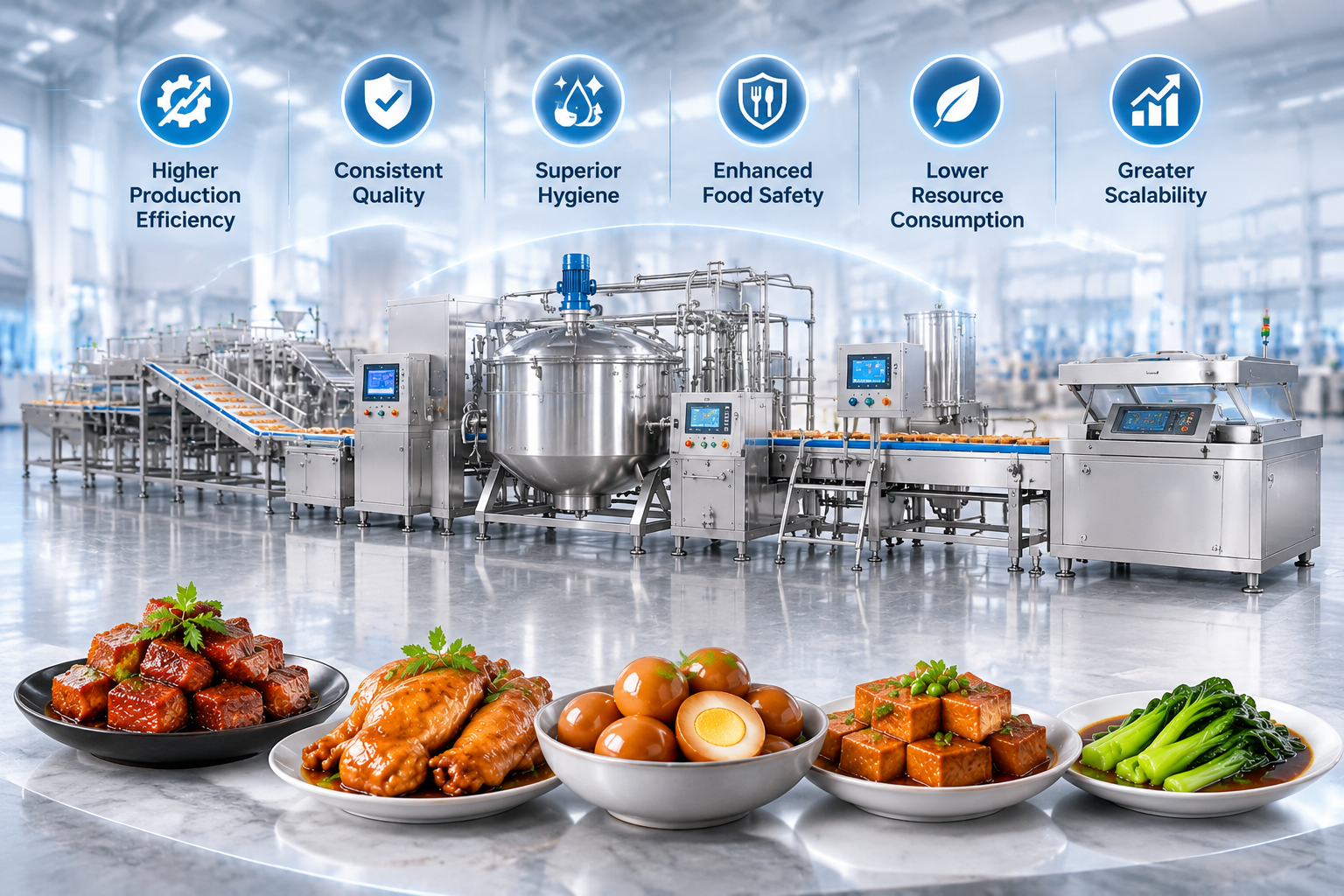
An Automatic Braised Food Production Line helps food manufacturers improve production efficiency, reduce repetitive manual operations, and maintain more consistent product quality. Compared with separate manual processing operations, integrated Braised Meat Processing Equipment can create a more organized workflow from raw material preparation to final packaging. Industrial cooking kettles with adjustable temperature and time settings help operators manage cooking conditions and seasoning processes, while conveying and handling equipment can reduce unnecessary material transfers. Suitable cooling and packaging equipment also helps manufacturers organize post-cooking operations and protect finished products during handling. In 2026, automation, hygienic equipment design, food safety monitoring, and resource efficiency are increasingly important investment priorities for food manufacturers. PMMI and FPSA's 2026 industry report identifies workforce shortages, sanitation, data-driven monitoring, and operational efficiency as major factors influencing equipment investment. These developments make customized, easy-to-clean, and expandable food processing systems increasingly valuable for manufacturers seeking stable production and long-term operating efficiency.
Paragraph 3 – How to Choose the Right Braised Food Production Line Manufacturer?
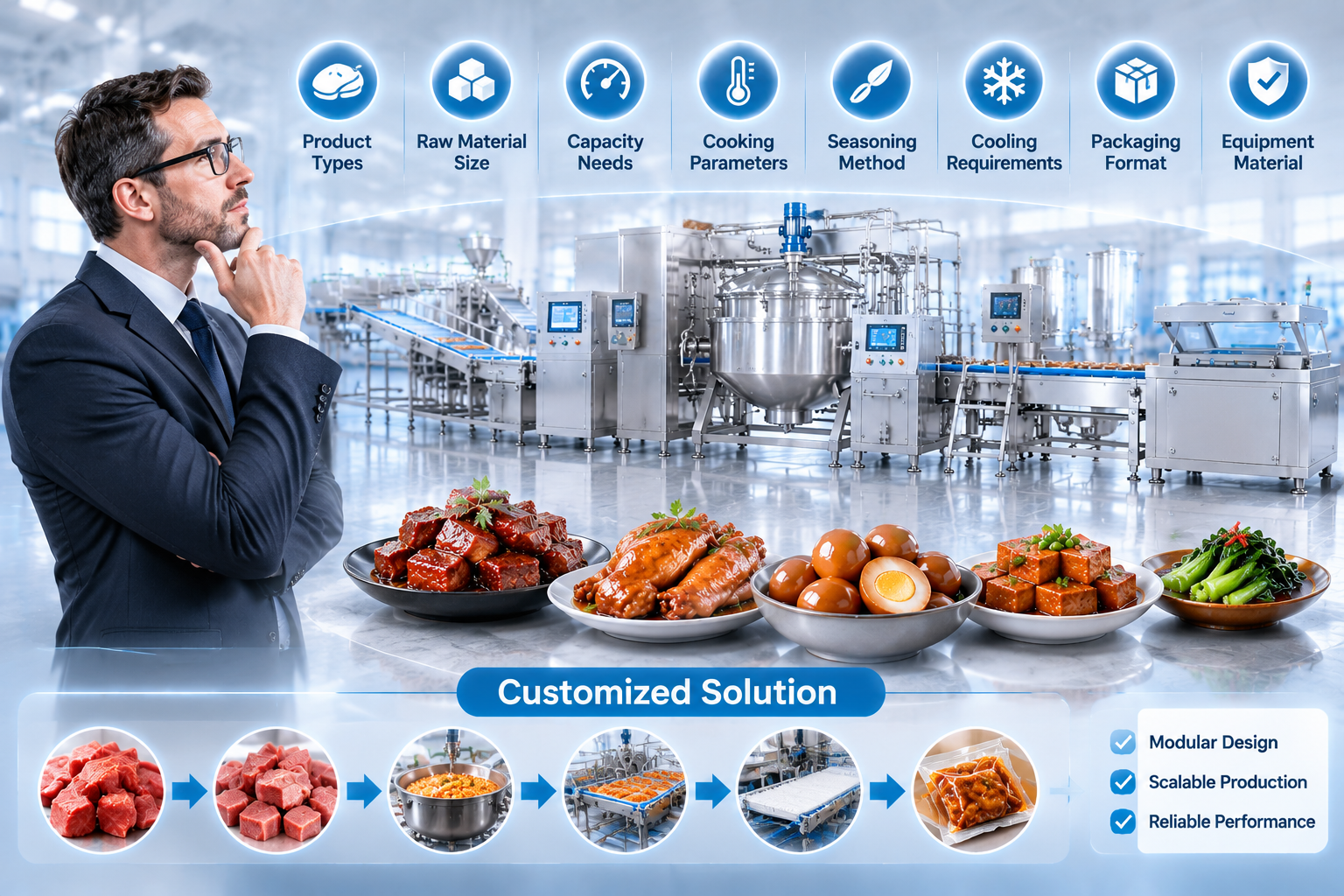
When selecting a Braised Food Production Line Manufacturer, buyers should evaluate more than the initial machine price. Important considerations include the types of products to be processed, raw material dimensions, required hourly capacity, cooking temperature and time, seasoning methods, cooling requirements, packaging format, equipment materials, cleaning convenience, and factory layout. Manufacturers should also confirm whether the proposed Commercial Braised Food Processing Equipment can be integrated with existing production facilities and whether the supplier can provide customized equipment combinations instead of offering only fixed configurations. For food factories planning to expand production, a modular processing line can make it easier to add washing, cutting, cooking, conveying, cooling, and packaging equipment in stages. Zhucheng Yido Intelligent Technology Co., Ltd. provides food processing machinery and customized production line solutions for international customers. By evaluating actual product requirements and production targets, buyers can select suitable equipment for braised meat, poultry, eggs, tofu, and other prepared foods while building a more efficient and scalable manufacturing workflow.