
Jam production line
Automatic Jam Production Line: Advantages and Future Trends
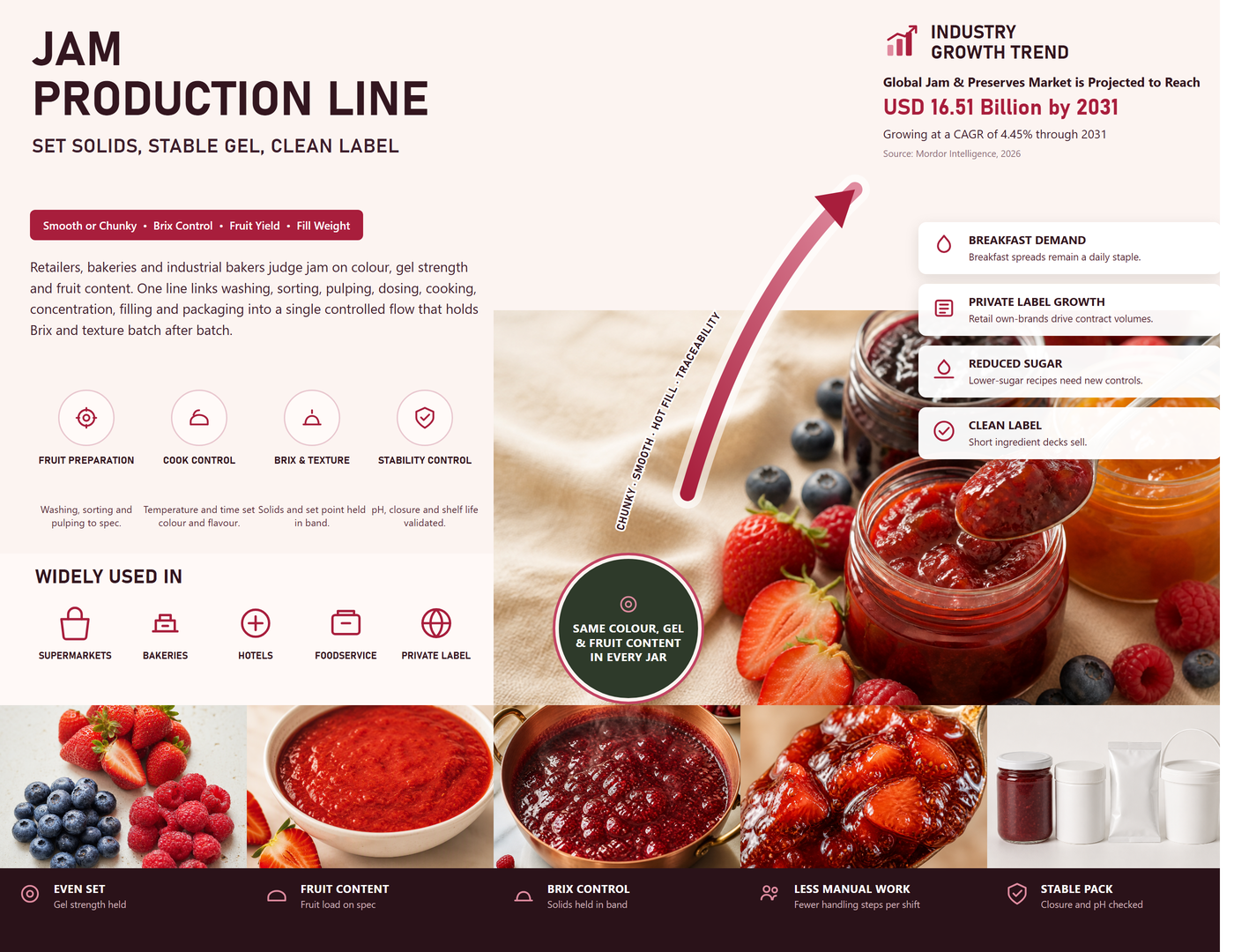
With the growing demand for convenient breakfast foods, bakery ingredients, fruit-based snacks, and versatile food spreads, the global jam and fruit preserve industry continues to offer opportunities for food manufacturers, wholesalers, supermarkets, bakeries, hotels, and private-label brands. Consumers are increasingly interested in a wider variety of fruit flavors, including strawberry, blueberry, raspberry, mango, pineapple, peach, and mixed-fruit jam. At the same time, market demand is encouraging manufacturers to explore reduced-sugar formulations, fruit-rich recipes, clean-label products, and convenient packaging formats. An automatic jam production line provides an integrated solution for transforming fresh or processed fruit into consistent, market-ready jam products. Depending on the raw materials and final formulation, a complete jam processing line may include fruit washing, sorting, peeling, cutting, pulping, crushing, blending, sugar dosing, cooking, concentration, homogenization, filling, sealing, and packaging equipment. Different configurations can support smooth fruit jam, chunky fruit preserves, bakery jam, filling jam, and other fruit-based spreads. By connecting these processing stages, manufacturers can reduce unnecessary manual handling, improve production flow, and establish more standardized operations. A properly designed fruit jam manufacturing line also helps businesses accommodate different fruit varieties, recipe requirements, production capacities, and packaging formats. For manufacturers supplying retail stores, bakeries, foodservice companies, and industrial food producers, this flexibility can create opportunities to develop new products and respond to seasonal changes in fruit availability. As competition increases in the packaged food market, investing in suitable automatic jam processing equipment can help manufacturers improve productivity, maintain consistent product quality, and build a scalable foundation for long-term growth.
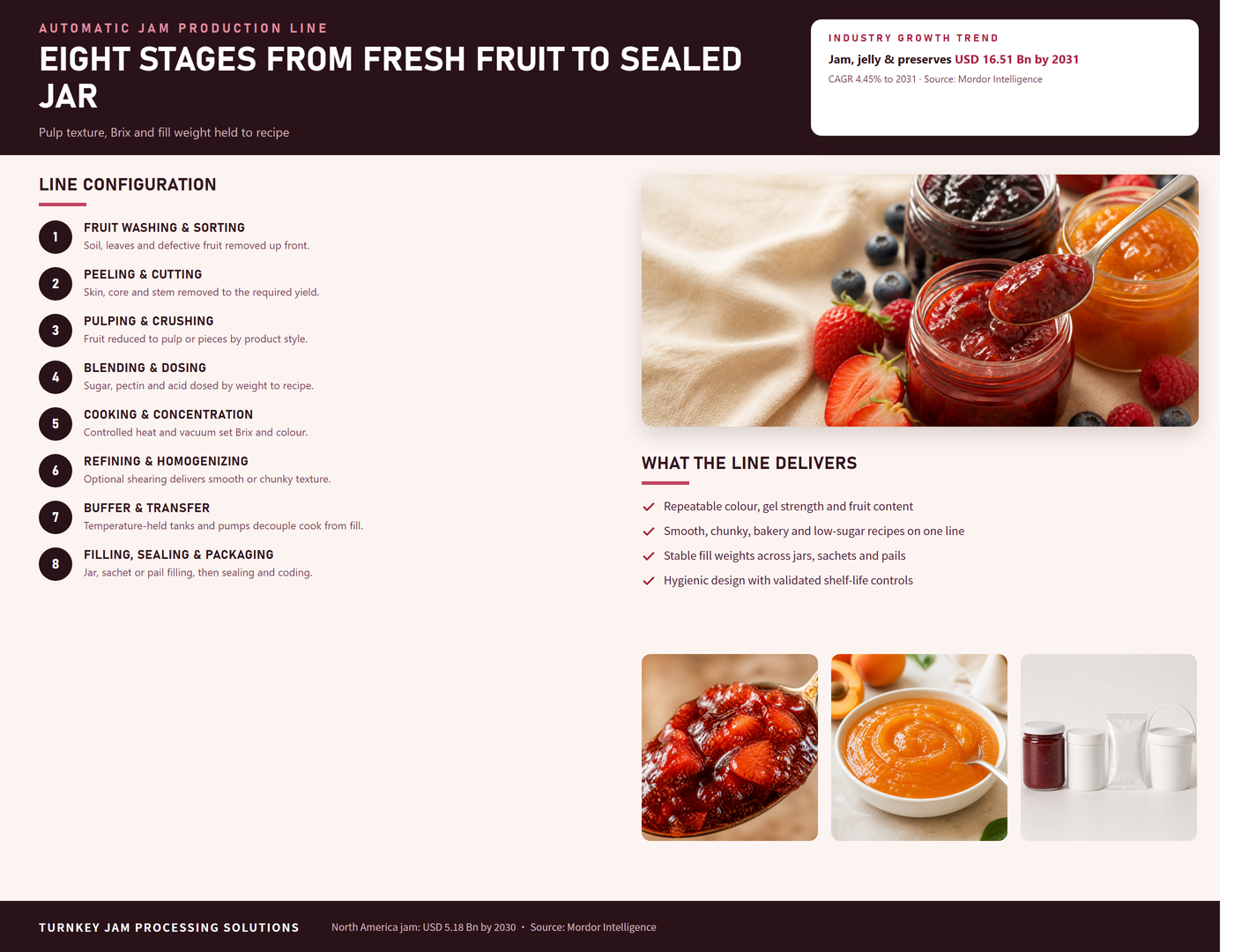
One of the main advantages of an industrial jam production line is its ability to improve processing efficiency, fruit utilization, and finished-product consistency. In manual or poorly coordinated production, variations in fruit preparation, ingredient proportions, cooking temperature, concentration time, and mixing can affect color, flavor, viscosity, texture, and finished-product yield. Automated washing and sorting systems help prepare fruit for subsequent processing, while cutting, crushing, and pulping equipment can be selected according to the characteristics of different fruits. Accurate ingredient dosing supports consistent formulations, and controlled heating and stirring systems help manufacturers manage the cooking process and achieve the desired product texture. Depending on the recipe, concentration equipment can help reduce excess water and develop the required solids content, while suitable homogenizing or refining systems can produce a smoother texture when needed. Automated filling and sealing equipment can improve packaging efficiency and help maintain consistent filling weights. These integrated operations may reduce repetitive labor, improve throughput, and minimize avoidable material losses, although actual performance depends on fruit quality, recipe design, equipment configuration, and operating conditions. Food safety and product stability are equally important in commercial jam manufacturing. Manufacturers should control incoming fruit quality, water quality, ingredient handling, cleaning procedures, processing temperatures, and packaging conditions. Food-contact components should use suitable materials, and the equipment layout should support effective cleaning and inspection. For products intended for ambient storage, pH, soluble solids, thermal processing, container compatibility, and closure integrity may all influence product stability and must be assessed according to the specific formulation and applicable requirements. Reduced-sugar jam may require different preservation and processing controls from traditional high-sugar formulations, so manufacturers should not assume that the same processing conditions will work for every recipe. Properly selected equipment, combined with validated processing procedures and suitable packaging, can help manufacturers achieve more reliable quality and shelf-life performance while meeting customer and regulatory expectations.
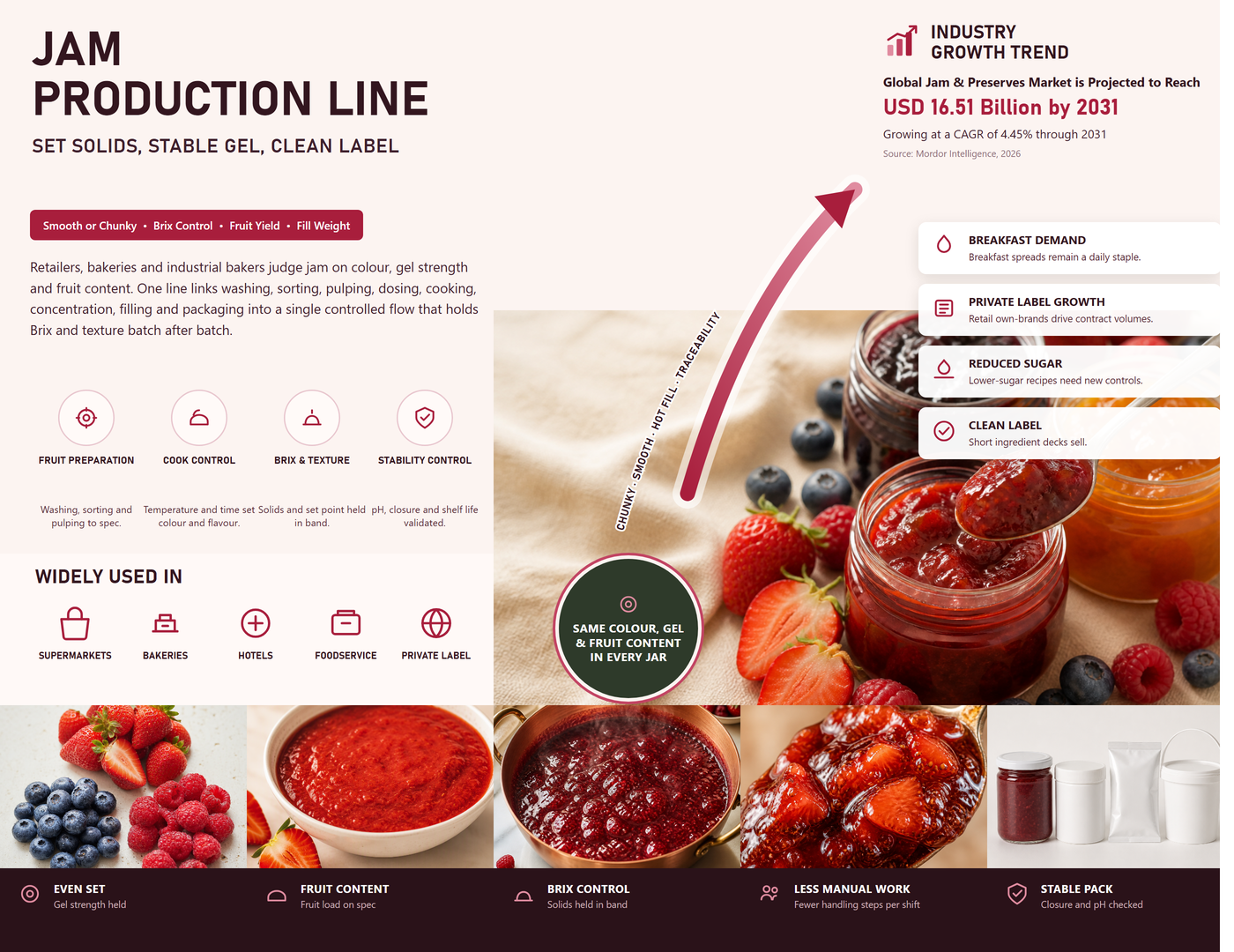
Looking ahead, the jam manufacturing industry is increasingly influenced by flexible production, automation, clean-label product development, resource efficiency, and improved traceability. Consumers are exploring fruit spreads with distinctive flavors, reduced added sugar, and ingredient lists that align with their preferences, creating opportunities for manufacturers to diversify their product portfolios. A modern automatic jam processing line can be designed with programmable logic controller (PLC) systems, touchscreen operation, temperature monitoring, automatic ingredient dosing, and optional production data recording. These functions can help operators manage recipes, monitor critical parameters, and improve batch-to-batch repeatability. For manufacturers processing different fruits throughout the year, flexible equipment configurations can support product changeovers and accommodate variations in fruit texture and processing requirements. Energy-efficient heating, suitable insulation, optimized cooking schedules, and well-planned cleaning procedures may also help reduce operating costs and improve resource utilization. Fruit handling and pulping equipment should be selected to maximize usable raw material while maintaining the required product characteristics. Packaging flexibility is another important consideration, as jam may be supplied in glass jars, plastic containers, sachets, pouches, or bulk packaging for industrial customers. Filling systems must be compatible with product viscosity, fruit-piece size, container design, and required processing conditions. Small and medium-sized businesses may benefit from modular jam production equipment that allows capacity to expand gradually, while large manufacturers may require integrated systems connecting fruit preparation, cooking, concentration, filling, and packaging. When selecting a jam production line manufacturer, buyers should evaluate processing capacity, fruit compatibility, cooking performance, final texture, cleaning accessibility, energy consumption, packaging requirements, maintenance needs, spare parts availability, installation guidance, and after-sales technical support. It is also important to confirm expected output using representative fruit materials and the intended product formulation. By choosing a suitable automatic jam production line and optimizing the complete manufacturing workflow, food producers can improve operational efficiency, develop innovative fruit products, maintain consistent quality, and strengthen their competitiveness in the global fruit processing market.
Mob: +86 15094949111
WhatsApp: +86 15094949111
Skype: +86 15094949111
WeChat: +86 15094949111
Email: caroline@zekomachinery.com