Frozen Meat Processing Line: What Equipment Is Needed and What Are the Key Advantages?
What Equipment Is Included in a Frozen Meat Processing Line?
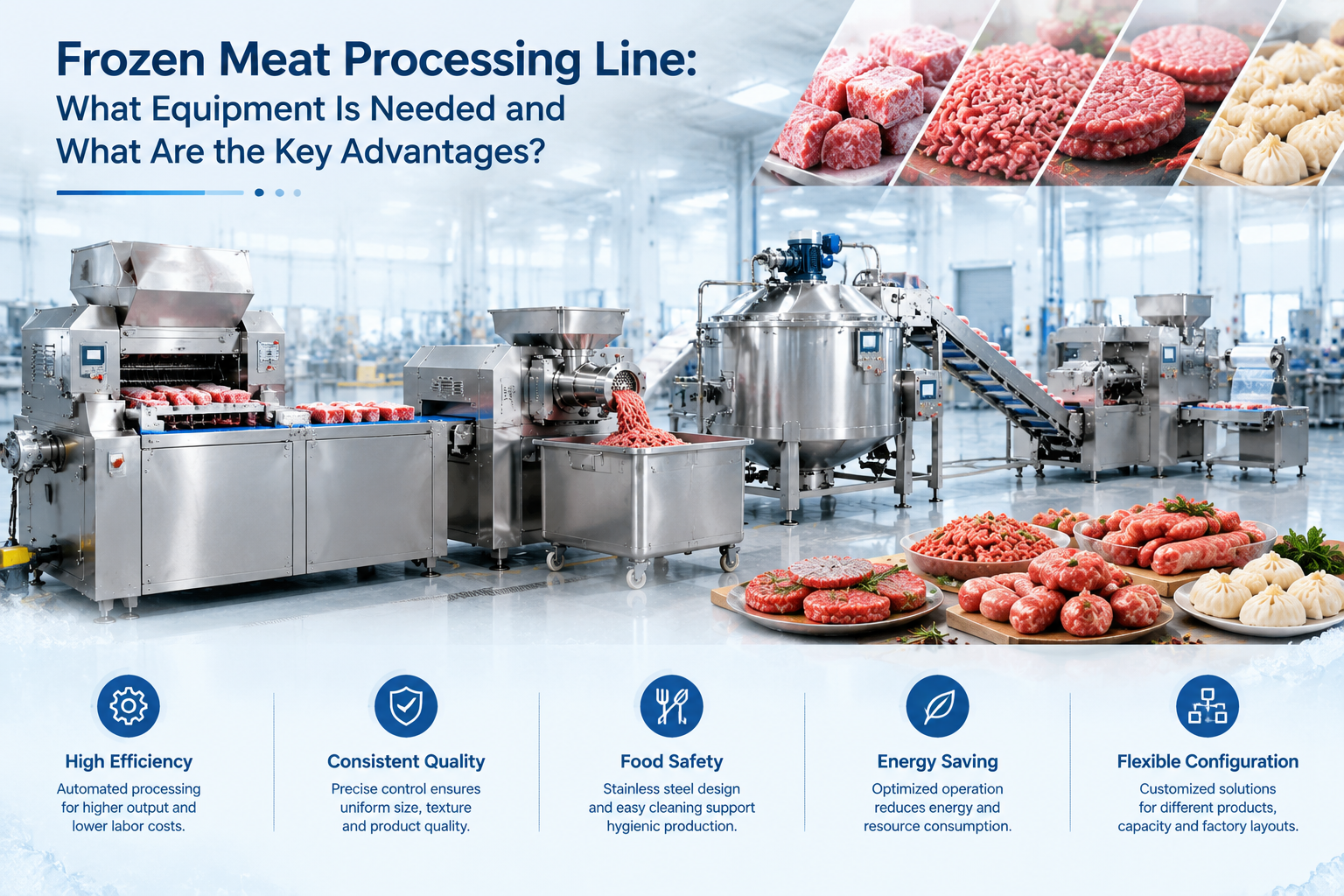
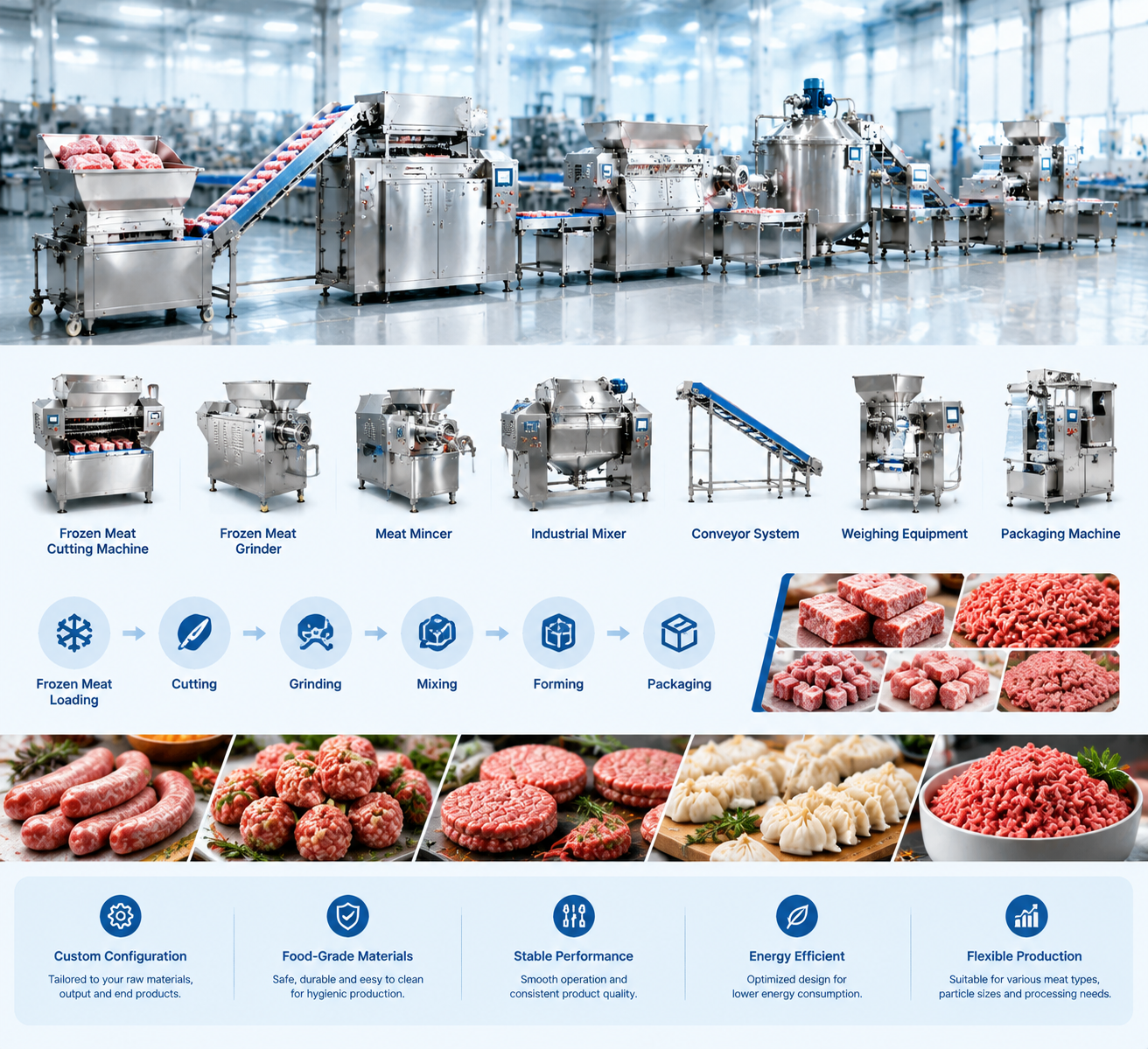
A Frozen Meat Processing Line is an integrated production system designed to process frozen meat blocks, frozen beef, pork, poultry, and other frozen meat raw materials into smaller pieces, minced meat, meat fillings, and semi-finished products for further food manufacturing. Depending on the raw material condition, required output, and final application, a complete Frozen Meat Processing Equipment solution may include frozen meat cutting machines, frozen meat grinders, meat mincers, industrial meat mixers, conveyors, feeding systems, weighing equipment, and downstream forming or packaging machines. A Frozen Meat Cutting Machine reduces large frozen meat blocks into manageable pieces, while a Frozen Meat Grinder processes suitable meat pieces into minced meat with the required particle size. Industrial meat mixers help distribute seasonings, additives, and other ingredients evenly when producing meat fillings for sausages, meatballs, burger patties, dumplings, and prepared foods. Conveyor systems connect individual machines to create a continuous workflow, reducing unnecessary manual handling and improving production coordination. For manufacturers with higher output requirements, an Automatic Frozen Meat Processing Line can integrate feeding, cutting, grinding, mixing, and material transfer into one coordinated system. Equipment configuration should be based on meat temperature, block dimensions, hardness, fat content, target particle size, hourly capacity, and the intended end product. Selecting machines according to these factors helps prevent overload, reduce bottlenecks, and achieve a more stable production process.
What Are the Main Advantages of Frozen Meat Processing Equipment?
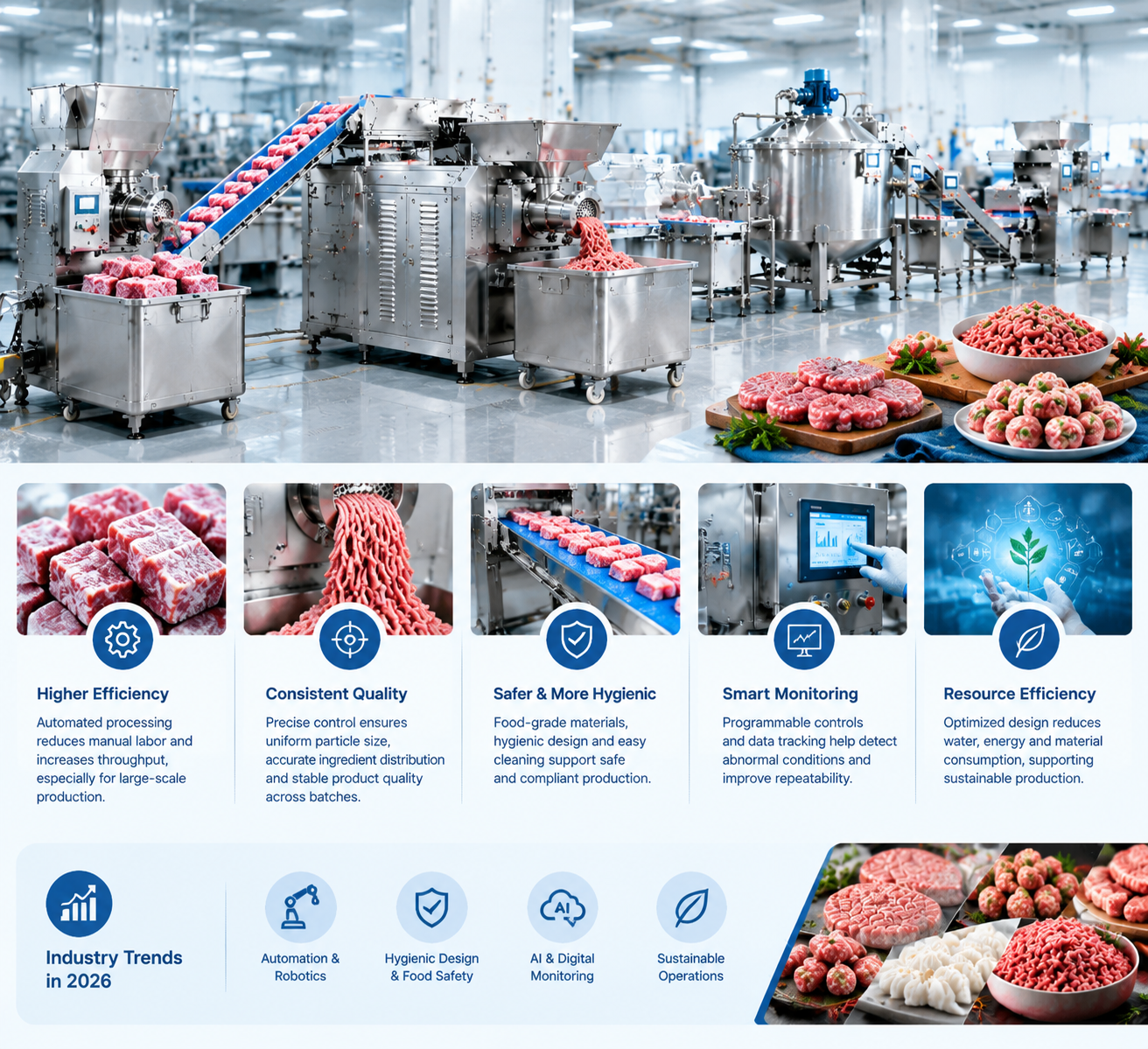
Modern Industrial Frozen Meat Processing Equipment offers several important advantages over fragmented, labor-intensive processing methods. First, mechanized cutting, grinding, mixing, and conveying can improve processing efficiency and reduce repetitive manual work, especially in factories handling large volumes of frozen meat. Second, properly matched machines help maintain more consistent particle size, ingredient distribution, and product quality across batches. Third, an integrated processing line improves workflow coordination by reducing unnecessary transfers between separate machines and allowing manufacturers to plan production capacity more accurately. Food safety and hygienic design are also essential considerations. Equipment made with suitable food-contact materials, accessible cleaning areas, and a design appropriate for the factory’s sanitation procedures can support hygienic operations and facilitate routine cleaning. In addition, programmable controls and production monitoring can help operators track key parameters, identify abnormal operating conditions, and improve process repeatability. These priorities align with the 2026 food-processing industry focus on automation, hygienic equipment design, digital monitoring, and resource efficiency. PMMI and FPSA’s 2026 industry report highlights sanitation, inspection, digital tools, and the efficient use of water, energy, and materials as important areas for processing-equipment investment. Research on Meat Industry 5.0 also identifies flexible automation, robotics, and AI-supported operations as emerging approaches, while emphasizing the need to address integration costs and variations in raw materials. For manufacturers, the practical benefits of a well-designed frozen meat processing system include improved throughput, reduced manual handling, more consistent processing, easier production planning, and opportunities to control operating costs. Actual results depend on equipment configuration, raw material conditions, operating practices, maintenance, and the factory’s production targets.
How to Choose the Right Frozen Meat Processing Line in 2026
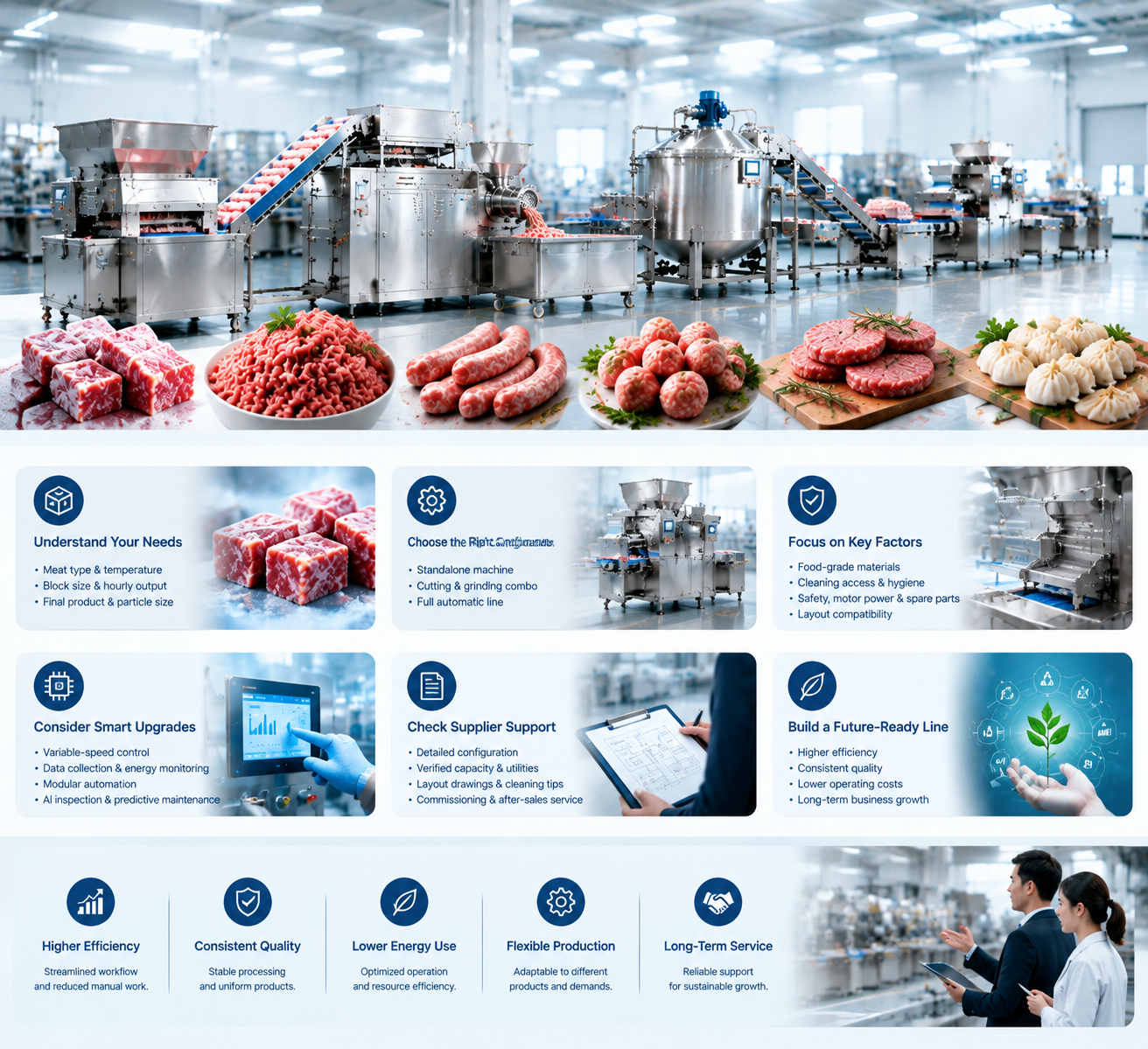
Choosing the right Frozen Meat Processing Line Manufacturer requires more than comparing machine prices or advertised capacity. Buyers should first define the type of frozen meat being processed, its incoming temperature and block size, the required hourly output, the desired final particle size, and whether the products will be used for sausages, meatballs, burger patties, dumplings, or other prepared foods. These requirements determine whether the factory needs a standalone frozen meat cutter or grinder, a cutting-and-grinding combination, or a complete automatic meat processing line. Equipment capacity should be evaluated across the entire production process rather than by the maximum output of a single machine. If the grinder processes material faster than the mixer or conveying system can handle it, the line may develop bottlenecks and lose overall efficiency. Buyers should also assess food-contact materials, cleaning access, safety protection, motor power, spare-parts availability, after-sales service, and compatibility with existing factory layouts. As the industry moves toward smarter and more sustainable manufacturing, useful options may include variable-speed control, production data collection, energy monitoring, and modular automation that can be expanded as demand grows. AI-assisted inspection and predictive maintenance may provide additional value where suitable sensors, reliable data, and technical support are available, but these features should be selected according to measurable operational needs rather than marketing claims alone. Before purchasing, manufacturers should request a detailed equipment configuration, verified capacity information, utility requirements, layout drawings, cleaning recommendations, and a clear description of what is included in the quotation. A reliable supplier should help match the processing technology to the raw material and final product, explain the limitations of each configuration, and provide practical commissioning and maintenance support. By evaluating production requirements, hygiene, flexibility, energy use, and long-term service together, food manufacturers can build a Customized Frozen Meat Processing Line that supports efficient production, consistent product quality, and future business growth.