Food Pasteurization Line: Core Equipment, Key Advantages & Selection Guide
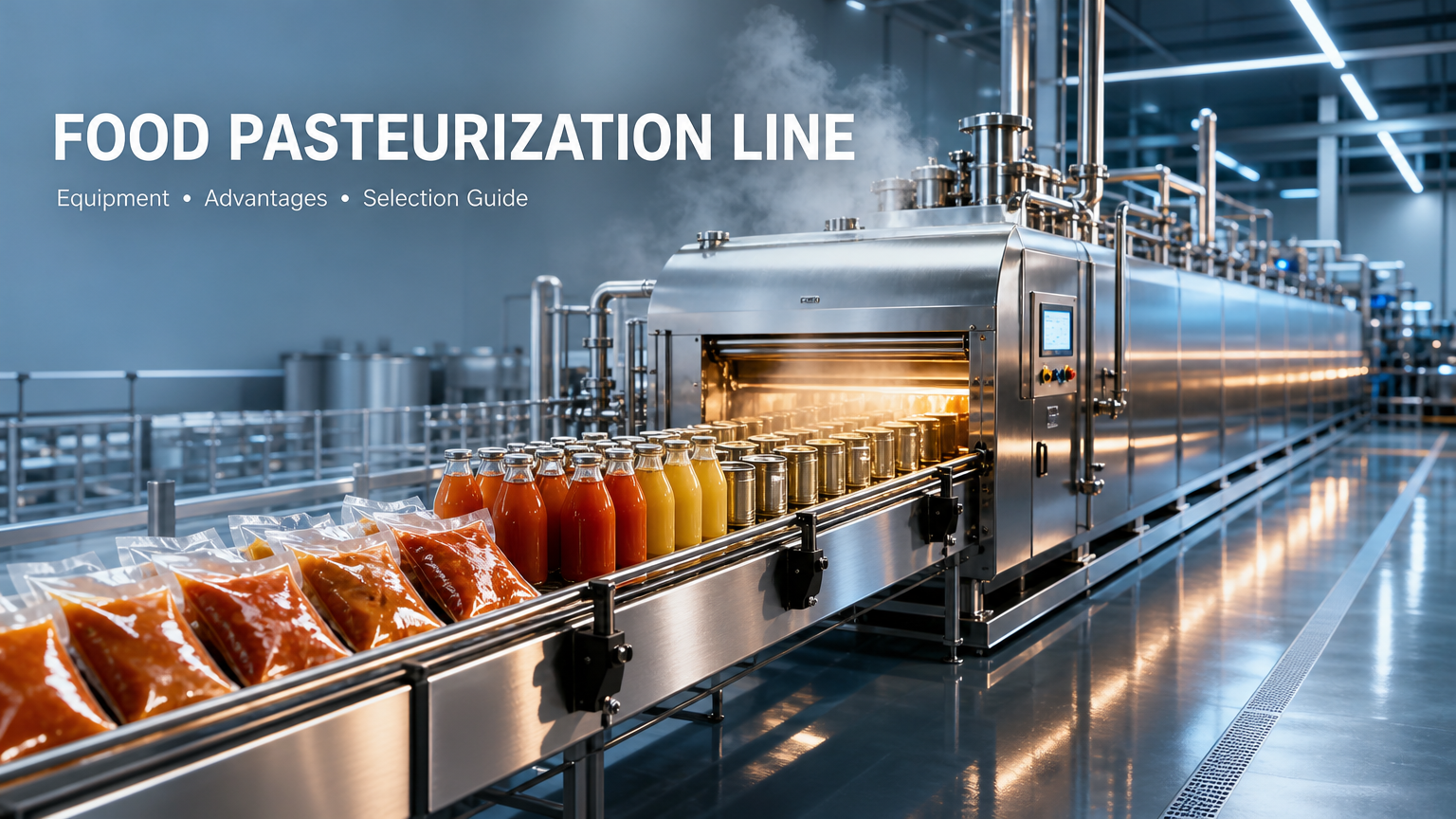
Driven by the growing demand for clean-label and minimally processed foods, continuous pasteurization lines have become essential for processing pickled vegetables, low-temperature meats, juices, sauces, and dairy products. A modern commercial food pasteurization line delivers extended shelf life, reliable food safety, and optimal operational efficiency.
Core Equipment in a Continuous Pasteurization Line
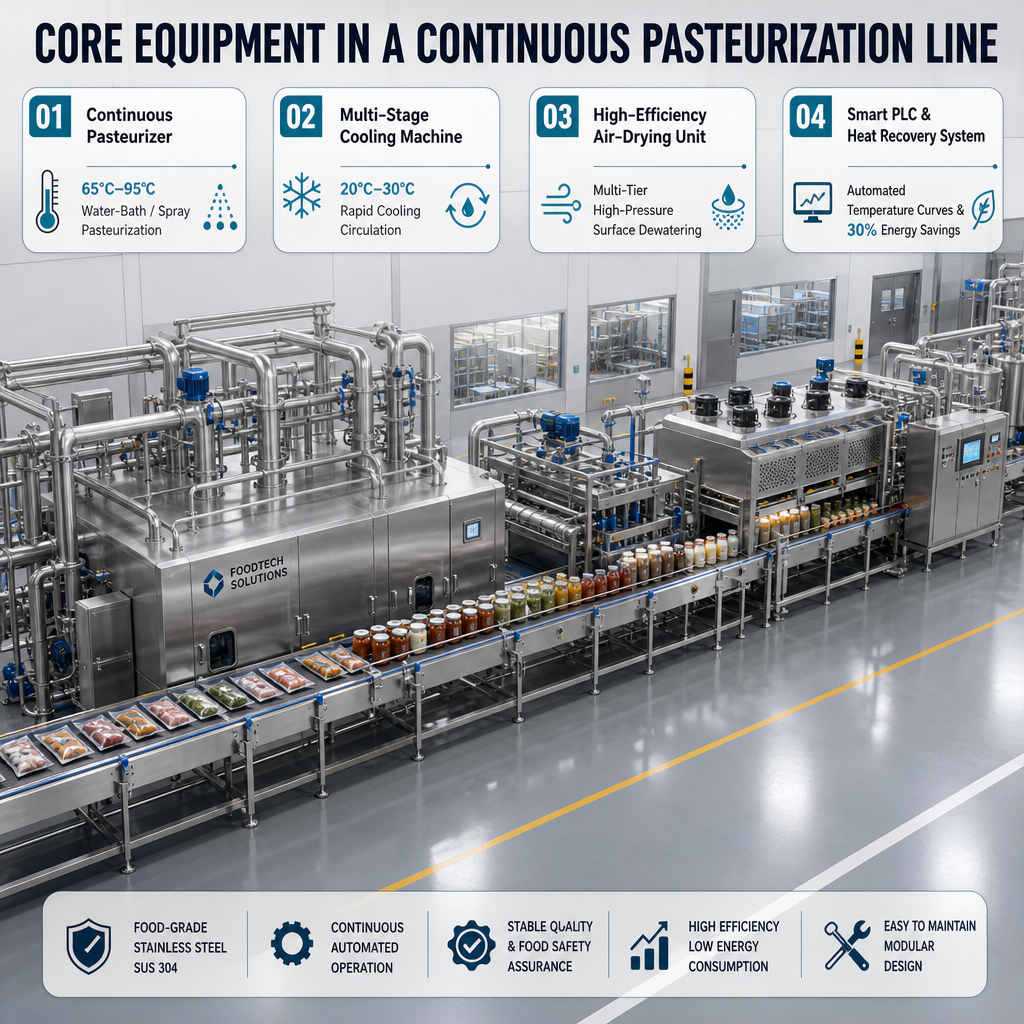
A standard automated food pasteurization line integrates four core machines into a seamless, continuous workflow: • Continuous Water-Bath / Spray Pasteurizer: Fabricated from food-grade SUS304/SUS316L stainless steel, this main unit precisely maintains water temperatures between 65°C and 95°C (149°F–203°F) with variable-speed conveyor belts to ensure thorough pathogen reduction. • Multi-Stage Cooling Machine: Rapidly lowers product core temperatures to 20°C–30°C using ambient and chilled water circulation, preventing overcooking and package swelling. • High-Efficiency Air-Drying Machine: Employs multi-tier high-pressure blowers to instantly remove surface moisture from pouches, bottles, and jars for immediate labeling and packing. • Smart PLC & Heat Recovery System: Automatically logs real-time temperature curves and recycles cooling water heat back into preheating zones, cutting energy consumption by up to 30%.
Key Advantages & Industry Trends
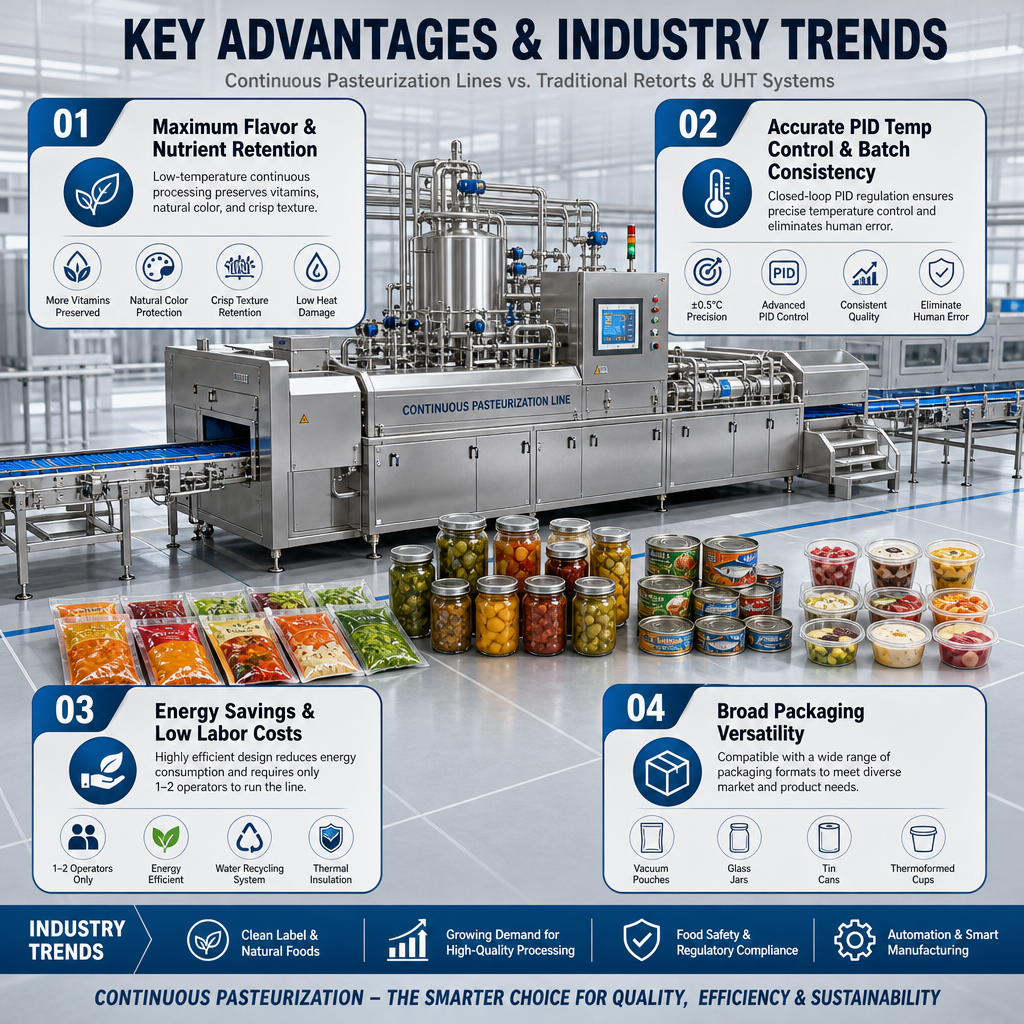
Compared with traditional retort autoclaves and UHT systems, continuous pasteurization lines offer significant commercial benefits: • Maximum Flavor & Nutrient Retention: Low-temperature thermal processing destroys pathogens and spoilage enzymes while preserving natural texture, fresh color, vitamins, and heat-sensitive nutrients. • Accurate Temperature Control & Batch Consistency: Closed-loop PID temperature regulation and automated belt speeds eliminate human error, ensuring uniform pasteurization values across every batch. • Energy Savings & Lower Labor Costs: Continuous automated operation requires only 1–2 operators; double-layer thermal insulation and water-recycling designs significantly reduce steam and water waste. • Broad Packaging Versatility: Compatible with vacuum pouches, retort bags, glass jars, tin cans, and thermoformed plastic containers across multiple food categories.
Buyer Selection Guide & Best Practices
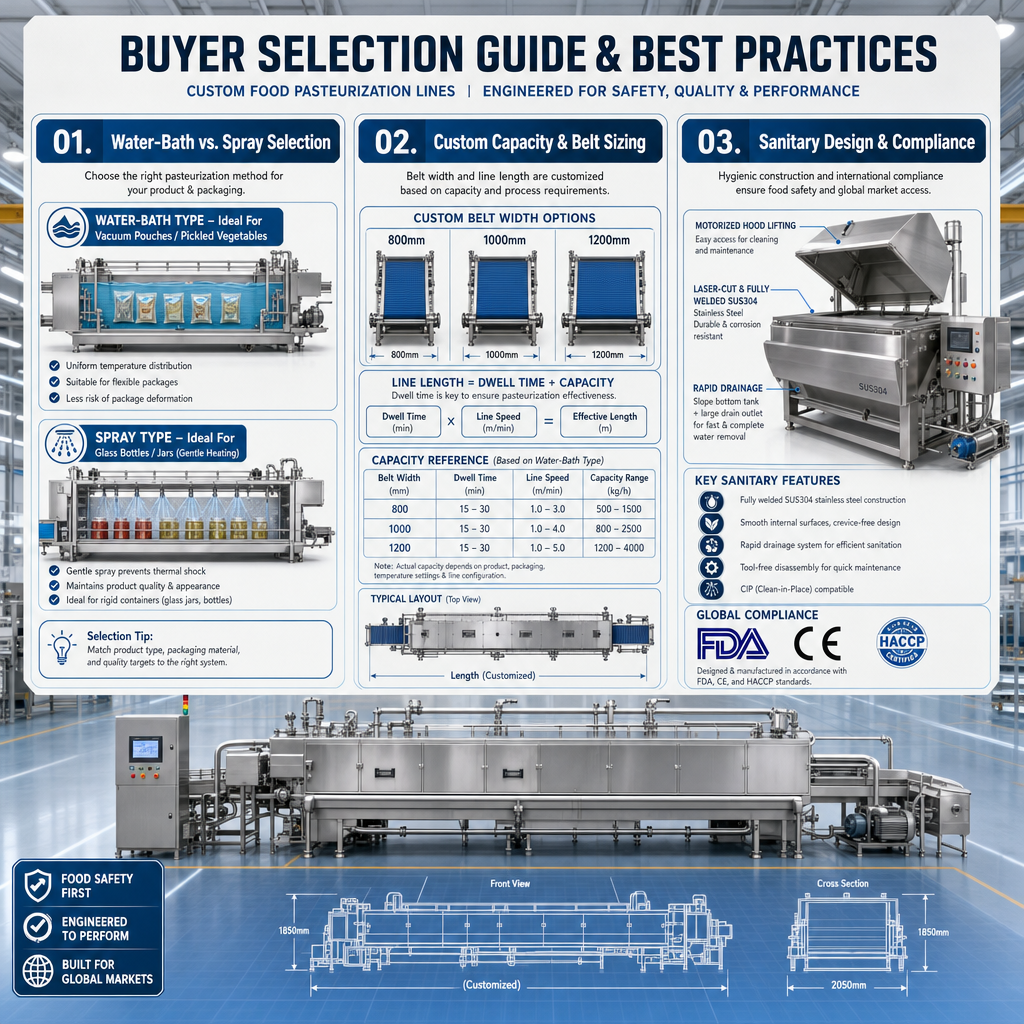
When investing in a custom pasteurization line, consider these critical factors: • Water-Bath vs. Spray Pasteurization: Water-bath lines provide superior thermal transfer for heavier vacuum pouches and pickled vegetables; high-pressure spray pasteurizers prevent thermal shock and breakage in glass bottles and canned goods. • Capacity & Line Sizing: Total line length and mesh belt width (e.g., 800mm, 1000mm, 1200mm) are customized based on target hourly output (kg/h), package dimensions, and required heating/cooling dwell time. • Sanitary Design & Compliance: Prioritize laser-cut, fully welded SUS304 construction with motorized hood-lifting mechanisms and rapid drainage valves to meet FDA, CE, and HACCP hygiene standards.