Fish Ball Processing Equipment: What Machines Are Needed for a Fish Ball Production Line and What Are Their Advantages?
What Equipment Is Needed for a Complete Fish Ball Production Line?
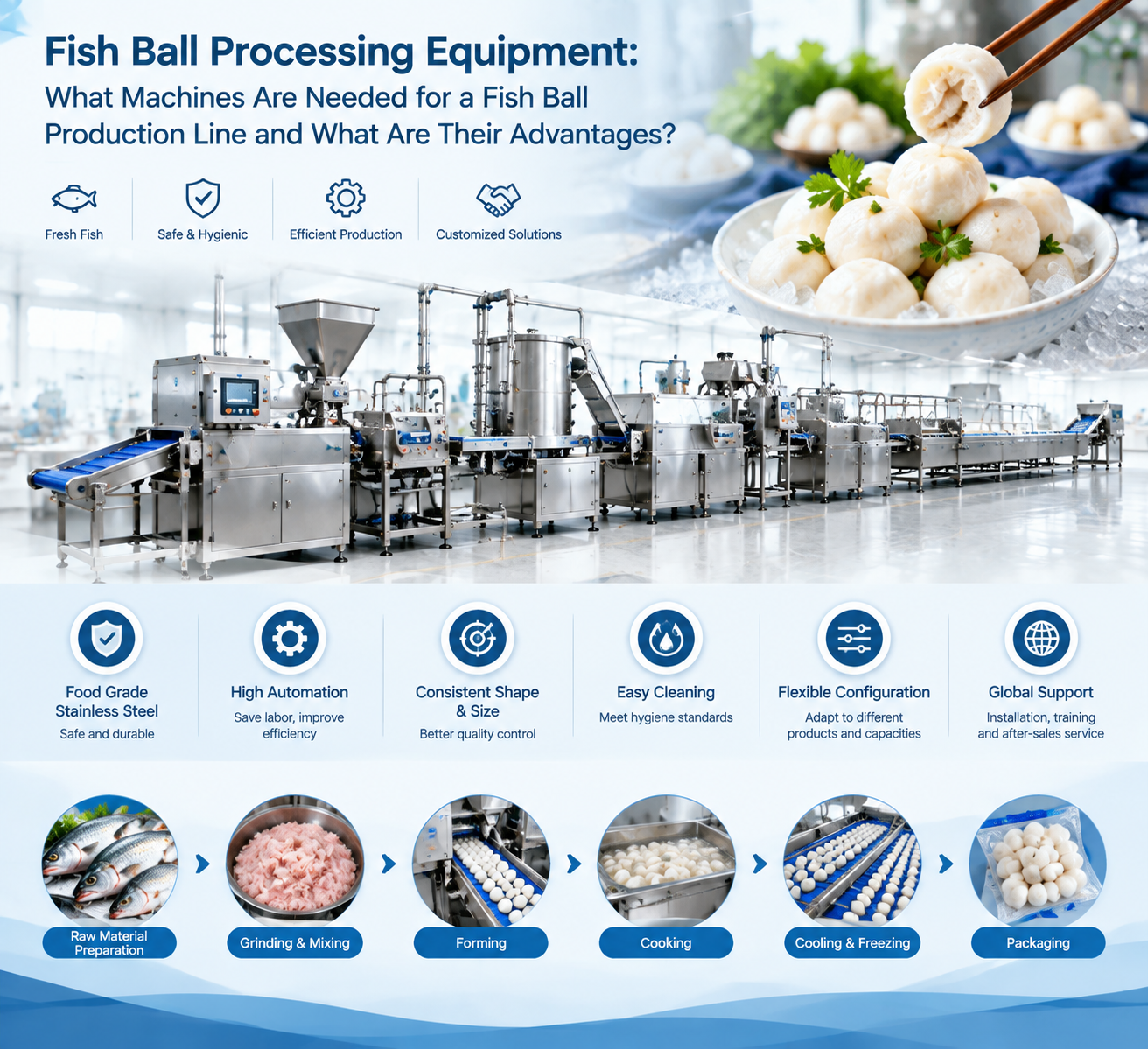
A Fish Ball Production Line is an integrated food processing system designed to transform fish meat or surimi into uniform, elastic fish balls for hot pot, soups, frozen food distribution, restaurants, and retail markets. Depending on the raw materials, product specifications, and production capacity, a complete Fish Ball Processing Line may include a fish cleaning machine, fish meat separator, meat grinder, bowl cutter or high-speed mixer, fish ball forming machine, cooking tank, cooling system, freezing equipment, and packaging machinery. The typical workflow involves raw material preparation, fish meat extraction, grinding, mixing and seasoning, forming, cooking, cooling, freezing, and packaging. Not every factory needs every machine; equipment selection should reflect the intended product, available space, budget, and target output. Modular production systems allow manufacturers to start with essential equipment and expand as demand grows.
What Are the Advantages of Automatic Fish Ball Processing Equipment?
Higher Efficiency, Consistent Shape, and Improved Hygiene
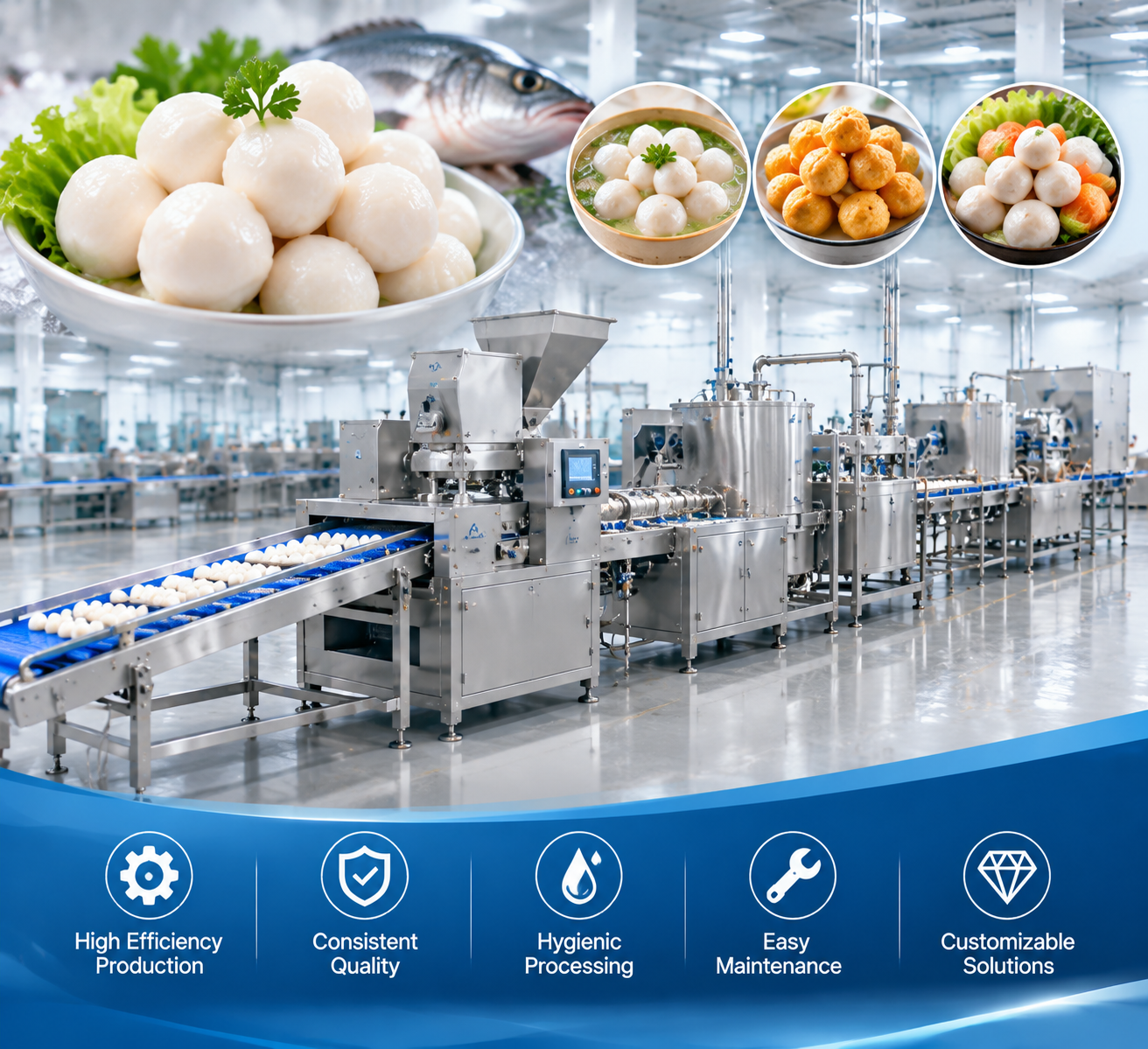
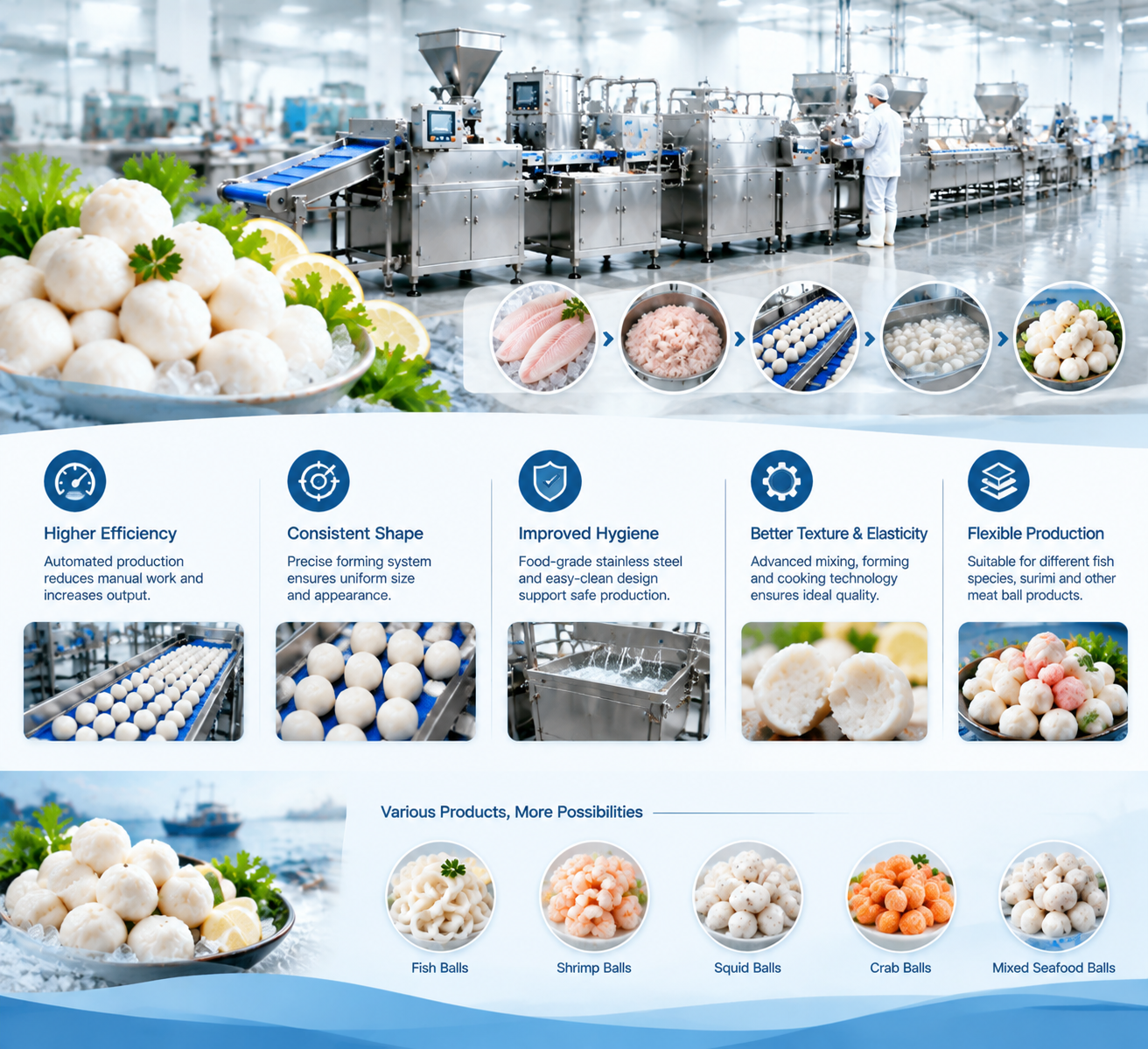
An Automatic Fish Ball Making Machine helps standardize product size, shape, and forming speed, reducing the variation often associated with manual production. When combined with suitable grinding and mixing equipment, controlled forming, cooking, and cooling stages help manufacturers achieve the desired texture and elasticity. Food-grade stainless steel construction, accessible contact surfaces, and practical cleaning arrangements support hygienic production and routine maintenance. An integrated Industrial Fish Ball Production Line can also reduce repetitive manual work, improve material transfer, and make production planning more predictable. Depending on the configuration, manufacturers can produce fish balls from different fish species and surimi formulations, as well as selected shrimp or other meat-ball products using suitable recipes and equipment. Actual output, yield, and labor savings depend on raw material quality, formulation, machine capacity, and operating conditions.
What Are the Latest Fish Ball Production Trends in 2026?
Automation, Flexible Manufacturing, and Food Safety
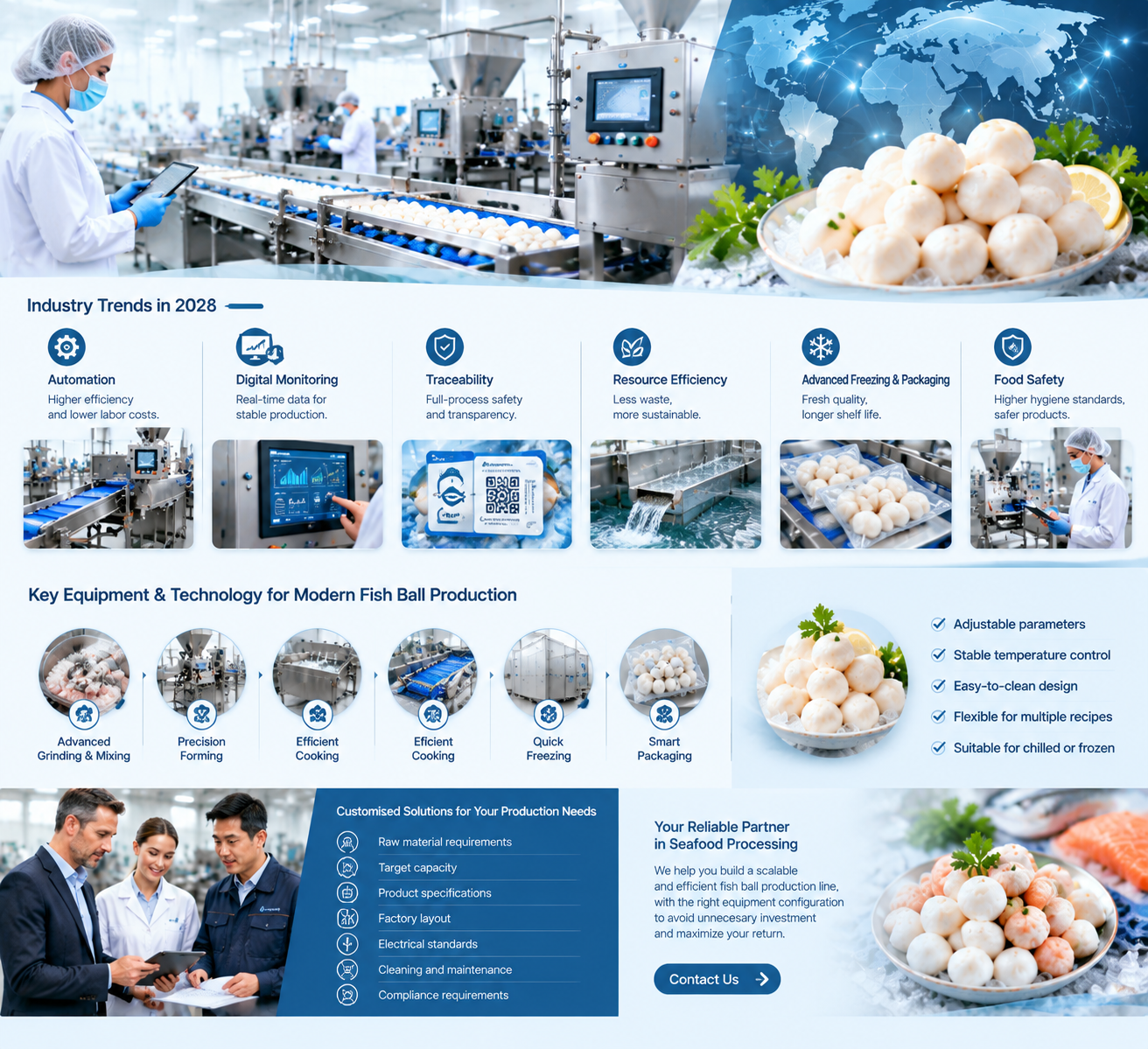
In 2026, seafood processing manufacturers are increasingly evaluating automation, digital monitoring, traceability, and resource-efficient production to improve operational consistency and respond to labor and food-safety challenges. Recent seafood industry research highlights the growing role of robotics, machine vision, connected monitoring, and digital traceability across processing operations. For fish ball factories, practical priorities include adjustable forming parameters, stable temperature control, easy-to-clean machine structures, efficient freezing, and packaging options suited to chilled or frozen distribution. Zhucheng Yido Intelligent Technology Co., Ltd. provides food processing machinery and customized equipment solutions for industrial production projects. When planning a fish ball processing line, buyers should compare raw material requirements, hourly capacity, finished product specifications, factory layout, electrical standards, cleaning procedures, and local compliance requirements. A properly configured Fish Ball Processing Equipment solution can help manufacturers establish a scalable production workflow while avoiding unnecessary machinery investment. Contact Zhucheng Yido to discuss your fish ball products, target capacity, and customized production line requirements.