
Automatic Pickled Food Production Line for Industrial Vegetable Processing
Automatic Pickled Food Production Line: Advantages and Future Trends
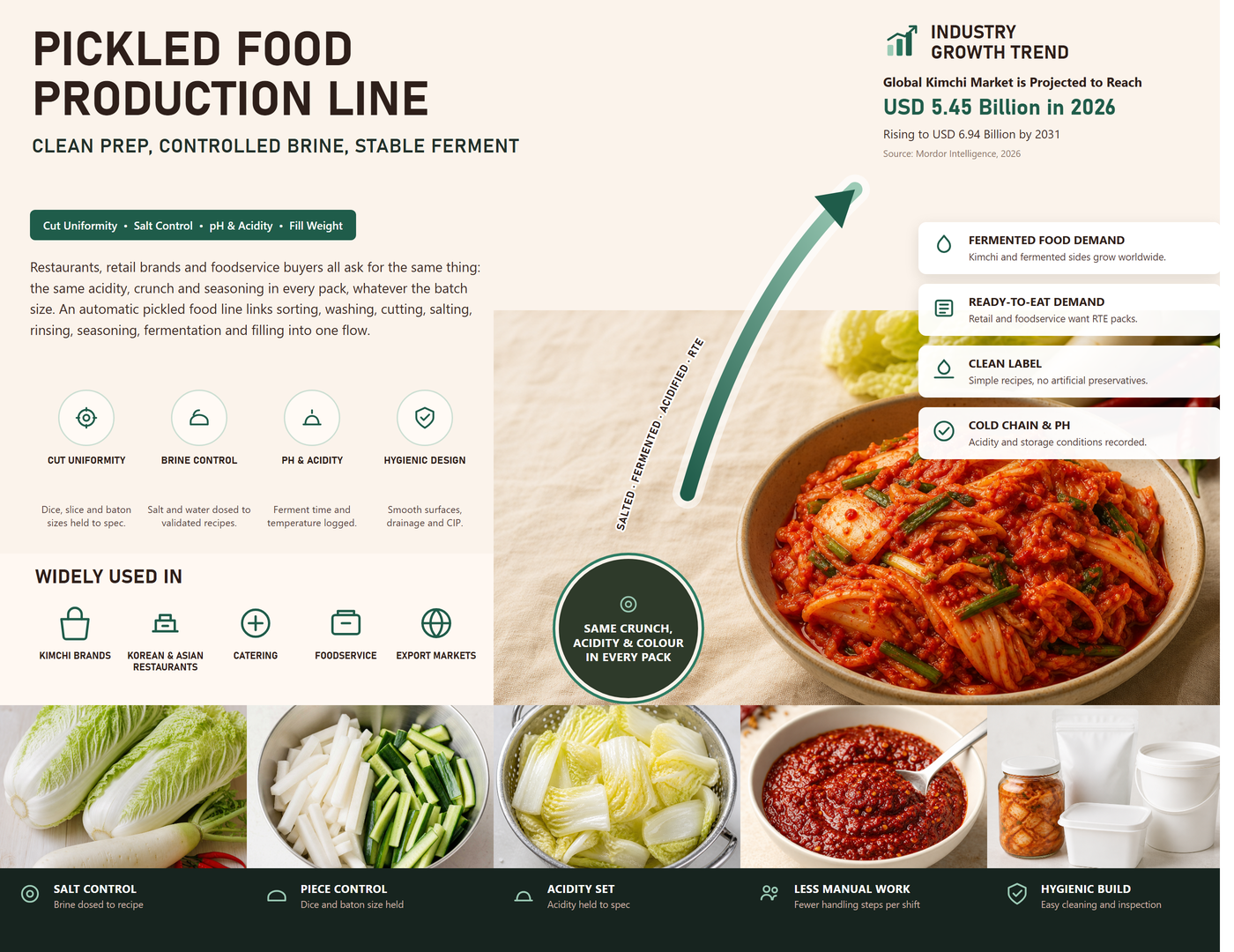
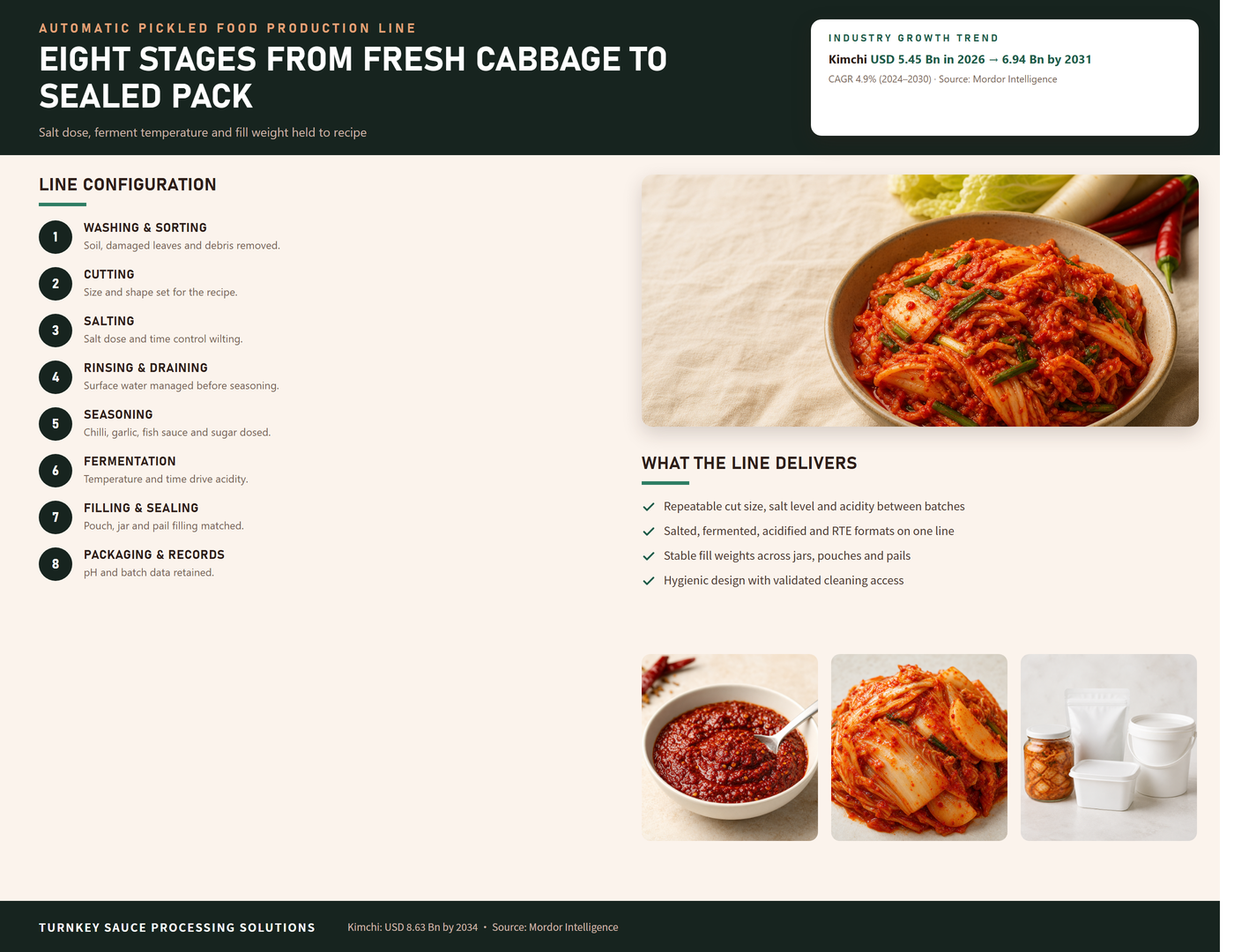
With the growing global demand for convenient foods, traditional flavors, and ready-to-eat products, the pickled food industry is experiencing new opportunities in both domestic and international markets. Pickled vegetables, pickled cucumbers, kimchi, pickled radishes, pickled peppers, preserved cabbage, and other fermented or marinated foods are widely used in households, restaurants, foodservice businesses, and food manufacturing facilities. Consumers are increasingly interested in diverse flavors, convenient packaging, natural ingredients, and consistent product quality. At the same time, food manufacturers are facing higher requirements for production efficiency, hygiene management, product traceability, and standardized processing. An automatic pickled food production line provides an integrated solution for processing fresh vegetables and other suitable raw materials into finished pickled products. Depending on the product type and processing requirements, a complete line may include vegetable sorting conveyors, bubble washing machines, cutting machines, peeling equipment, draining machines, brine preparation tanks, mixing systems, seasoning equipment, fermentation tanks, marinating containers, filling machines, and automatic packaging machines. For products such as kimchi, the process may involve vegetable cleaning, cutting, salting, rinsing, draining, seasoning, fermentation, and packaging. For pickled cucumbers, radishes, and peppers, the production process may include sorting, washing, cutting, brine preparation, soaking or fermentation, and filling. Different processing configurations can also be designed for pickled cabbage, mixed vegetables, spicy pickled products, and customized condiment ingredients. By integrating suitable equipment, manufacturers can establish a more organized production workflow, reduce manual handling, and support different product specifications and packaging formats.
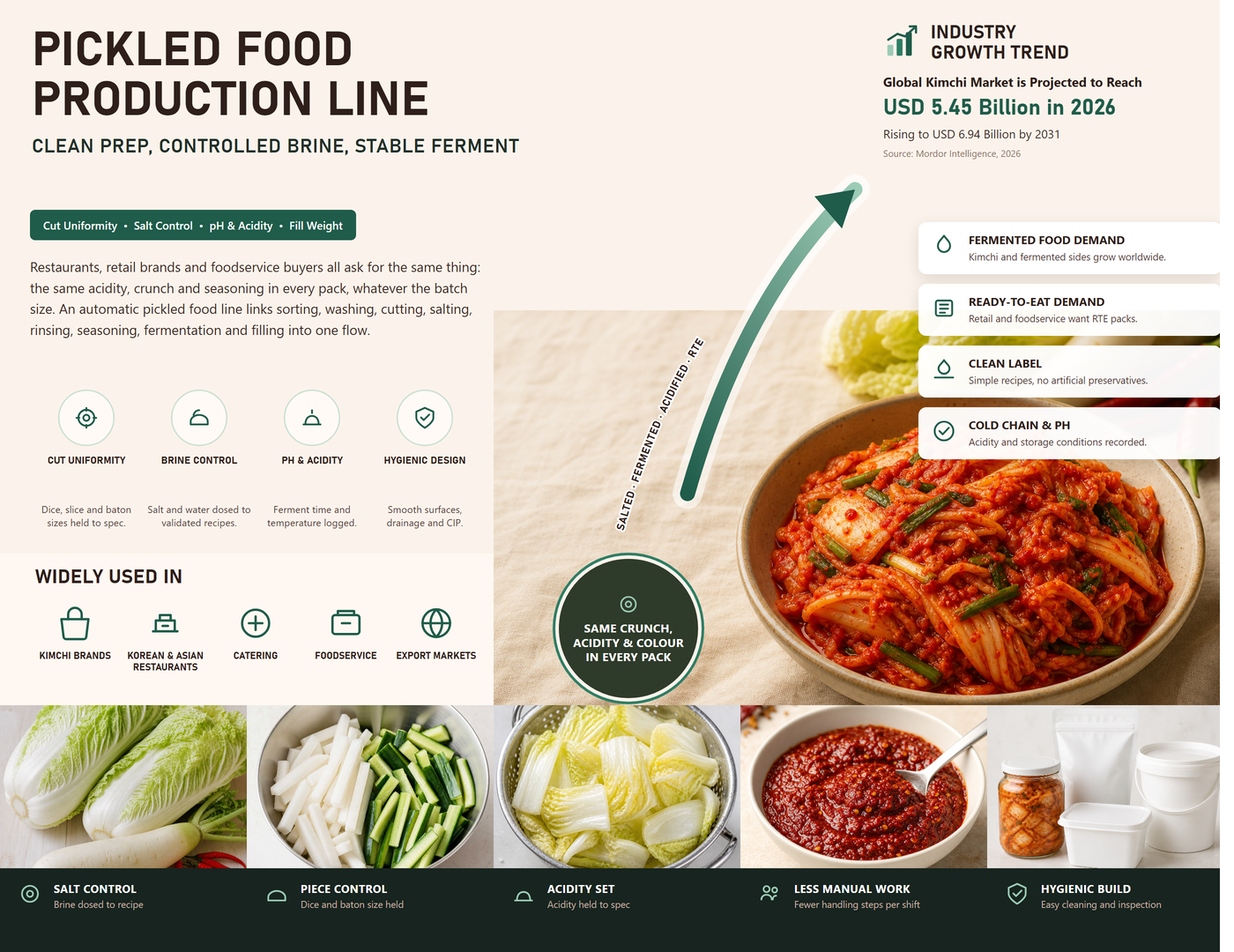
One of the main advantages of an industrial pickled food production line is its ability to improve processing efficiency and product consistency. Traditional manual operations often involve repeated washing, cutting, salting, mixing, and transferring, which can increase labor requirements and lead to variations in ingredient proportions, cutting sizes, seasoning distribution, and processing conditions. Automated washing and sorting equipment helps remove soil, damaged vegetables, and unwanted materials before further processing. Vegetable cutting machines can provide more consistent shapes and sizes, while draining equipment helps control excess surface water before seasoning or marinating. Automatic brine preparation and mixing systems make it easier to manage salt, water, spices, and other ingredients according to standardized recipes. For fermented products, controlled fermentation conditions are important for developing the desired flavor, acidity, texture, and product characteristics. Temperature, salt concentration, fermentation time, raw material quality, and microbial activity all influence the final result. Modern fermentation tanks and storage systems can support more controlled processing when designed for the specific product. Food safety and hygienic design are equally important. Food-contact equipment should use suitable materials, have accessible surfaces for cleaning, and minimize areas where vegetable residues and brine can accumulate. Manufacturers should establish effective sanitation procedures, monitor raw material quality, manage water quality, and maintain batch records throughout production. For fermented and acidified products, appropriate pH monitoring, validated processing procedures, and suitable packaging conditions are essential. Filling and sealing equipment can improve packaging efficiency and support different containers, including glass jars, plastic bottles, pouches, and foodservice packages. However, packaging alone cannot guarantee product safety or shelf life. Processing conditions, formulation, acidity, storage temperature, and packaging performance must be evaluated together. By combining reliable machinery with standardized recipes and effective quality management, manufacturers can improve production stability, reduce unnecessary waste, and provide more consistent pickled products to commercial buyers.
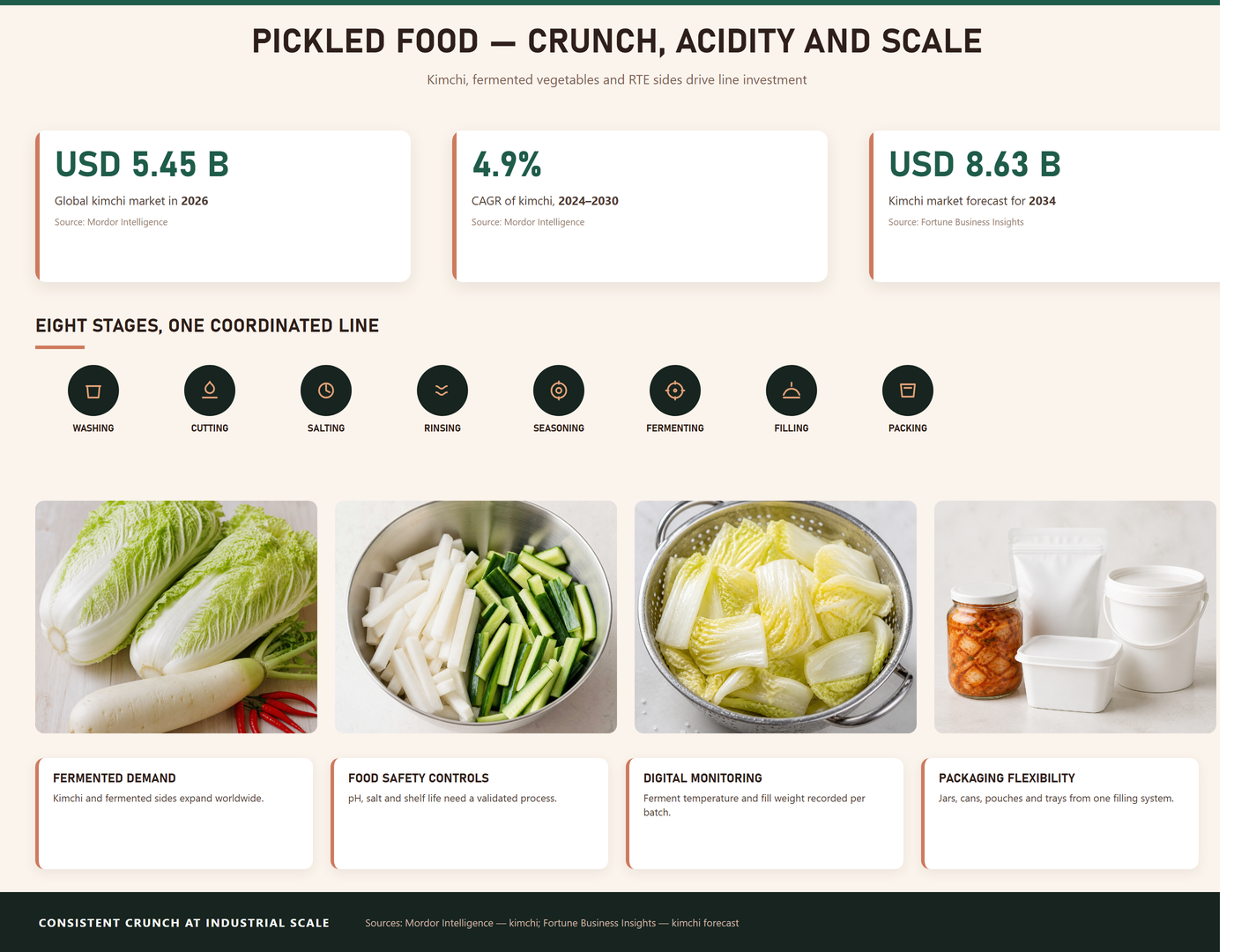
Looking ahead, the pickled food industry is moving toward flexible automation, intelligent manufacturing, improved food safety management, and more efficient resource utilization. Demand for kimchi, fermented vegetables, spicy pickled products, low-sugar condiments, and convenient ready-to-eat side dishes is encouraging manufacturers to expand their product portfolios and develop more adaptable production systems. Modern processing facilities are increasingly adopting programmable logic controllers, touchscreen operation, automatic temperature monitoring, digital production records, and recipe management systems to improve process control and operational visibility. Flexible production equipment allows factories to switch between different vegetables, cutting styles, seasoning formulas, and packaging formats with greater convenience. Modular equipment design also enables small and medium-sized businesses to begin with essential washing, cutting, mixing, and filling machines before expanding their production capacity. In addition, water-saving washing systems, efficient motors, optimized brine preparation, and improved cleaning procedures can help reduce operating costs and support more sustainable manufacturing. When choosing a pickled food production line, buyers should evaluate the type of raw materials, daily processing capacity, washing efficiency, cutting accuracy, brine preparation method, mixing performance, fermentation requirements, temperature control, filling accuracy, packaging compatibility, cleaning accessibility, and after-sales technical support. It is particularly important to distinguish between naturally fermented products, vinegar-pickled products, and directly marinated vegetables because their processing procedures and equipment requirements may differ significantly. A customized production line should be designed according to the finished product, recipe, required output, factory layout, and target market. By investing in suitable pickled food processing equipment and standardized production technology, manufacturers can improve operational efficiency, maintain consistent product quality, strengthen food safety management, and develop competitive products for the global preserved vegetable and fermented food market.
Mob: +86 15094949111
WhatsApp: +86 15094949111
Skype: +86 15094949111
WeChat: +86 15094949111
Email: caroline@zekomachinery.com