Automatic Dairy Processing Production Line for Milk and Dairy Products
Dairy Processing Production Line: Advantages and Future Trends
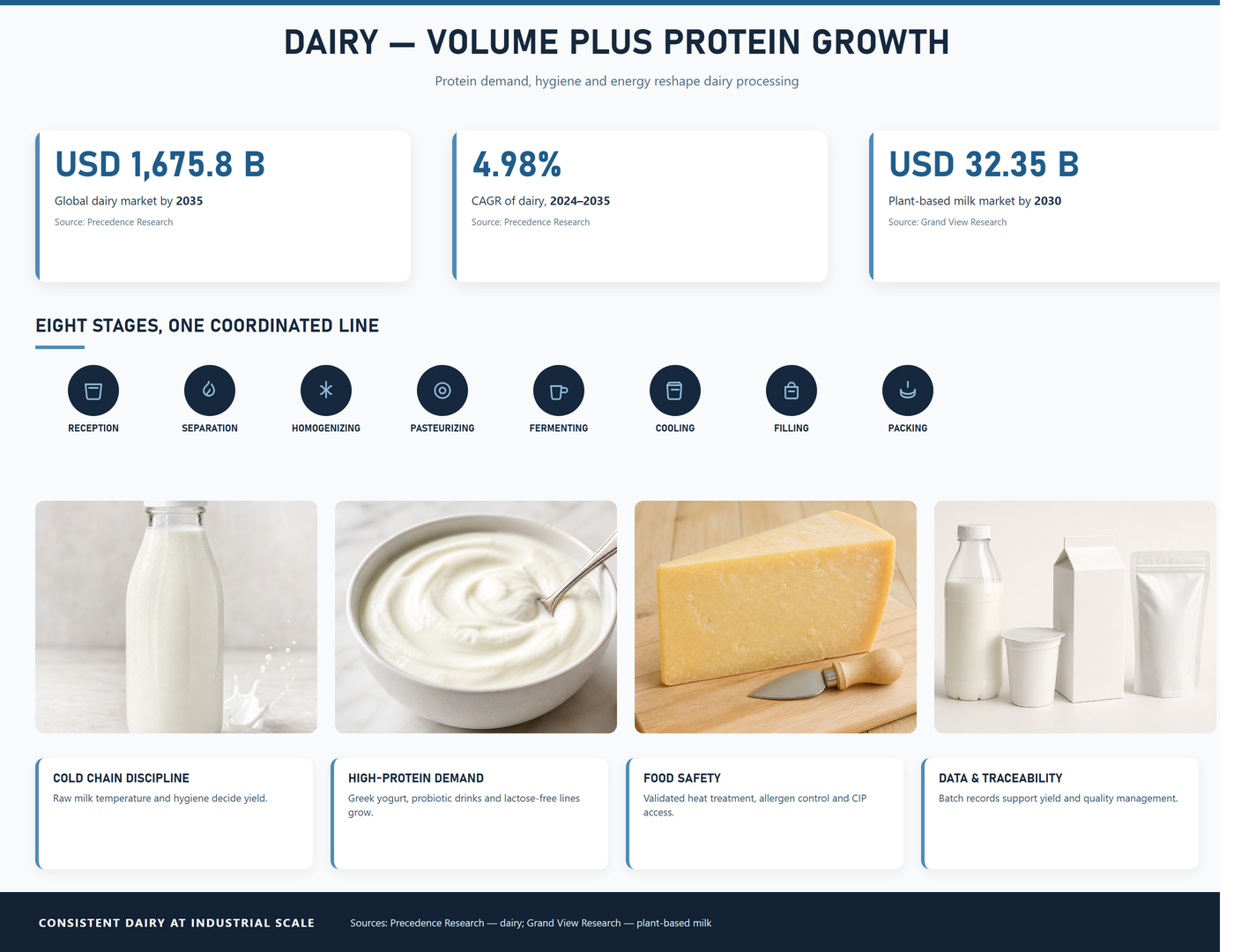
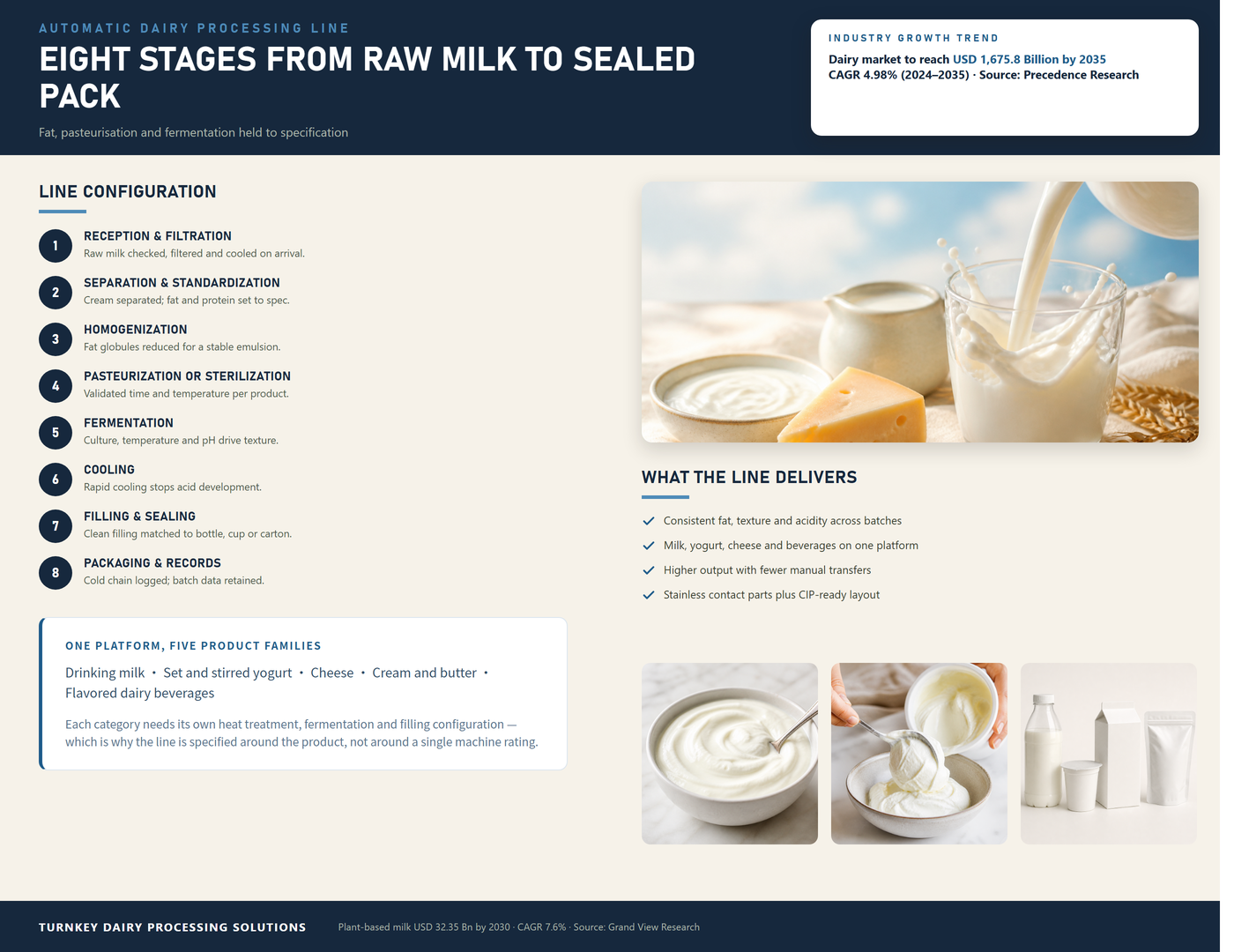
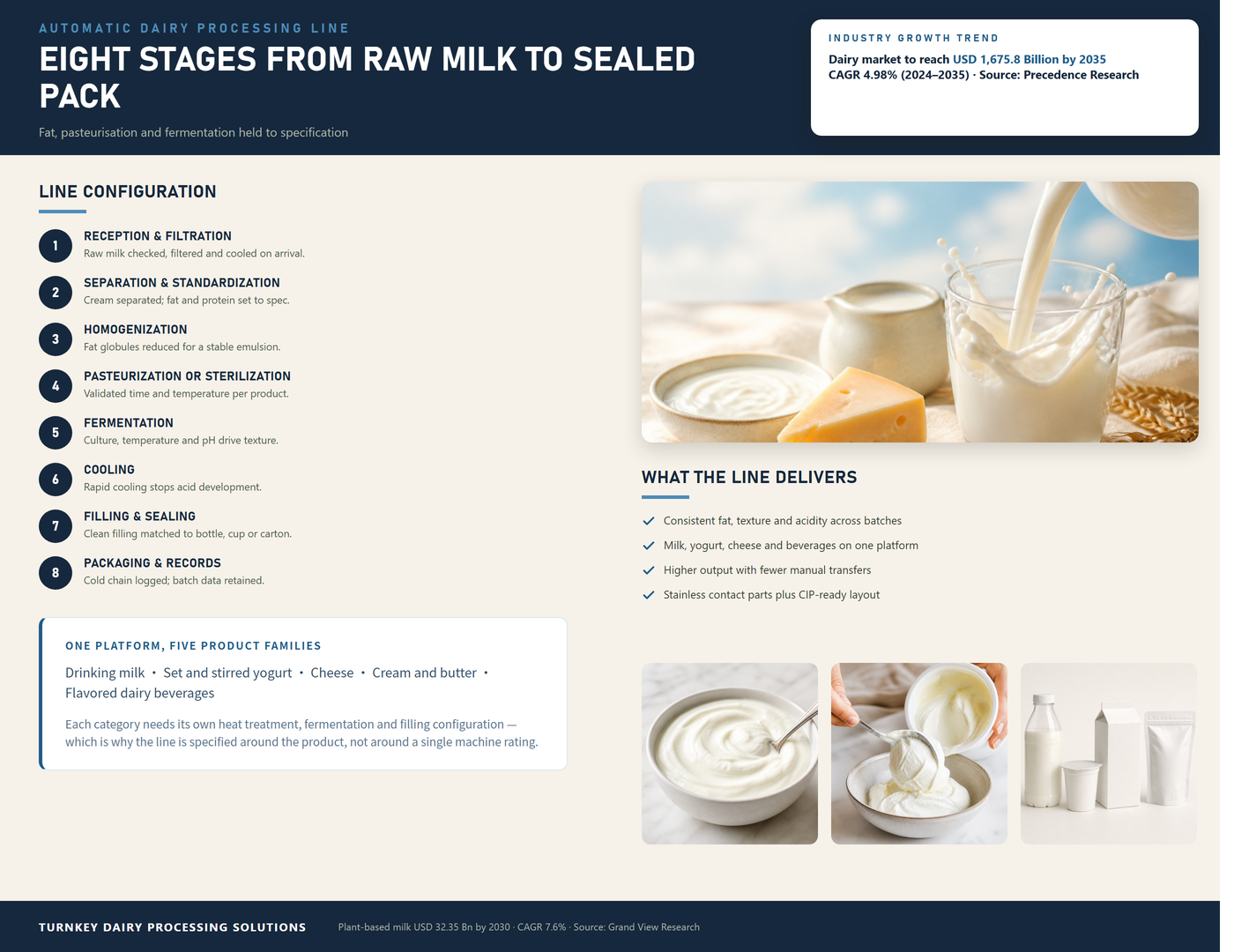
With the continuous growth of global demand for nutritious foods, convenient beverages, and high-quality dairy products, the dairy processing industry is experiencing new opportunities and challenges. Milk, yogurt, cheese, cream, butter, milk powder, and flavored dairy beverages are widely consumed in households, restaurants, hotels, bakeries, and food manufacturing facilities. Consumers are paying increasing attention to product quality, nutritional value, food safety, ingredient transparency, and convenient packaging. At the same time, dairy manufacturers are facing higher requirements for production efficiency, consistent product quality, energy management, and hygienic processing. An automatic dairy processing production line provides an integrated solution for transforming raw milk into different finished dairy products through controlled processing procedures. Depending on the product category and factory requirements, a complete line may include milk reception tanks, filtration systems, cooling tanks, milk storage tanks, homogenizers, pasteurizers, sterilization equipment, fermentation tanks, mixing systems, filling machines, sealing machines, and packaging equipment. For yogurt production, additional fermentation and cooling systems are required, while cheese manufacturing may involve milk coagulation, curd cutting, whey separation, pressing, and forming equipment. Milk beverage production may require ingredient mixing, homogenization, heat treatment, and automatic filling. By selecting suitable equipment and connecting each processing stage, manufacturers can establish an efficient production workflow for different dairy products. A customized dairy processing line can be designed for small dairy workshops, medium-sized food factories, and large industrial manufacturers, helping businesses expand product categories and respond to different market demands.
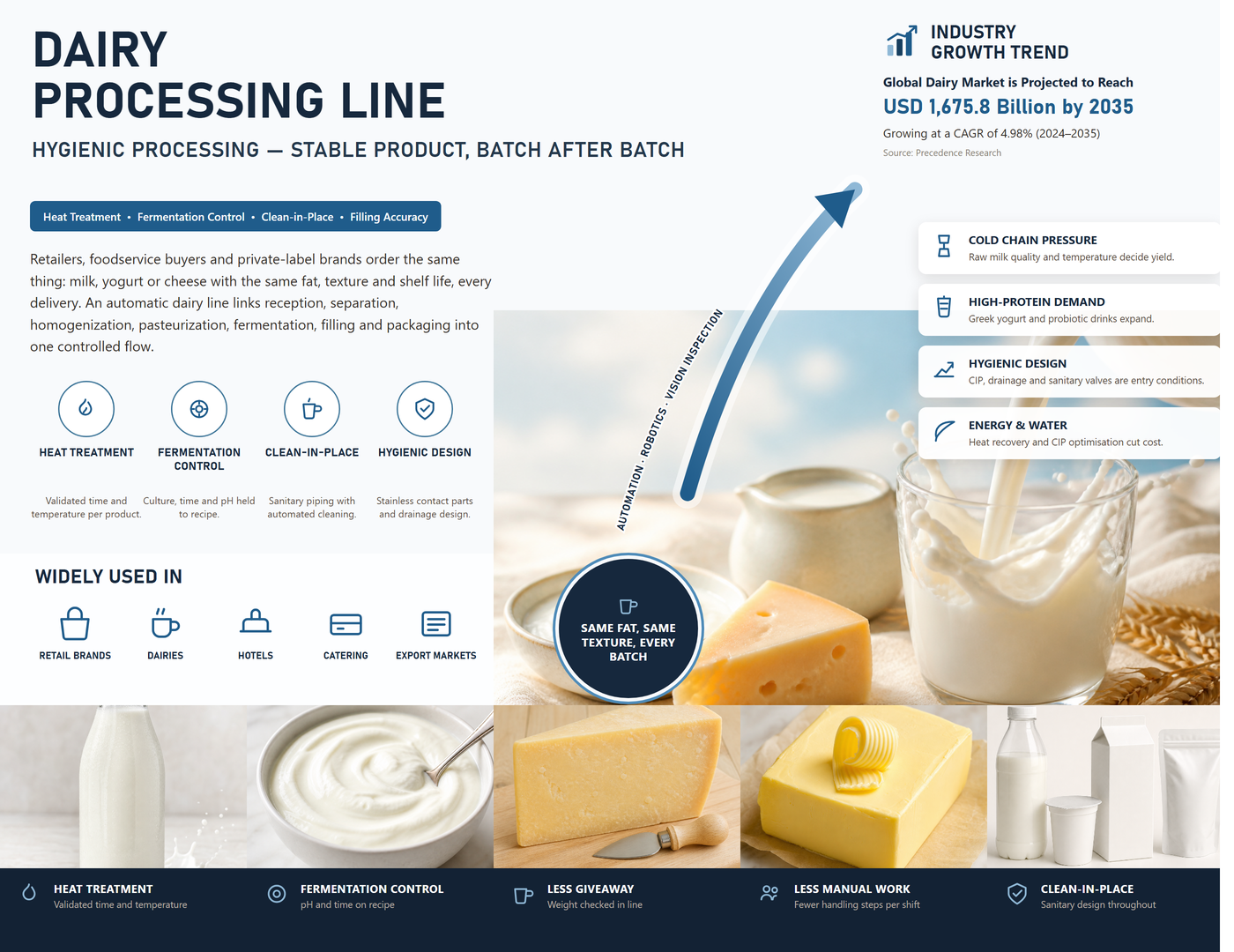
One of the most important advantages of an industrial dairy processing line is its ability to improve production efficiency while maintaining stable product quality and hygiene standards. Traditional manual processing often involves repeated handling, inconsistent operating conditions, and higher labor requirements. Automated equipment helps coordinate milk filtration, storage, heating, homogenization, cooling, fermentation, and filling, reducing unnecessary manual intervention and improving process consistency. Pasteurization and sterilization systems are essential for controlling microorganisms and achieving the required product safety objectives. Homogenization helps distribute fat evenly, improving the texture and appearance of many milk-based products. For yogurt and fermented dairy products, accurate temperature control, fermentation time management, and cooling procedures are important for maintaining the desired texture, acidity, and flavor. In cheese production, controlled coagulation, curd handling, whey separation, and pressing help manufacturers achieve more consistent product characteristics. Hygienic design is another essential consideration. Food-grade stainless steel equipment, sanitary pipelines, suitable valves, effective drainage, and clean-in-place systems can support efficient cleaning and reduce contamination risks. A well-designed dairy processing facility should also establish strict raw milk reception procedures, temperature monitoring, equipment sanitation, personnel hygiene, and batch traceability. Automated filling and packaging equipment can improve filling accuracy, reduce product contact with the external environment, and support different container formats, including bottles, cups, cartons, and pouches. The appropriate packaging method depends on the dairy product, its processing conditions, storage requirements, and distribution environment. By combining process automation with effective quality management, dairy manufacturers can improve operational stability, reduce avoidable waste, and provide more consistent products to customers.
Looking ahead, the dairy processing industry is moving toward intelligent manufacturing, flexible production, energy efficiency, and sustainable food processing. Growing interest in high-protein dairy products, Greek yogurt, probiotic beverages, lactose-free milk, flavored milk, cheese snacks, and convenient ready-to-drink products is encouraging manufacturers to develop more flexible production capabilities. Modern dairy factories are increasingly adopting programmable logic controllers, touchscreen operation, automatic temperature monitoring, digital production records, and integrated control systems to improve process visibility and management efficiency. Clean-in-place technology can help automate equipment cleaning procedures, while appropriate water recovery, heat recovery, insulation, and energy-efficient motors may contribute to lower resource consumption. Manufacturers are also paying greater attention to production flexibility, because different dairy products require different processing temperatures, fermentation conditions, mixing procedures, and packaging formats. Modular equipment design allows businesses to select essential processing units first and expand production capacity as market demand increases. When choosing a dairy processing production line, buyers should evaluate the required daily capacity, raw milk quality, finished product categories, processing technology, heating and cooling requirements, automation level, filling accuracy, packaging formats, cleaning procedures, energy consumption, installation conditions, and after-sales technical support. It is particularly important to confirm the production process according to the actual product formula and required quality standards, because milk, yogurt, cheese, cream, and dairy beverages cannot all use exactly the same processing configuration. A properly planned dairy processing line should integrate raw material handling, processing, quality control, filling, and packaging into a coordinated system. By investing in suitable dairy processing equipment and reliable production technology, manufacturers can improve productivity, strengthen food safety management, develop diversified dairy products, and build a more competitive position in the global dairy market.