Automatic Chocolate Production Line for Industrial Chocolate Manufacturing
Automatic Chocolate Production Line: Advantages and Future Trends
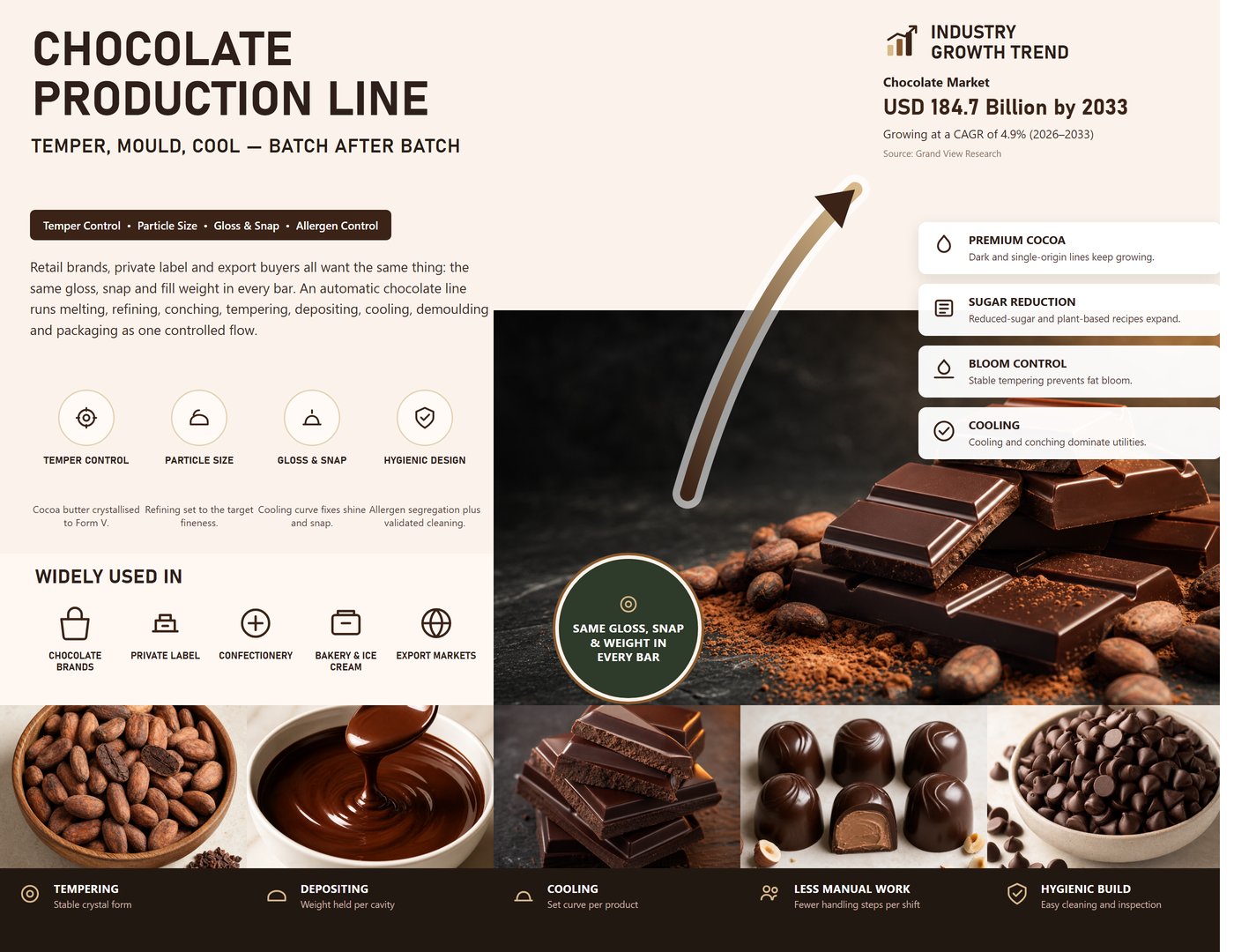
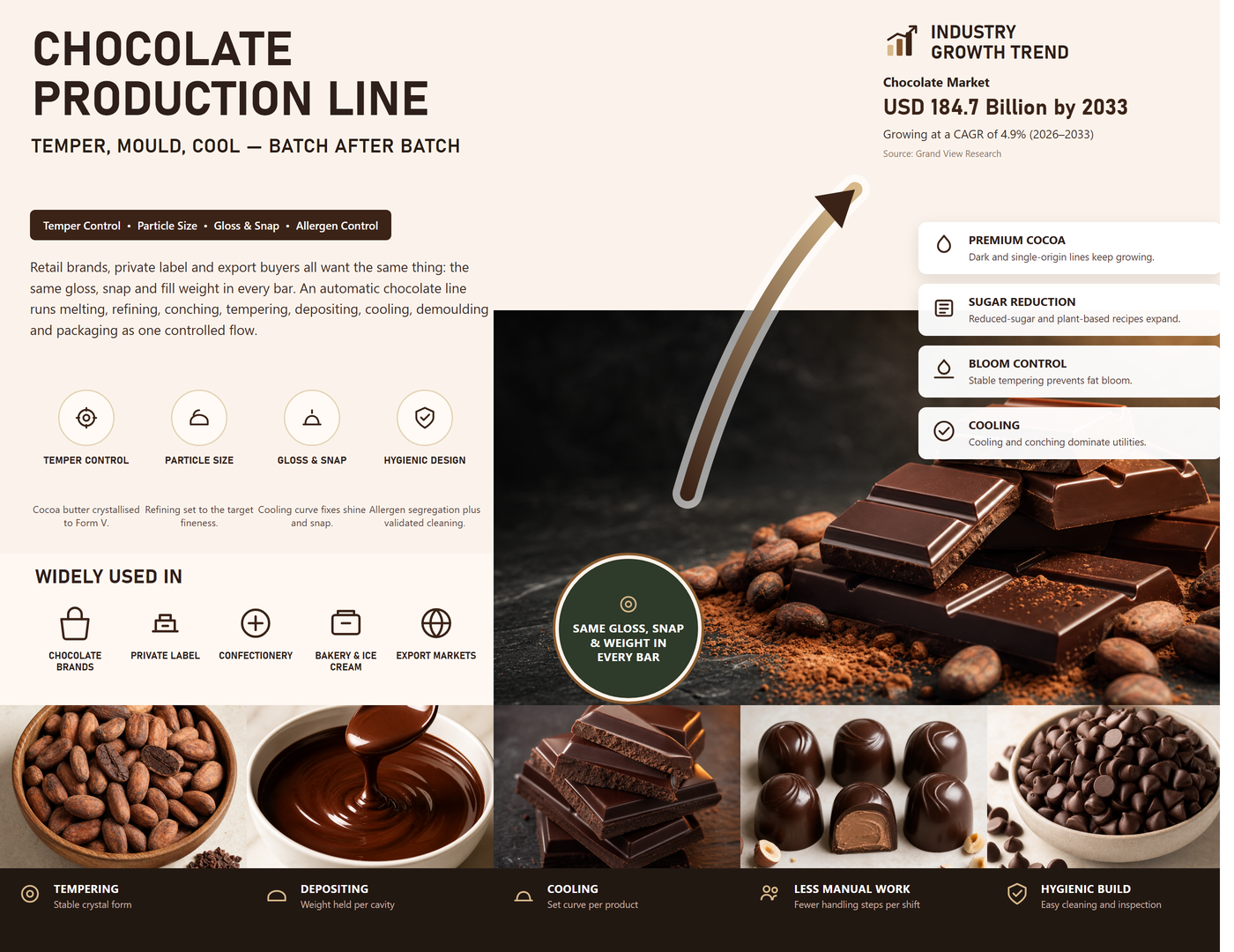
With the continuous growth of the global confectionery market, chocolate has become one of the most popular products in the food industry. From dark chocolate, milk chocolate, and white chocolate to chocolate bars, filled chocolates, chocolate chips, truffles, and coated snacks, consumers are increasingly looking for diverse flavors, attractive appearances, premium ingredients, and convenient packaging. The development of premium confectionery, gift products, seasonal chocolates, and innovative snack foods is creating new opportunities for chocolate manufacturers. At the same time, food factories face increasing demands for production efficiency, product consistency, food safety, and flexible manufacturing. An automatic chocolate production line provides an integrated solution for transforming cocoa-based ingredients into finished chocolate products through a series of controlled processing stages. Depending on the product type and production capacity, a complete line may include cocoa butter melting tanks, chocolate mixing tanks, chocolate refiners, conching machines, storage tanks, tempering machines, depositing machines, chocolate molding equipment, cooling tunnels, demolding systems, coating machines, and automatic packaging machines. For filled chocolates, additional equipment may be required for center filling, depositing, and shell formation. For chocolate-coated products, enrobing machines can apply a uniform chocolate coating to biscuits, nuts, wafers, dried fruits, and other suitable snacks. Different production configurations can be designed for chocolate bars, pralines, chocolate buttons, chips, and customized confectionery products. By integrating suitable processing equipment, manufacturers can establish an efficient workflow, improve production consistency, and develop multiple chocolate products for different markets.
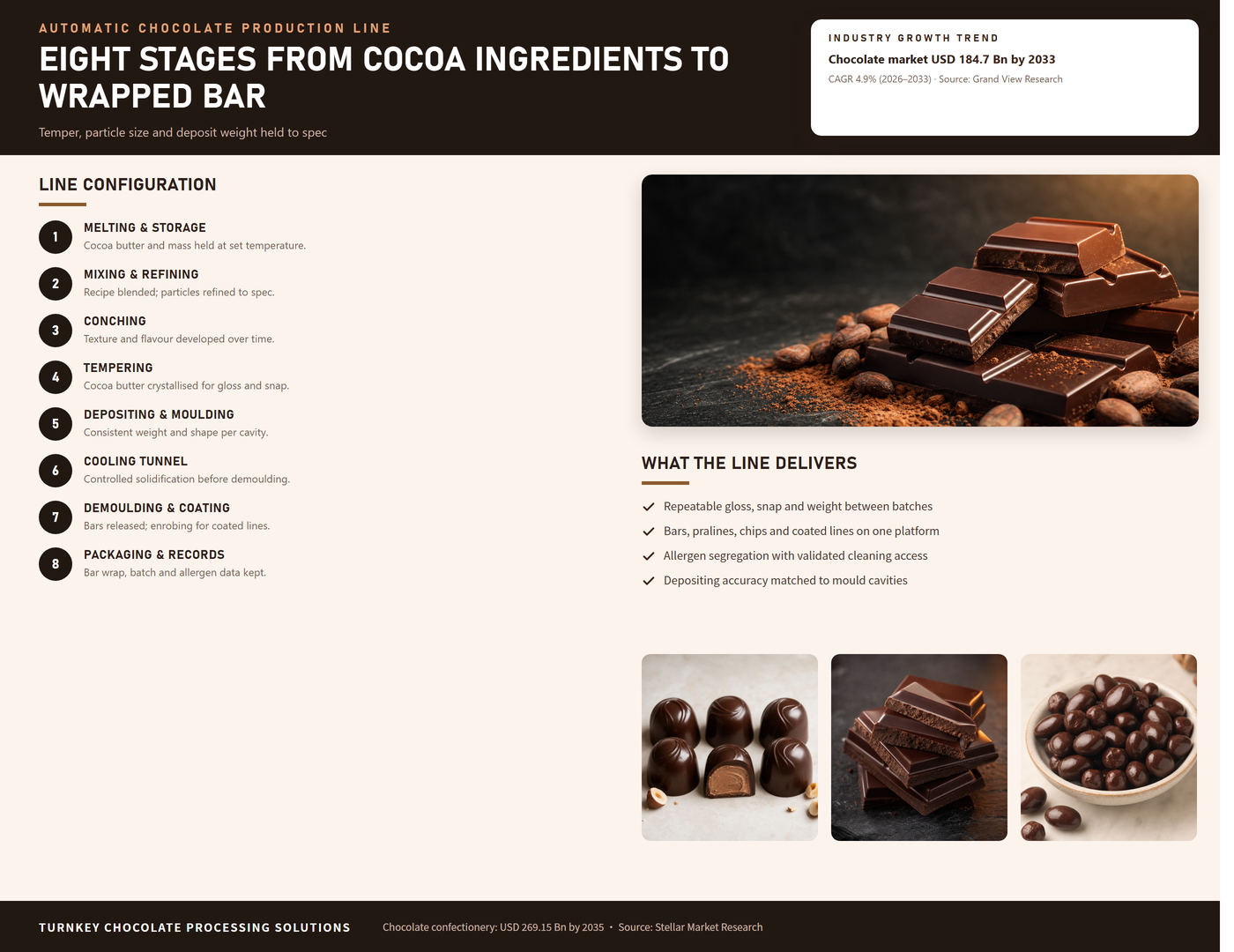
One of the most important advantages of an industrial chocolate production line is its ability to improve product quality, production efficiency, and manufacturing consistency. Traditional manual chocolate production involves repeated melting, mixing, tempering, molding, cooling, and packaging operations, which can require considerable labor and result in variations between batches. Automated equipment helps coordinate these stages and maintain more stable processing conditions. Chocolate melting systems provide controlled heating to prepare chocolate ingredients, while mixing and refining equipment help achieve the desired formulation and particle fineness. Conching machines improve chocolate texture and flavor development through controlled mixing and processing. Tempering is particularly important because it helps control cocoa butter crystallization, influencing chocolate gloss, texture, snap, and resistance to fat bloom. Automatic depositing and molding equipment can produce more consistent product shapes and weights, while cooling tunnels support controlled solidification before demolding and packaging. For filled chocolate products, accurate filling and shell formation help improve appearance and reduce product variation. Hygienic equipment design is equally important in modern chocolate manufacturing. Food-grade contact materials, accessible cleaning surfaces, suitable temperature control, and effective sanitation procedures help maintain production hygiene. Manufacturers should also manage allergens such as milk, nuts, soy, and other ingredients through appropriate storage, handling, cleaning, and labeling procedures. Automatic packaging systems can improve packaging efficiency and protect finished chocolates from moisture, contamination, and physical damage. Temperature and humidity management during storage and transportation are also essential for maintaining chocolate quality. By combining automation with standardized recipes and process control, manufacturers can reduce unnecessary manual handling, improve batch consistency, and deliver attractive chocolate products to commercial buyers.
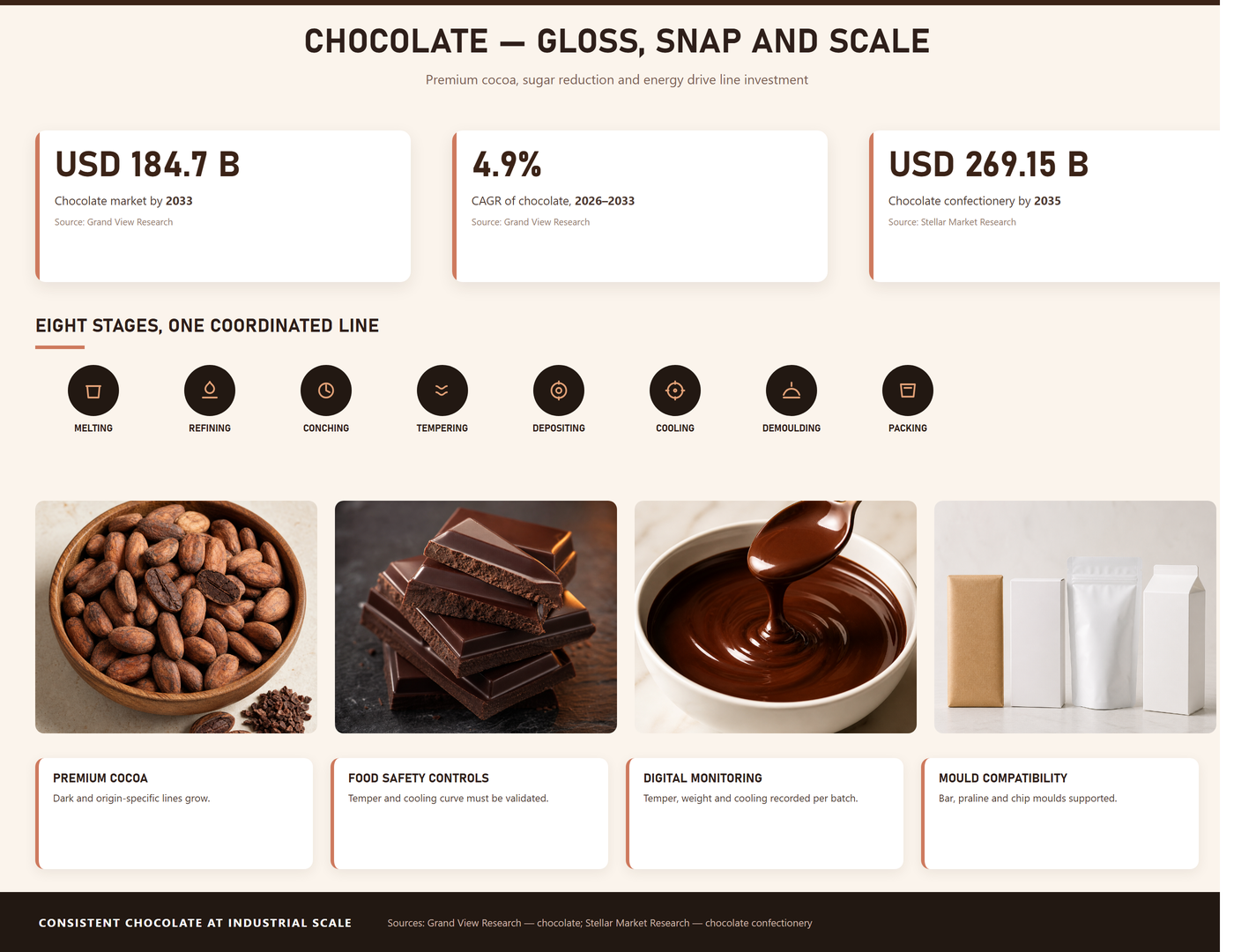
Looking ahead, the chocolate manufacturing industry is moving toward intelligent automation, product innovation, energy efficiency, and more flexible production systems. Consumers are showing interest in dark chocolate, reduced-sugar formulations, plant-based chocolate, premium cocoa products, high-protein snacks, nut-filled chocolates, and products with distinctive textures and flavors. These trends encourage manufacturers to develop adaptable production lines that can handle different formulations, shapes, fillings, and packaging styles. Modern chocolate factories are increasingly adopting programmable logic controllers, touchscreen operation, automatic temperature monitoring, recipe management, and digital production records to improve process visibility and operational efficiency. Modular equipment allows businesses to begin with essential melting, tempering, molding, and cooling machines before expanding into more advanced depositing, coating, and packaging systems. Energy-efficient heating, insulated tanks, optimized cooling systems, and preventive maintenance can also help reduce operating costs and improve resource utilization. When choosing an automatic chocolate production line, buyers should evaluate the required production capacity, chocolate formulation, refining requirements, conching time, tempering accuracy, depositing precision, cooling performance, mold compatibility, filling options, packaging formats, cleaning accessibility, and technical support. It is important to confirm that the equipment matches the actual chocolate recipe and finished-product specifications, because different chocolate types and fillings may require different processing temperatures and production configurations. A well-designed chocolate processing line should coordinate ingredient preparation, melting, refining, tempering, molding, cooling, demolding, and packaging according to the manufacturer's production goals. By investing in suitable chocolate processing equipment and reliable automation technology, confectionery manufacturers can improve production efficiency, maintain consistent chocolate quality, expand their product ranges, and strengthen their competitiveness in the global chocolate market.